Articles
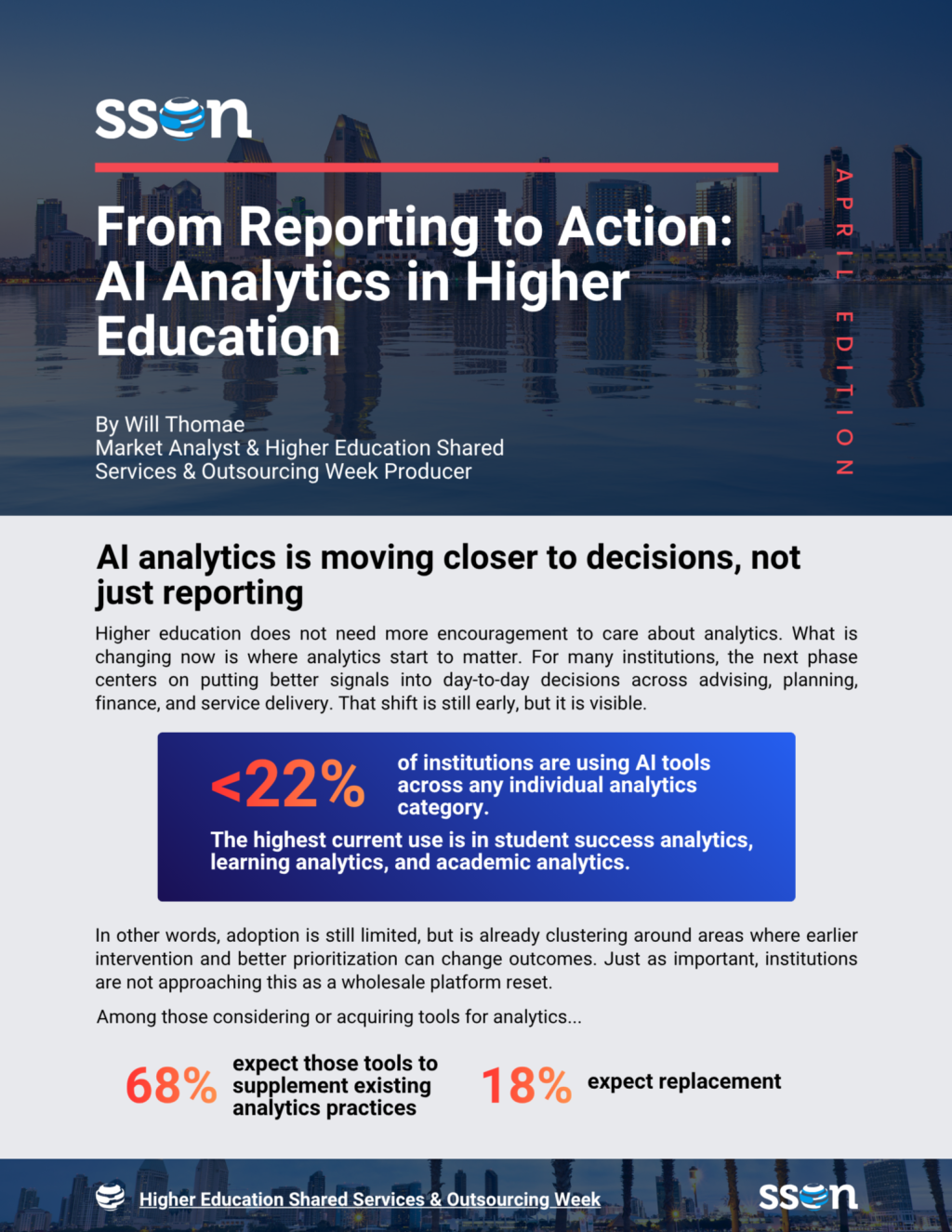
From Reporting to Action: AI Analytics in Higher Education
How Higher Education Leaders Can Build AI Analytics Into Decision-Making
AI analytics is becoming more useful in higher education, but scale still depends on more than new tools. As institutions look to improve advising, planning, finance, and service delivery, the real pressure is falling on data foundations, governance, and the ability to connect insight to action across the institution.
This article explores:
- How AI analytics is moving closer to operational decision-making across higher education
- Why data architecture and governance are becoming the main barriers to scale
- What mission-linked ROI looks like for leaders focused on institutional value
- Where human oversight remains essential as AI analytics moves into live workflows
Click here to have this article emailed to you
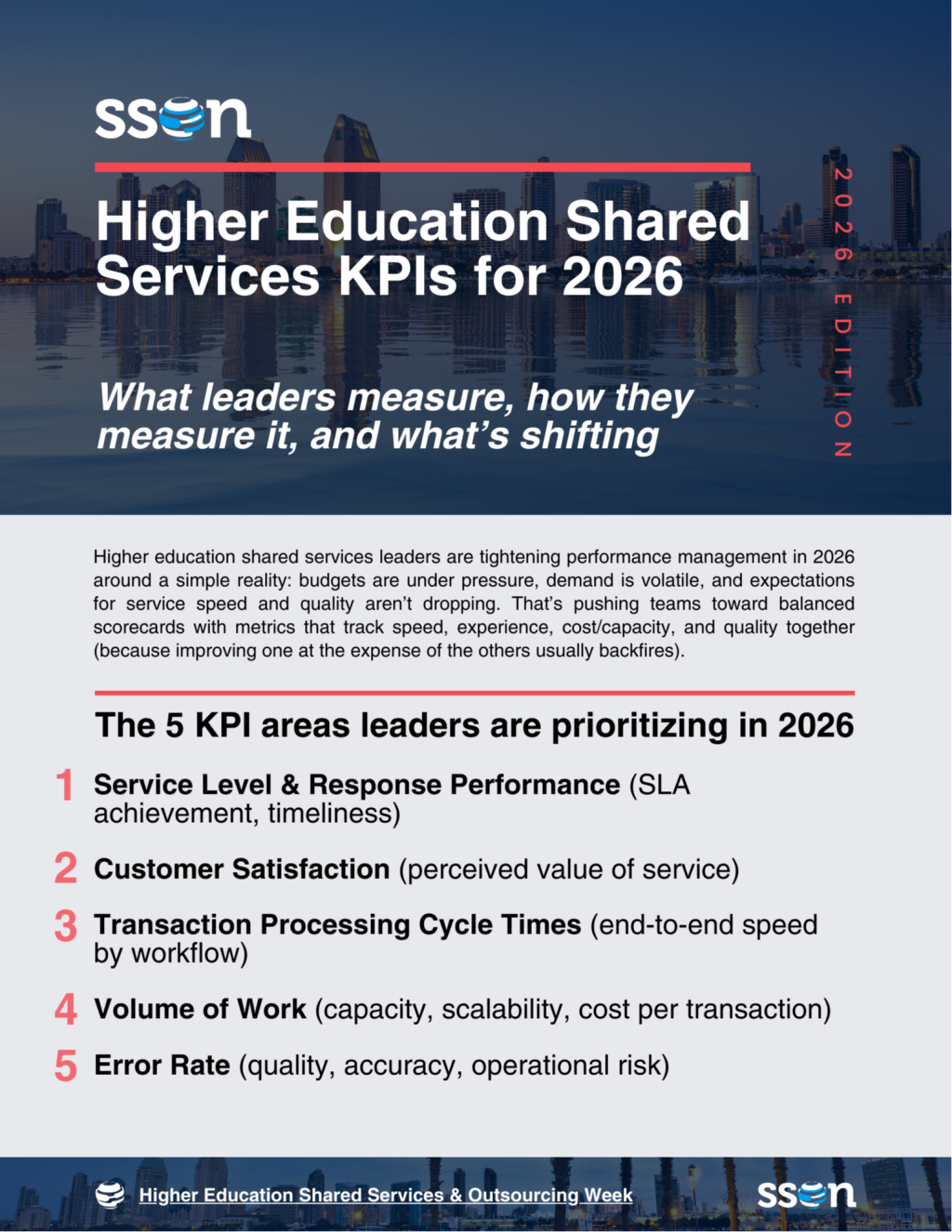
Higher Education Shared Services KPIs for 2026
In 2026, higher ed shared services teams are moving beyond “did we hit the SLA?” to a tighter, more balanced view of performance - one that protects speed, quality, and stakeholder trust at the same time.
We’ve put together an in-depth article that breaks down:
- The core KPI set leaders are standardizing around in 2026: SLA performance, CSAT, cycle time, volume/cost per transaction, and error rate
- How to measure service performance across channels (self-service vs. agent-assisted) without masking delays or exceptions
- The most common KPI pitfalls to avoid, so your metrics drive better decisions, not false confidence
Click here to have this article emailed to you.

From Resistance to Change Champions: The Key to Successful Shared Services Engagement in Higher Education
How Leading Universities Are Turning Shared Services into a Strategic Advantage
The conversation around Shared Services is evolving. No longer just about cutting costs, the most forward-thinking institutions are using it to streamline operations, enhance service delivery, and build trust with faculty and staff. But making it work takes more than efficiency metrics - it requires strong leadership, stakeholder buy-in, and a model that actually serves the people who use it.
We’ve put together an in-depth article that breaks down:
- How universities can move from resistance to adoption through smarter stakeholder engagement
- The leadership missteps that can derail Shared Services - and how to fix them
- What real success looks like beyond budget savings
- Lessons and case studies from top institutions
Click here to have this article emailed to you.

Beyond Cost-Cutting: Expanding Shared Services in Higher Education
Universities are under increasing pressure to do more with less - rising costs, declining enrollment, and operational inefficiencies make it clear that the traditional decentralized model is no longer sustainable. Shared Services Centers (SSCs) offer a solution but expanding them beyond HR and IT requires strategic planning, stakeholder buy-in, and the right technology.
In this article, we explore:
- Why SSC expansion is no longer optional - and what’s driving institutions to act now
- The key benefits of scaling Shared Services beyond administrative functions
- The biggest challenges institutions face - from faculty resistance to governance complexity
- Proven strategies and case studies from universities successfully expanding SSCs
Click here to have this article emailed to you.

Breaking Down Silos: How Higher Ed Institutions Can Foster Cross-Department Collaboration
Higher education is built on knowledge-sharing, but too often, departments operate in isolation - leading to inefficiencies, duplicate efforts, and slow decision-making. As universities face growing financial pressures and evolving student needs, breaking down silos is no longer optional - it’s essential.
In this article, we explore:
- Leadership strategies that drive collaboration and break down internal barriers
- Technology solutions that streamline communication and operations
- Key success metrics to measure and sustain cross-departmental cooperation
- Real-world case studies of institutions leading the way
Click here to have this article emailed to you.
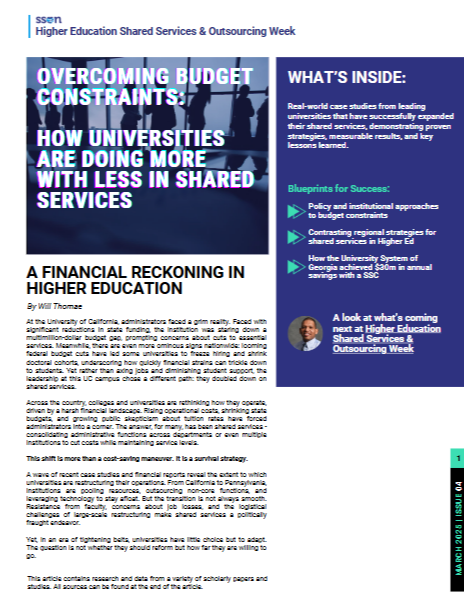
Overcoming Budget Constraints: How Universities Are Doing More with Less in Shared Services
Universities face unprecedented budget pressures as state funding shrinks, federal research grants become uncertain, and public scrutiny intensifies. Traditional cost-cutting methods, like hiring freezes or enrollment reductions, risk long-term damage. A more sustainable path forward involves strategically consolidating administrative functions through Shared Services.
In this article, we explore:
✔ Why adopting Shared Services is now critical - and how recent funding challenges have pushed universities to act immediately.
✔ Proven case studies showcasing real-world savings and improved efficiency from institutions like Texas Tech, Oregon State, and the University System of Georgia.
✔ The policy and governance landscape universities must navigate, from state incentives and oversight challenges to federal funding volatility.
✔ How leading institutions overcome resistance and barriers to achieve stakeholder buy-in and successfully implement Shared Services.

Effective Change Management in Higher Education: A Guide for Success
Are you ready to transform your institution's approach to change management? How can proactive strategies in shared services elevate your higher education institution?
Key Topics Inside Include:
- The importance of proactive change management in higher education
- A detailed five-step process for successful change management
- Aligning institutional goals, processes, core values, and technologies
- Case studies and best practices from leading institutions
In the dynamic landscape of higher education, effective change management is vital for institutions aiming to align with evolving goals, processes, core values, and technologies. Discover the essential five-step process that outlines the key stages involved in successful change management.
Want your copy emailed to you? Click here.
In Partnership With:

QUESTIONS?
Contact us: 1-800-882-8684
Email: enquiry@iqpc.com

©2026 IQPC. All rights reserved.