Articles
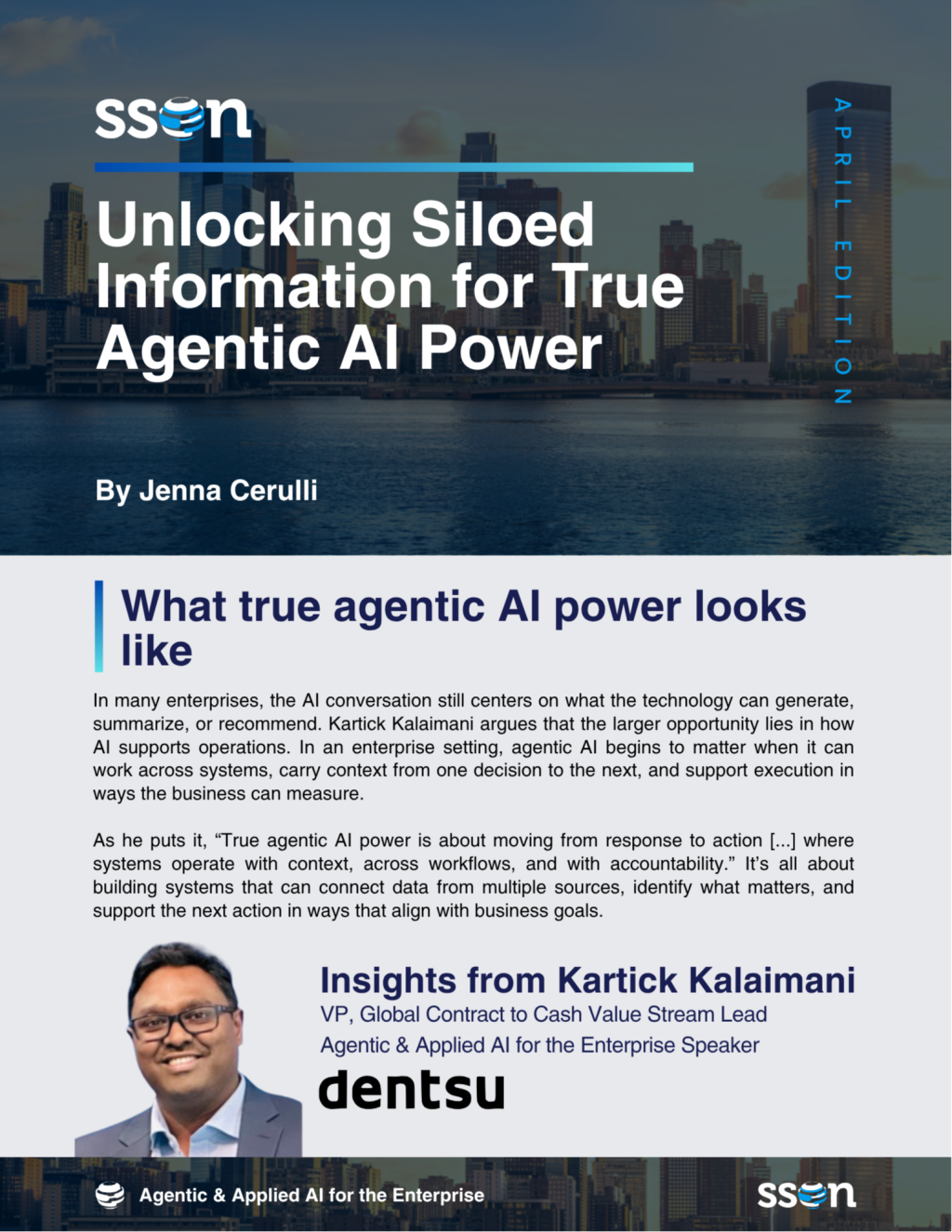
Unlocking Siloed Information for True Agentic AI Power
How to turn fragmented data into a foundation for reliable enterprise AI.
This article featuring Kartick Kalaimani, VP, Global Contract to Cash Value Stream Lead at Dentsu, examines why siloed information remains one of the biggest barriers to scalable agentic AI. Drawn from his upcoming session at Agentic & Applied AI for the Enterprise, it explores where silos persist, why they create greater risk for autonomous systems, and what leaders can do to build stronger data foundations, governance, and trust.
What you'll learn:
- Why system-led transformation still leaves critical data fragmented
- Where siloed information hides, from legacy systems to tribal knowledge
- How leaders can align data, governance, and AI execution for scale
Click here to have a copy sent to your inbox.
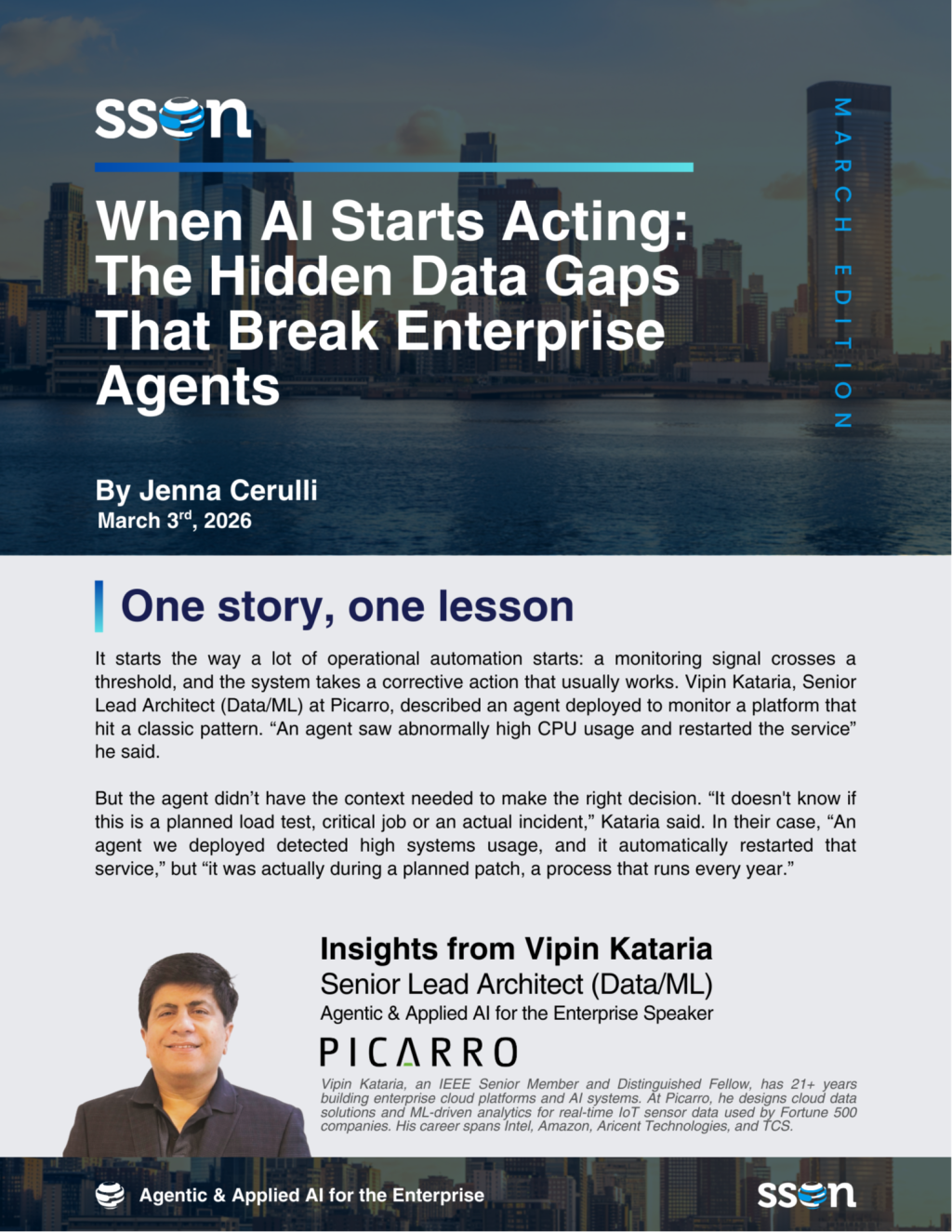
When AI Starts Acting: The Hidden Data Gaps That Break Enterprise Agents
Scaling agentic AI depends on closing the data gaps that show up when agents move from demos to day-to-day operations.
View the article for clear answers to the questions enterprise leaders are asking:
Q: Why do agents work in pilots, then fail in production?
A: Production adds messy inputs, inconsistent context, and higher stakes. Missing signals and unclear decision rules lead to wrong actions.
Q: What does “agent-ready data” mean?
A: Data that includes business context, freshness requirements, ownership, and clear boundaries for what an agent can and cannot do.
Q: What’s the most common hidden gap?
A: Undocumented process logic. Escalations, exceptions, and “how we actually decide” often live in people, not systems.
Q: What needs to be set before agents can execute actions?
A: Scoped permissions, approval gates for high-risk steps, audit trails, and rollback paths.
It also features insights from Vipin Kataria, Senior Lead Architect (Data/ML) at Picarro (and Agentic & Applied AI for the Enterprise Speaker), on what it takes to make enterprise data usable for agents at scale.
Click here to have a copy sent to your inbox.
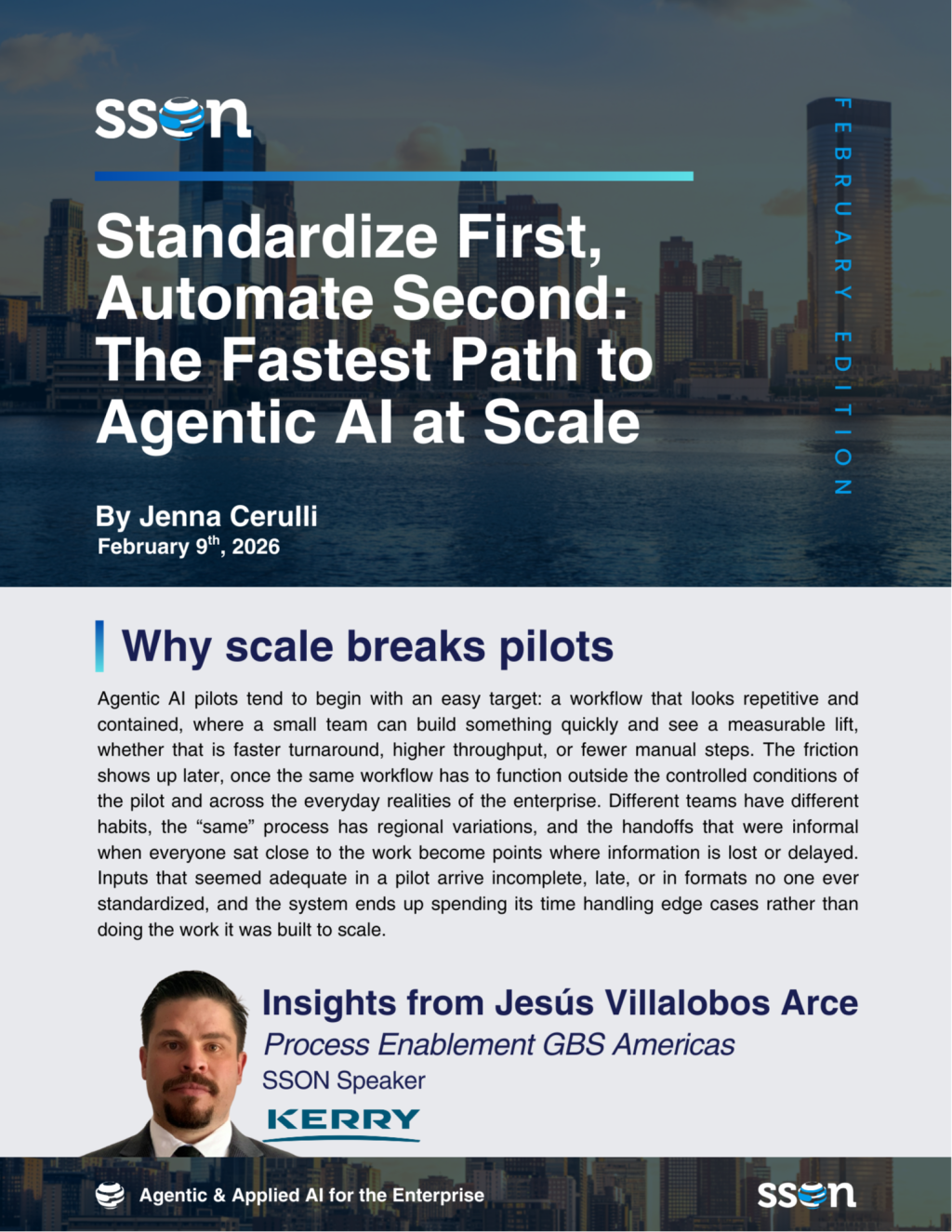
Standardize First, Automate Second: The Fastest Path to Agentic AI at Scale
Scaling agentic AI depends on process discipline, clear ownership, and governance that is in place before automation expands.
View the article for clear answers to the questions enterprise leaders are asking:
Q: Why do agentic AI pilots succeed, but scaling slows down?
A: Pilots run in controlled settings. At scale, process variation, data gaps, unclear accountability, and control requirements start to limit results.
Q: What does “standardize first” mean in practice?
A: Align teams on the same inputs, steps, decision rules, and exception handling so automation runs consistently across locations and systems.
Q: What needs to be set before agents can take action across workflows?
A: Ownership, access boundaries, escalation paths, and auditability, plus controls that match the risk of the process.
Q: What should we measure beyond hours saved?
A: Exception rates, rework, handoffs, intervention frequency, end to end cycle time, and control performance.
It also features insights from Jesús Villalobos Arce, Process Enablement GBS Americas (SSON Speaker), on how standardization and governance create the conditions for agentic AI to scale.
Click here to have a copy sent to your inbox.
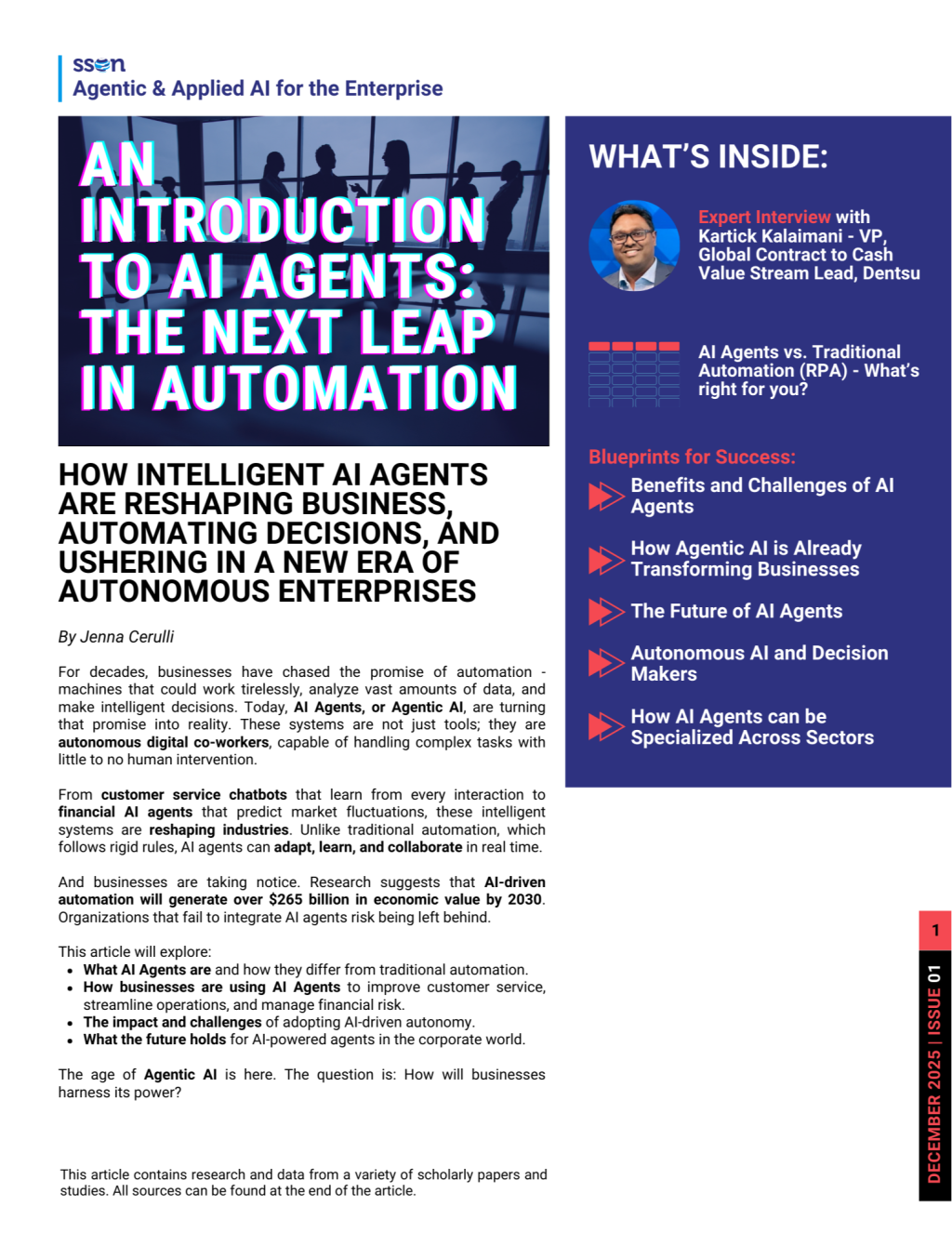
An Introduction to Agentic AI: The Next Leap in Automation
AI agents (agentic AI) are taking automation beyond rigid rules - toward systems that can learn, decide, and act.
View the article for clear answers to the questions leaders are asking:
Q: What is an AI agent (agentic AI)?
A: A system that can make decisions and take actions with minimal human intervention - more adaptive than traditional automation.
Q: How is this different from RPA?
A: RPA follows pre-defined rules; AI agents can handle unstructured inputs and adjust their approach based on context.
Q: Where are AI agents creating impact today?
A: Across functions like operations, finance/risk, and customer service - helping teams automate work at scale and improve outcomes.
Q: What should we watch out for?
A: Governance and risk - bias, regulation, security, and workforce adaptation need to be built into adoption plans.
It also features an interview with Kartick Kalaimani (Dentsu), sharing a practical view on how “digital workers” can take on high-volume tasks so teams can focus on higher-value work.
Click here to have a copy sent to your inbox.
In Partnership With:

QUESTIONS?
Contact us: 1-800-882-8684
Email: enquiry@iqpc.com

©2026 IQPC. All rights reserved.