Agenda Day 1

Agenda day 1

7:45 am - 8:30 am Registration & Coffee

8:30 am - 8:35 am Exchange Welcome

8:35 am - 8:45 am Chair’s Opening Address

8:45 am - 9:15 am OPENING KEYNOTE - Progressive Finance: The CFO as a Leader of AI Adoption and Cultural Change

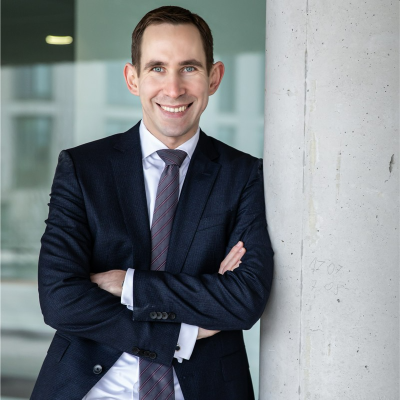
Sebastian Hurst - CFO at Roche Netherlands, Roche Netherlands

As organisations accelerate investment in AI, the CFO's role is rapidly expanding beyond traditional financial stewardship. In this era of Progressive Finance, CFOs are uniquely positioned to lead not just the deployment of technology, but the fundamental mindset shift required for its success.

The successful integration of AI is more about effective leadership that shapes culture, establishes trust, and guides teams through change.
CFOs are crucial in fostering an "AI-First" culture by actively championing its adoption. Given that AI acts as the "great equaliser," this leadership must be characterised by empathy and flexibility. This means leaders must demonstrate emotional intelligence, acknowledge the human element of this transformation, and remain adaptable as roles, processes, and expectations evolve.

By combining strategic foresight with empathy, Finance Leaders can ensure the responsible deployment of AI, aligning it with overall business objectives and embedding it into daily decision-making across the organisation. The current focus should be on cultivating the essential mindsets and capabilities within the Finance Organisation today. This proactive approach will ensure the development of a high-performing finance team prepared for the future.
This opening keynote will detail how CFOs can spearhead AI transformation, driving both the necessary technological innovation and the critical cultural shift required to realise its full potential.

Key discussion points include:
  • Why CFOs and the Finance Function are uniquely positioned to lead enterprise-wide AI adoption: Including Roche leadership perspectives.
  • Defining high-performing finance teams: Exploring the skill sets and capabilities required when AI becomes the great equalizer.
  • Leading through change: The Finance Leader as a role model in AI adoption, fostering an "AI-First" mindset with empathy and adaptability. 

img

Sebastian Hurst

CFO at Roche Netherlands
Roche Netherlands

9:15 am - 9:45 am PLENARY FIRESIDE CHAT: Predictive FP&A: Using AI to Forecast Revenue, Costs, and Cash Flow

Traditional financial forecasting often reacts to events after they happen. Today however, AI is transforming FP&A, enabling finance leaders to move from reactive to proactive cost and cash flow management. By spotting deviations in revenue and costs early, AI forecasting gives financial leaders time to respond before small variances impact margins and cash flow.

In this session we will explore how AI driven forecasting differs from traditional models and how a connected, AI native ERP, can automate margin tracking and scenario planning. Join us to discover how predicative FP&A can turn finance from a back-wards looking function into a forward-thinking strategic partner which can effectively navigate uncertainty, optimise decision making and safeguard margins.

We will explore the following three ways to protect and grow profit margins through the use of AI:

  • Automate anomaly detection: AI can identify deviations from forecasts in real time allowing CFOs to take action sooner rather than later
  • Increase productivity time: Ensure resources are deployed efficiently to maximise revenue and profitability
  • Shift from time-based to value-based forecasts: Focus on value creation and aligning forecasting with strategic goals 

9:45 am - 10:00 am Networking Bingo

Get to know your peers as you navigate the room to find the needed numbers for you to be able to call "Bingo!" 

10:05 am - 10:35 am Pre-scheduled Business Meetings & Networking

10:05 am - 10:35 am THINK TANK A CASE STUDY: Novartis’ Journey to a Global Standardised ERP System
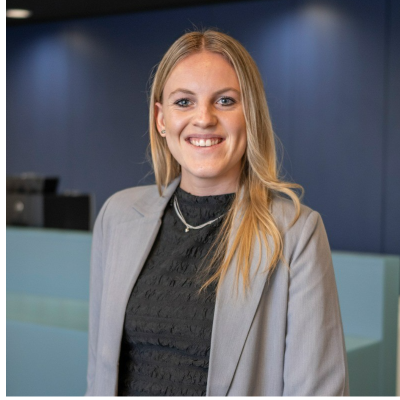
Silvia Mettauer - CFO and Managing Director, Novartis

A year and a half after going live with its global standardised ERP system, Novartis has transformed a once highly fragmented technology landscape into a unified, efficient platform. Previously operating with around 40 separate SAP instances, the organisation faced significant complexity, inconsistent data structures, and challenges in achieving global visibility.

This session explores how Novartis successfully harmonised its systems, streamlined financial processes, and established a single source of truth across all entities. With standardised global finance master data and aligned processes, the company has significantly improved reporting capabilities and operational efficiency.

Join this session to gain practical insights into:

  • The strategic approach taken to move from a fragmented to a harmonised ERP landscape
  • Key benefits realised, including improved data integrity and streamlined global reporting
  • The challenges encountered during implementation and how they were addressed
  • Effective change management strategies to drive adoption across global finance teams 

img

Silvia Mettauer

CFO and Managing Director
Novartis

10:40 am - 11:10 am Pre-scheduled Business Meetings & Networking

10:40 am - 11:10 am THINK TANK B: Is Invoice Lifecycle Management the New ERP?

ERP systems were once the core of global finance but for many organisations today, they've become fragmented, country-specific silos connected by layers of complex integrations. As GBS teams face increasing pressure to modernise while maintaining efficiency, compliance, and control, a new question is emerging: is Invoice Lifecycle Management becoming the true operational backbone of finance?

This interactive session explores how ILM platforms are transforming the way organisations manage invoices, payments, and tax across multiple jurisdictions. By standardising the invoice lifecycle globally, embedding compliance into every transaction, and enabling scale without proportional headcount growth, ILM is positioning itself as a powerful alternative to traditional ERP systems.
During the discussion we will examine both sides of the debate focusing on

  • The benefits of increased visibility, control, and agility
  • The challenges of integration, change management, and the continuing role of ERP in core financial processes.
  • Challenging finance leaders to rethink their architecture and consider a critical question: When your ILM platform already has a complete view of your global financial operations, what role should ERP play going forward? 

11:15 am - 11:45 am PLENARY PRESENTATION: Case Study: Reimagining Finance Workflows with AI Agents

Finance teams are facing mounting challenges: fragmented data, legacy systems, and increasing expectations from leadership and investors. Much of their time is consumed by manual reporting, data gathering, and reconciliation leaving limited capacity for strategic work. As the role of the CFO continues to expand, this imbalance is becoming unsustainable with 69% saying they're struggling to drive strategy due to an ever-expanding brief.

AI agents offer a practical way to address these issues. By working across existing systems, they connect data, automate routine tasks, and make insights more accessible without adding complexity or requiring deep technical expertise.

Join this session to learn how AI agents can help finance teams move beyond operational constraints and play a more strategic role in driving business performance. We will explore how agents can help finance teams:

  • Unify data and accelerate decisions: Provide natural language access to both structured and unstructured data, enabling faster analysis, planning, and scenario modelling without reliance on multiple teams or tools.
  • Reduce manual effort and elevate focus: Automate repetitive tasks such as data collection, report preparation, and document search, freeing up time for interpretation, forecasting, and strategic guidance.
  • Enable trust and control at scale Support transparent, traceable, and auditable outputs aligned to existing governance frameworks helping teams meet regulatory and investor expectations with confidence. 

Uncertainty in business is nothing new but today, it has become multi-dimensional and, arguably, the new world order. CFOs and senior financial executives are navigating a world defined by geopolitical tensions, market volatility, currency fluctuations, rapid technological change, and relentless operational pressures. The question is clear: What is uncertainty and how do you manage in these conditions, inspire confidence, and ensure that stores, infrastructure, and supply chains keep running smoothly?

This panel discussion, led by Dennis Sasse, Group Finance Director, Roche, explores how uncertainty differs from unpredictability and questions how disruption can create opportunities for new business models, strategic investments, and sustainable growth.

Key discussion points will include:

  • Embracing a "wait, look, and listen" approach, centred around scenario planning and stress-testing in volatile environments
  • Mastering the distinction between perceived and actual crises while communicating financial realities effectively, turning fear of uncertainty into curiosity and courage
  • How to balance short-term pressures with long-term stability and growth goals in times of instability
  • Navigating fragmented trade dynamics and regulatory shifts to maintain supply chain and capital fluidity 

img

Dennis Sasse

Group Finance Director
F. Hoffmann-La Roche Ltd, Roche

img

Mohamed Elmeadawy

Vice President Finance & Controlling - Emerging Markets
Groupe SEB

img

Daniel Martinez

Group CFO
Ferrero International

img

Elizabeth Shadrack Paszek

CFO Technology
Nordea

img

Rick Selbach

CFO
Zurich Insurance Benelux

12:20 pm - 12:50 pm Pre-scheduled Business Meetings & Networking

12:20 pm - 12:50 pm THINK TANK C: Building Resilience Against Digital Threats

The average ransomware demand in 2025 reached $1.3 million, and that figure does not include the wider financial impact of regulatory penalties, operational disruption, and reputational damage. Cyberattacks are no longer isolated technical incidents handled quietly by IT teams, they are one of the most significant and unpredictable financial risks facing modern organisations.

As a result, cyber risk now sits firmly within the CFO's office. Beyond managing financial exposure, CFOs play a critical role in building organisational resilience, ensuring their businesses can withstand, respond to, and recover from cyber incidents with minimal disruption.
By understanding the financial drivers of cyber incidents and embedding resilience into risk management, investment decisions, and crisis planning, CFOs can help organisations move beyond prevention alone to ensure they are financially prepared for when incidents occur.

Join this interactive think tank as we explore how CFOs can strengthen organisational resilience by:
  • Embedding cyber risk into enterprise risk management strategies
  • Prioritising cybersecurity investments that strengthen resilience and recovery capabilities
  • Ensuring cyber insurance and financial safeguards support rapid recovery
  • Leading cross-functional incident response and financial contingency planning
  • Strengthening financial disclosures and stakeholder communication around cyber exposure  

12:55 pm - 1:55 pm Networking Lunch

2:00 pm - 2:30 pm Pre-scheduled Business Meetings & Networking

2:00 pm - 2:30 pm THINK TANK D: From FP&A to xP&A: Is This the Next Stage in Financial Transformation?
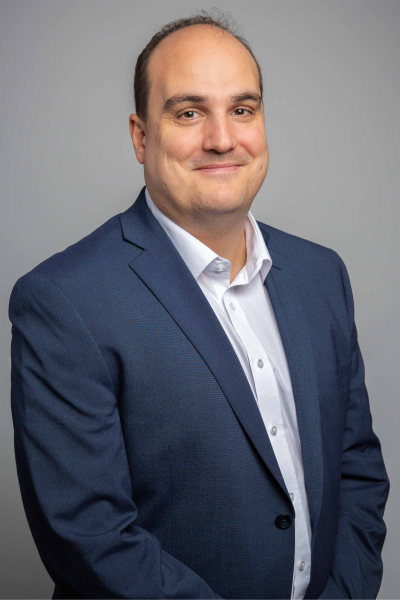
Saad Lahlou - Division CFO, Hermès

Economic uncertainty, regulatory change, and ongoing market disruption are placing increasing pressure on finance functions to deliver more accurate, and forward-looking insight. Yet many teams remain constrained by legacy FP&A processes including manual workflows, fragmented data models, and static planning cycles that are no longer suited to a more volatile European environment.

This session will explore whether the shift from traditional FP&A to xP&A represents a meaningful next step in finance transformation. The discussion will consider how planning is evolving beyond a finance-centric activity toward a more integrated, enterprise-wide capability. By connecting data and assumptions across finance, sales, operations, and HR, xP&A aims to create a more aligned planning framework that supports cross-functional decision-making.
This session will provide a practical, balanced perspective on the opportunities and challenges of adopting xP&A, helping finance leaders evaluate its relevance and potential impact within their own organisations.

Key discussion points include the following benefits of xP&A:
  • Reducing data silos across the organisation
  • Enabling proactive, forward-looking decisions
  • Streamlining enterprise-wide planning processes  

img

Saad Lahlou

Division CFO
Hermès

As AI becomes embedded across the finance function, CFOs face a fundamental strategic question: is the real value of AI in reducing costs and increasing efficiency, or in redeploying talent to higher-value work?

AI has the potential to automate manual processes, accelerate reporting cycles, and reduce operational costs. At the same time, it can free finance professionals from repetitive tasks, enabling them to focus on strategic analysis, scenario planning, and deeper business partnership. For CFOs, the challenge is determining where AI should drive cost efficiency and where it should unlock new capability and insight.
Join this panel discussion as we debate the purpose of AI within finance and impact on team structures.

Key discussion points include:
  • Efficiency vs. reinvention: Should AI primarily reduce headcount and operational costs, or enable the redeployment of finance talent into more strategic roles?
  • Measuring AI's real impact: How CFOs are assessing productivity gains, process acceleration, and value creation across finance workflows
  • Redesigning the finance workforce: What AI means for roles, skills, and team structures as automation increases 

img

Claudia Brambilla

CFO Nordics
Pirelli Tyre Nordic AB

img

Alexandra Kim

BL CFO
Eurofins

img

Nataliya Rudenko

Finance Director
Just Eat Takeaway.com

img

Inbal Orbach

Vice President Global Head of FP&A
Lonza Group AG Basel

3:05 pm - 3:35 pm PLENARY PRESENTATION: Real-Time Financial Reporting: Is Continuous Accounting Achievable?

The traditional month-end close features persistent bottleneck which delay insights, increasing pressure on teams, and limit the strategic value finance can deliver. Even among top-performing organisations, closing the books often takes 4–5 days, leaving finance leaders with reduced time to guide the business.

But what if finance could operate in real time?

This session challenges the perception of continuous accounting as an aspirational concept and explores whether it is truly achievable in today's environment. With the promise of faster insights, improved accuracy, and greater agility, this session argues the question is no longer if continuous accounting is possible but how far organisations can realistically go in adopting real-time finance.

Join us to discuss:
  • What continuous accounting really means in practice and how it differs from a faster close
  • Whether a fully "continuous close" is achievable, or if a hybrid model is more realistic
  • The operational, technological, and cultural shifts required to move away from traditional processes
  • Practical steps to begin embedding continuous processes without overwhelming your team 

3:40 pm - 4:10 pm Pre-scheduled Business Meetings & Networking

4:15 pm - 4:45 pm Pre-scheduled Business Meetings & Networking

4:15 pm - 4:45 pm THINK TANK E: Interactive Case Study: Transforming the Finance Function at Sulzer
Stan Stoyanov - Senior Director, Finance Transformation & CFO Office, Sulzer Pumps Ltd.

Finance transformation is often described as a technology journey. In reality, it is a much broader organisational change that touches operating models and people capabilities.

In this case study, we explore how Sulzer is redesigning its finance function through a multi-year transformation programme. The initiative includes the creation of regional centres of excellence, the redesign of controlling and accounting structures, and a fundamental shift in how finance supports the business.
The transformation is currently about 40% complete, offering a realistic view of what works, what doesn't, and what other CFOs should expect when undertaking similar programmes.

Key lessons from the current transformation discussed include
  • Finance transformation quickly becomes organisational transformation: Changes to processes and systems inevitably require changes to roles, structures, and skills.
  • Centralisation alone does not deliver efficiency: Without process standardisation, centres of excellence simply centralise inefficiency.
  • Technology must come after process redesign: Automation is only effective once processes are aligned and standardised.


img

Stan Stoyanov

Senior Director, Finance Transformation & CFO Office
Sulzer Pumps Ltd.

4:50 pm - 5:20 pm CONFERENCE WIDE DISCUSSION: The Future of GBS & Value Creation in the Age of AI

Inbal Orbach - Vice President Global Head of FP&A, Lonza Group AG Basel

Over the past 15–20 years, Global Business Services and outsourced finance models have evolved from cost-saving engines into strategic enablers. However, the landscape is shifting rapidly.

With the rise of AI, automation, and changing cost dynamics across geographies, CFOs are re-evaluating long-standing operating models. Traditional location-based arbitrage is no longer the primary driver of value and many organisations are questioning whether their current GBS structures are fit for the future.
This Think Tank session explores how finance leaders can redefine GBS to deliver true value in a digital-first world.
Key Questions Explored:
  • From Cost Efficiency to Value Creation: Is the traditional GBS model still relevant?
  • The Impact of AI on GBS : How AI is reshaping shared services and BPO models
  • Location Strategy Revisited : Does it still matter where your shared services are located? 

img

Inbal Orbach

Vice President Global Head of FP&A
Lonza Group AG Basel

5:25 pm - 6:25 pm THE WINE AND WHINE CLUB

Leading the charge on finance comes with its fair share of challenges. In this roundtable session, enjoy a glass of wine as you discuss (and whine about!) the trials you are up against and come up with actionable insights that you can bring back with you to the office. Choose the boardroom topic that most aligns with your current priorities and interest and join the discussions! 

5:25 pm - 6:25 pm GROUP A: Future Skills: Empathy in the Age of Teams
Roberto di Matteo - Chief Financial Officer (Netherlands), Takeda

Finance roles are evolving fast. They are no longer defined by control and reporting alone, but by the ability to influence direction, shape strategy, and create value beyond the numbers.


As automation and AI become embedded across finance, the skills and profiles needed in teams over the next three to five years will look very different from today. Technical expertise will still matter but so will data fluency, strategic thinking, and the ability to collaborate across the business. At the same time, as teams become more distributed and interactions increasingly take place in virtual environments, empathy and human connection are emerging as critical leadership capabilities.

In this interactive roundtable, led by Roberto Di Matteo, CFO, Takeda, we will explore what the finance team of 2030 needs to look like and how CFOs can begin preparing now. Alongside the evolving talent profile, strategic agility, and data fluency, the discussion will also focus on the human intelligence required in an automated world.

Join peers for an open discussion on how finance leaders can start building the skills, structures, and culture needed for the next generation of finance teams, balancing technological advancement with human connection. 

img

Roberto di Matteo

Chief Financial Officer (Netherlands)
Takeda

5:25 pm - 6:25 pm GROUP B: Tinkers vs. Integrators: Where Are You on Your AI Adoption Journey?

Finance teams are under pressure to leverage AI, yet adoption remains uneven. Fragmented data, slow close cycles, limited training, and the absence of executive mandates are all barriers preventing AI from becoming a core part of finance operations. As a result, only a minority of organisations have successfully embedded AI into their operating model, creating a widening gap between experimentation and true transformation.

This interactive roundtable will help you benchmark your AI journey against your peers and explore the critical distinction between Tinkers, finance leaders who are aware of AI's potential but are still exploring use cases and integrators, the CFOs who have moved beyond experimentation and are embedding AI tools into routine processes.

Join us to share experiences, uncover best practices, and gain insights that can accelerate your path from tinkering to full-scale integration. 

5:25 pm - 6:25 pm GROUP C: Cash is King: Why CFOs Prioritise Cash in Uncertain Times
Svitlana Dryhush - CFO, METRO Cash & Carry Ukraine

In an environment where certainty is scarce and economic conditions shift quickly, cash has become the most critical strategic asset on a CFO's balance sheet. It's not just about liquidity or survival. Strong cash positions give finance leaders the flexibility to make confident decisions when the future is unclear.

Seasoned CFOs understand that companies rarely fail because of poor strategy alone. More often, they fail when they lose the financial breathing room needed to adapt. Effective cash management preserves that breathing room allowing organisations to absorb shocks, respond to change, and seize opportunities when they arise.

This roundtable will explore why cash continues to dominate the CFO agenda and how finance leaders can strengthen their organisation's cash position. Together we'll discuss how so-called "idle" cash can provide resilience during periods of volatility, create strategic optionality when plans shift, and provide tolerance when things go wrong. Join peers from across the finance community to share practical approaches for improving cash management, including strengthening accounts receivable processes, structuring customer contracts and payment terms to better support cash flow and re-evaluating spend, cost structures, and working capital priorities. 

img

Svitlana Dryhush

CFO
METRO Cash & Carry Ukraine

5:25 pm - 6:25 pm GROUP D: Redefining the Finance Scorecard: Measuring What Truly Matters in Transformation
Stephanie Rinkel - CFO South Europe, Bayer

This roundtable will explore how finance leaders can effectively measure their "scorecard" in an environment of rapid transformation and rising strategic expectations. As organisations modernise their finance functions, many still face challenges in defining what good looks like, moving beyond traditional metrics, and ensuring reporting keeps pace with the needs of the business.


With 7 out of 10 finance transformation programmes failing to deliver on their objectives, the session will examine how leaders can better track progress, identify early warning signs, and ensure initiatives drive real value. Discussion will also focus on shifting from manual, retrospective reporting to real-time, insight-led performance measurement, and the importance of incorporating stakeholder feedback to truly assess finance's impact. Attendees will gain practical perspectives on how to align metrics with strategic outcomes and build a scorecard that reflects finance's evolving role as a trusted business partner.

img

Stephanie Rinkel

CFO South Europe
Bayer

5:25 pm - 6:25 pm GROUP E: Defining Guardrails, Governance, and Accountability in the Age of AI
Ewa Woroszyl - Cfo, Autopay

As AI rapidly reshapes finance—from predictive modelling to automated decision-making—CFOs are facing a critical challenge: how to harness its power without losing control, accountability, or trust. This interactive roundtable brings together senior finance leaders to explore how organisations are defining effective guardrails, governance frameworks, and human oversight in an increasingly AI-enabled finance function. With AI now embedded across FP&A, forecasting, and decision support, the question is no longer whether to adopt it, but how far it should go and who ultimately owns the outcome. Discussion will focus on where to draw the line between automation and human judgment, how accountability is maintained when AI generates insights, and what "human-in-the-loop" truly looks like in practice. 

img

Ewa Woroszyl

Cfo
Autopay

5:25 pm - 6:25 pm GROUP F:,How to manage the mental load and maintain resilience?
Alexander Sobiech - CFO Germany, REPLAY

As the role of the CFO evolves from financial steward to strategic partner, the pressure has intensified. Today's CFO is expected to navigate constant change, support the CEO, lead transformation, manage talent challenges, and embrace AI all while maintaining performance and composure.


But behind this shift lies a critical question: How are CFOs actually coping with the mental load?
This roundtable creates a safe, peer-led space to openly explore the often-unspoken realities of leadership pressure, resilience, and wellbeing at the top. 

img

Alexander Sobiech

CFO Germany
REPLAY

6:25 pm - 6:30 pm Chairs Closing Remarks & Evening Reception

7:30 pm - 8:00 pm End of Day One