NOT JUST A CONFERENCE. A COMMUNITY.
18 - 21 May 2026 | Estoril Congress Center, Estoril, Portugal
Conference Day Two: May 20th, 2026
7:30 am - 8:45 am
BREAKFAST AND REGISTRATION
8:45 am - 8:55 am
TUESDAY HIGHLIGHTS FROM THE CHAIR
SSOW THE BIG IDEAS STAGE
9:00 am - 9:30 am
SHIFTING THE CONVERSATION FROM "WHAT WE DO" TO "WHY WE EXIST": A BUSINESS LEADER'S PERSPECTIVE ON GBS EXPECTATIONS
Priyaranjan Jha -
SVP and Head of GBS,
Iron Mountain
Iwona Silora - SVP & GM EMEA, Iron Mountain
In GBS, the conversations are often about what we do and who we are. But the business leaders are asking different questions: why does GBS exist, and how is it delivering outcomes that truly matter to the enterprise? In this session, Iwona and Ranjan will bring together the voices of business and GBS leaders on stage. Rather than focusing on process for process’ sake, “end-to-end” or AI as an objective, this conversation will challenge how GBS can continuously raise the bar by delivering on margin expansion, innovation and revenue growth. All that while navigating the unique complexities of Europe’s fragmented regulatory and digital environment.
• Through the eyes of the business leaders: how evolving business challenges are continually redefining GBS requirements
• What does it mean for GBS to be accountable not only for efficiency, but also for innovation and revenue impact?
• How can AI and digital be positioned as means to an end rather than ends in themselves?




9:30 am - 10:00 am
A C-SUITE PANEL: CHALLENGING GBS VALUE FROM THE CUSTOMER AND BUSINES PERSPECTIVE: POSITION, PERCEPTION & POWER
Madeleine Roach -
Executive Vice President, Head of Business Operations,
Sanofi
Caroline Basyn - Chief Digital and Information Officer & Global Business Services Officer, The Adecco Group
Maria Saggese - GBS Solution Lead Partner Global & Europe West, EY
John O'Shea - Chief Communication Officer, Solvay
Even the highest‑performing GBS organisations struggle with how they are perceived and understood at the very top of the house. The C‑suite often has only a partial or fragmented view of what GBS is, what it does, and the value it delivers. This panel brings together senior leaders who sit in, or very close to, the executive committee to unpack how the narrative around GBS is (or isn't) landing at board level.
• Why do some boards still see GBS as a transactional "back office", even when it is driving transformation and growth?
• How clear is the positioning, mission, and scope of GBS at enterprise level – and who owns that story?
• What happens when the C‑suite lacks a common, fact‑based view of GBS performance, outcomes, and value?

Caroline Basyn
Chief Digital and Information Officer & Global Business Services OfficerThe Adecco Group




10:00 am - 10:30 am
IS YOUR GBS READY FOR AI? THE REAL QUESTION IS WHETHER YOU HAVE THE 'AQ': CAN YOU HIRE, MANAGE AND FIRE AI TEAM MEMBERS?
Robert Weltevreden -
Global Business Services Advisor,
RW Advisory Ltd
Sashi Narahari - Founder & CEO, HighRadius
Annette Hamann - Head of Global Enterprise Solutions, Merck Group
Alexander Jochinger - CEO Engie GBS, Engie
As AI agents develop into full fledged AI team members, we will see more and more mixed teams, where humans and AI work together seamlessly, and hence I will be guiding the discussion towards understanding what it takes for GBS leaders to develop the skills needed to manage AI team members. Managing humans requires EQ (your natural instincts for managing people), but managing AI will require "AQ" (picking the right algorithms for a problem or situation).
Sponsored by: HighRadius






10:30 am - 11:00 am
EVOLVING THE SERVICE DELIVERY MODEL THROUGH AGENTIC GBS TO DELIVER ULTIMATE USER-CENTRIC EXPERIENCE
Candice Sieg -
Partner, Global GBS and Outsourcing Advisory Lead,
KPMG
Lene Hylling Axelson - SVP Global Solutions, Novo Nordisk
Agentic AI is reshaping GBS service delivery model by taking on more complex tasks and providing more personalised experiences. This session will share how industry leaders are evolving their GBS delivery model and service management through a human-centric design and AI innovation, driving significant improvements in employee engagement and operational efficiency.
• What does the future of Agentic GBS look like with AI innovation?
• A new service delivery model focusing on enhancing user-centric experiences
• New ways of augmenting your service management in the age of Agentic AI


10:30 am - 11:30 am
MORNING NETWORKING BREAK
SPLIT PLENARY
11:30 am - 12:00 pm PANEL DISCUSSION: GBS LEADERSHIP IN AN AI-FIRST ERA: SHAPING DECISIONS FOR DISRUPTION Santosh Unni - Head of Digital Practice - EMEA & APAC and Global Head of AI, InfosysSaskia Poelman - SVP Group SSC, Agrolimen
Caroline Basyn - Chief Digital and Information Officer & Global Business Services Officer, The Adecco Group
Aneta van den Kieboom - Senior Vice President, Head of Global Shared Services, RHI Magnesita
This panel will explore the pivotal role of GBS in navigating and shaping decision-making within an era of digital and AI disruption. Delve into strategies for harnessing the power of GBS to drive organizational success, amidst transformative technological advancements, and learn how GBS leaders are redefining their approaches to enable agile and informed choices.
• Embracing disruption: spearheading transformative initiatives to align decision-making processes with the digital-first landscape
• Agile strategies: uncovering innovative approaches to enable rapid and well-informed decisions in an ever-changing business environment
• Redefining GBS: reimagining roles, leveraging data-driven insights, and fostering collaboration to drive strategic outcomes
Sponsored by: Infosys BPM




Caroline Basyn
Chief Digital and Information Officer & Global Business Services OfficerThe Adecco Group


SPLIT PLENARY
12:00 pm - 12:30 pm BEYOND TECHNOLOGY: HOW SERVICE MANAGEMENT IS ENABLING GBS STRATEGY - A SMITH & NEPHEW CASE STUDYIs service management still just a ticketing system for your organisation? Smith & Nephew's Global Business Services leadership is challenging this limiting view, positioning service management as a strategic core of their operating model. By expanding their team's skillsets beyond technical expertise, they are reimagining how service management can become a powerful strategic capability. Join Pascal to hear how they are embedding service management as a central GBS management system:
• Understand how to transition service management from a transactional model to a strategic management system
• Map out the full services scope to ensure that they are aligned with business objectives
• Learn strategies for building a service management team that goes beyond technical skills
• Discover how to use service management to redefine KPIs and therefore drive organisational transparency and customer experience
SPLIT PLENARY
12:30 pm - 1:00 pm ACCOUNTABLE AI IN FINANCE: TRUST IT, TRACE IT, TIE IT TO RESULTS WHAT HAPPENS WHEN AGENTS MOVE FASTER THAN YOUR CONTROLS Sven Westeppe - Partner, EYMarkus Hübl - CEO, Springtime
Rob Bullen - Group Head of Global Business Services, BAT
Victoria Slowikowska - Partner, KPMG LLP
AI agents are making financial decisions across your organization right now - approving invoices, flagging exceptions, routing payments - and in most finance functions, nobody can fully explain why. And now CFOs and GBS leaders face a dangerous gap: the speed of automation without the accountability frameworks to back it up. Accounts Payable is where this tension is most palpable, and where the compliance stakes are highest. This session draws on deep AP expertise to examine what accountable AI in finance actually looks like, what your auditors will demand, and how to move fast without breaking things.
Sponsored by: Springtime Technologies



FINANCE END-TO-END TRANSFORMATION
11:30 am - 12:00 pm DESIGNING THE NEXT-GEN FINANCE OPERATING MODEL: AGILITY, TALENT AND SERVICE EXPERIENCE Markus Rieder - SVP, Global Head of Finance Transformation and Business Services, SwissportNathaniel Eaton - Group SVP Global Business Services, Adecco Group Ag
Marcel BRUOGNOLO - Regional Vice President SSC, Hyatt Hotels Corporation
Jakub Wojdat - Senior Director Finance / Global Head of Finance Shared Services, TE Connectivity





Jakub Wojdat
Senior Director Finance / Global Head of Finance Shared ServicesTE Connectivity

FINANCE END-TO-END TRANSFORMATION
12:00 pm - 12:30 pm PANEL DISCUSSION: TURNING DATA INTO CASH - VALUE CREATION IN WORKING CAPITAL MANAGEMENT THROUGH ANALYTICS Laura Rejón Perez - SVP Global Business Services, Repsol S.A.Marta Gacimartín Xicola - Group SVP GBS Finance & Procurement Services, The Adecco Group
Richard Williams - MGSF Strategic Initiatives, Mars Global Services
Sile Kelly - VP Digital Enablement, Business Functions, Kerry




FINANCE END-TO-END TRANSFORMATION
12:30 pm - 1:00 pm THIS SESSION IS MOVED TO THE PAVILION STAGE ON WEDNESDAY 12:10 & THURSDAY 11:30 Hugh O'Neill - Principal Accountant in Residence, FloQastSponsored by: FloQast



HR & PEOPLE SERVICES
11:30 am - 12:00 pm PANEL DISCUSSION: BUILDING A STRATEGIC FRAMEWORK FOR GLOBAL PAYROLL TRANSFORMATION Luis Peixoto - Global Payroll Expert, SolvayBeatriz Fragoeiro - Payroll Specialist, Bose Corporation
Organisations are under pressure to transform their payroll services, but with a heavy cost association and limited instant ROI, it can be hard to win stakeholder buy-in for change. This panel outlines a practical framework for global payroll transformation, combining governance design, technology rationalisation, data accuracy & standardisation, and change management, to create a scalable, compliant, insight-driven payroll operating model aligned to enterprise strategy that the board can’t refuse.
• Strengthen governance by defining global design principles and decision rights
• Reduce compliance risk by standardising controls and regulatory oversight models
• Improve data visibility by harmonising payroll data structures and reporting frameworks



HR & PEOPLE SERVICES
12:00 pm - 12:30 pm PANEL DISCUSSION: STANDARDISATION VS. LOCALISATION – SHARED SERVICES IN A GEOPOLITICAL WORLD Andreas Mayer - Director Employee Experience & Operational Excellence, INGÉva Csatlós - Group HR BSC Director & Country HRBP, EPTA Group
Shared services are built on efficiency, consistency, and scale. Yet geopolitical and regulatory shifts are forcing HR operations to rethink how to standardise processes in a world where “one size fits all” no longer works. From diverging pay transparency laws across Europe, to shifting DE&I expectations in the US, to sensitive ethical cases and local cultural nuances, HR shared services are increasingly required to operate in the unknown.
· How to balance the drive for global standardization with the need to adapt to country-specific legislation, cultural expectations, and business risks
· Preparing for EU pay transparency rules (and subsequent pay equity directives) that vary by country, while still maintaining efficiency and compliance across borders
· Deciding where to localise investment (e.g., graduate recruitment, DE&I, leadership development) and how shared services can provide the insight and infrastructure to support these choices



HR & PEOPLE SERVICES
12:30 pm - 1:00 pm CASE STUDY: THE JOURNEY TO BUILDING A SCALABLE, HIRE-TO-RETIRE PEOPLE SERVICES AT TESCO Amith Kumar - Associate Director – People Services, Tesco Business SolutionsThe service offerings from People Services function are expanding, with a vision of “Right work at the right place” and the intention to cover the entire hire-to-retire lifecycle. But what does that truly mean and how can it be achieved? This session explores the evolution of Tesco's People Services through an integrated, end-to-end model, covering every aspect of HR / People and continuously expanding its offerings to add value, enhance efficiency, and improve colleague experience across the board.
• Achieve operational efficiency by standardizing, simplifying and automating end-to-end HR / People processes
• Enhance colleague experience by designing people-centric service journeys
• Improve scalability by aligning shared services with business growth / goals
• Strengthen strategic impact by integrating HR services across the full hire-to-retire lifecycle

PROCUREMENT, CATEGORY MANAGEMENT & SUPPLY CHAIN
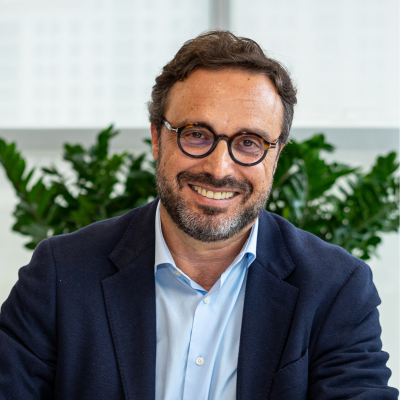
11:30 am - 12:00 pm BEYOND COST CONTROL: ROLES, BOUNDARIES, AND MODERN OPERATING MODEL FOR PROCUREMENT GBS Radu Bailau - Head of Procurement Governance and Digitalization Global Process Owner, AmmegaAlexandre Pinheiro - Vice President - Head of WBS, Webasto Group
Carlos Valeur - Head of S2P M&A and Integrations, Bayer Shared Services Global




PROCUREMENT, CATEGORY MANAGEMENT & SUPPLY CHAIN
12:00 pm - 12:30 pm A JOHNSON & JOHNSON CASE STUDY: DESIGNING AN END-TO-END PROCUREMENT OPERATING MODEL FOR ENTERPRISE AGILITY Bohumil Riha - EMEA Procurement Regional Delivery Lead, J&J Global Services

PROCUREMENT, CATEGORY MANAGEMENT & SUPPLY CHAIN
12:30 pm - 1:00 pm STRATEGIC WORKFORCE PLANNING AND SOURCING IN A DYNAMIC WORLD: A HOLISTIC APPROACH TO NAVIGATE UNCERTAINTY AND ACHIEVE ADAPTABILITY AND SOURCING COMPETITIVENESS Marcel Mertens - Head Strategic Sourcing & Partner Management, ABN Amro Bank

NETWORKING LUNCH
1:00 pm - 2:00 pm NETWORKING LUNCHINVITATION ONLY MASTERCLASS
1:00 pm - 2:50 pm INVITATION ONLY MASTERCLASS: SOLVING THE CENTRALISED STATUTORY REPORTING CHALLENGE Dirk Renders - Global Director, Statutory Accounting, Archer Daniels Midland CompanyEwelina Dominiak - Senior Project Manager, ABB
Mark Boakes - Client Advisory and Strategy Consultant, Thomson Reuters
Many businesses are looking to drive efficiency, reduce cost and improve quality in their statutory reporting process through centralisation and standardisation. However, there are major challenges to overcome including a lack of country specific knowledge and local language requirements. Join us to hear first-hand how these challenges were managed successfully by a large MNC in their global business. In this session, we will also discuss the latest information we are hearing from the market about the drivers for transformation.
Sponsored by: Thomson Reuters





THE BIG IDEAS STAGE
2:30 pm - 3:20 pm
THE G6 DEBATE: IN THE AI AGE, DOES THE BPO MODEL STILL FIT?
Deborah Kops -
Industry Influencer and Shared Services Expert,
Sourcing Change
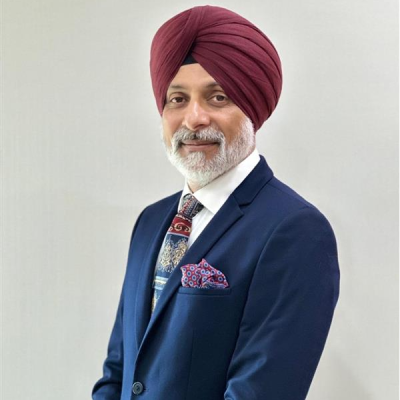
Jasjit Singh Kang - Managing Partner and Global Head of Business Process Services, Wipro
Marina Vernetti - Chief Operating Officer for Europe, the UK and Africa, Genpact
There's no argument that business process outsourcers have been instrumental in creating the global business services industry. Yet is their value proposition fit for purpose in today's rapidly evolving business context? This year we're taking a different spin on the famous G6, pitting some of our leading business services providers against GBS leaders in the effort to gauge how their offerings have evolved, and what value they provide. In rapid-fire fashion, a select group of BPO leaders will pitch their current propositions our feistiest, most opinionated leaders. Can the providers be differentiated? Are their services constructs agile? Is implementation of AI a method to cut their costs, or a game-changer for their clients?




3:20 pm - 3:45 pm
TOP 20 MOST ADMIRED SHARED SERVICES: OPTIMIZING PERFORMANCE WITH TRUSTED INDUSTRY BENCHMARKS
Barbara Hodge -
Global Editor & Principal Analyst,
SSON Research & Analytics
Steve Rudderham - SVP - GBS Leader, Ecolab
SSON Research & Analytics provides the benchmark metrics that guide top-performing SSO/GBS. This session will introduce two of the "Top 20 Most Admired SSO" list and explain how they make decisions based on industry benchmarks. We will also showcase some of the "Top 20" aggregated metrics hosted in SSON's Research & Analytics platform and explain how they are being used day-to-day.
Barbara Hodge, Analyst, SSON Research & Analytics
Steve Rudderham, SVP, GBS, Ecolab – a Top 20 GBS



3:45 pm - 4:30 pm
AFTERNOON NETWORKING BREAK
SPLIT PLENARY
4:00 pm - 4:30 pm
BEYOND AL READINESS: OPERATING MODELS THAT TURN INTELLIGENCE INTO OUTCOMES
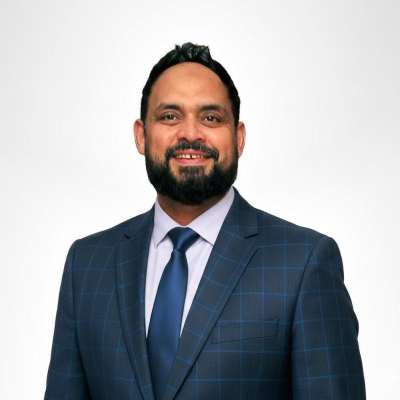
Imran Ahmed -
Vice President & Head of Europe, BPS,
Wipro
This session will explore how enterprises can move beyond AI readiness and pilots to build operating models that embed intelligence into day to day execution. It will focus on connecting boardroom ambition with scaled implementation across core functions, and turning AI investments into measurable, enterprise wide business outcomes.

4:30 pm - 5:00 pm
REWIRING SHARED SERVICES: LESSONS FROM UK GOVERNMENT AND THE MOD
Jennifer Chard -
Chief Executive Officer, Defence Business Services & SRO for Corporate Services,
Ministry of Defence

Jennifer Chard
Chief Executive Officer, Defence Business Services & SRO for Corporate ServicesMinistry of Defence

INTERACTIVE STAGES
CHANGE AND STAKEHOLDER MANAGEMENT CLINICS
4:30 pm - 5:00 pm HOW TO BUILD A CHANGE ENGINE BEYOND COMMUNICATIONS Jan Derek Gill - Head of Change and Communications, Digital Enterprise Solutions (DES), Merck GroupChange adoption and acceleration go far beyond communications. This clinic will focus on the core levers that drive real behaviour change and uncover the key resistance forces that slow Shared Services and GBS transformations.
• Building a structured change communications and adoption engine, starting with readiness assessments
• Building change pathways and change agent networks
• Role-based activation that ensure stakeholders don’t just hear the change - but are part of it
• Identifying and mapping resistance forces and identifying how to diagnose and manage them throughout the process

Jan Derek Gill
Head of Change and Communications, Digital Enterprise Solutions (DES)Merck Group

CHANGE AND STAKEHOLDER MANAGEMENT CLINICS
5:00 pm - 5:30 pm WHY TRANSFORMATIONS FALL APART? Asko Vainio - Project Director, GBS implementation, Fiskars CorporationWojtek Tatys - Senior Director, GBS Transformation Lead, Warner Bros. Discovery
João Pinto - Senior Director of Software Engineering, Adidas
We hear a lot of successful transformation stories at conferences. The reality, though, is that the majority of transformation programmes fail and those are the moments where we learn the biggest lessons. This session is designed for leaders to challenge and interrogate the true reasons behind their failed transformation efforts, providing a rare and unique opportunity to draw the most valuable lessons from an honest, raw and peer-led dialogue format.
• Sharing examples of where transformation efforts fall apart
• Digging deep into the reasons behind these failed efforts
• What could have been done differently?





CHAMPAGNE ROUNDTABLES (LIMITED ATTENDEES)
4:30 pm - 5:30 pm CHAMPAGNE ROUNDTABLE 1: FROM LOCAL E-INVOICING COMPLIANCE TO GLOBAL E-INVOICING TRANSFORMATION Matt Hammond - General Manager, E-Invoicing and Live Reporting, AvalaraWith France and Germany's B2B e-Invoicing mandates upon us, complex, country-level e-invoicing mandates like these continue to reshape O2C and P2P Shared Services and ERP strategy across the globe.
This Champagne Roundtable explores how multi-national organizations are moving from fragmented, country-specific solutions to a unified global approach which streamlines e-Invoicing compliance, minimizes total cost of compliance, and improves back-office efficiency.
Participants will explore how to top companies are future-proofing e-Invoice compliance, reducing IT complexity, improving data quality, and scaling efficiently across all their global jurisdictions.


CHAMPAGNE ROUNDTABLES (LIMITED ATTENDEES)
4:30 pm - 5:30 pm CHAMPAGNE ROUNDTABLE 2: THE NEXT EVOLUTION OF SHARED SERVICES: AGENTIC AI DRIVING REAL-TIME FINANCE OPERATIONS Sema Fongod - Deputy Head of Growth Office, Automated Finance, FISAs Shared Services organisations continue their digital transformation, the next frontier goes beyond automation toward Agentic AI – intelligent systems that can analyse data, make decisions, and trigger actions in real time. In finance operations this shift has potential to transform how teams manage areas such as Order-to-Cash, cash visibility and working capital management. Join this roundtable to hear how leading companies are leveraging Agentic AI to leap into the next stage of shared service maturity
Sponsored by: FIS Global


CHAMPAGNE ROUNDTABLES (LIMITED ATTENDEES)
4:30 pm - 5:30 pm CHAMPAGNE ROUNDTABLE 3: PUTTING AGENTIC AI TO WORK: SCALE YOUR BUSINESS AND SHARED SERVICES VALUE THROUGH PROCESS INTELLIGENCE Eric Roovers - Vice President and Head of Customer Value, ARISJonathan Smith - Head of Group Process Office, Lloyds Banking Group
Agentic AI is moving rapidly from experimentation to enterprise reality – but scaling it successfully is proving far more complex than deployment. Without strong foundations, AI agents risk operating in fragmented environments, amplifying inefficiencies and broken processes. As AI takes on greater autonomy, questions of control, governance, and operational context become critical. Join us to explore how leading organisations are using process intelligence foundations to deploy AI safely, efficiently and at scale, to create measurable new business value.



THE BIG IDEAS STAGE
5:30 pm - 5:35 pm
5 MIN CHANGE OVER (ALL HEADING BACK TO PLENARY ROOM)
5:35 pm - 6:05 pm
SHARED SERVICES, GBS & GCC: A DISCUSSION ON TRUE CAPABILITIES WITH GBS LEGENDS
Tony Saldanha -
President,
Inixia
Sumit Mitra - Chief Executive Officer, TESCO Global Business Services


AWARDS CEREMONY & GALA NIGHT
7:00 pm - 10:00 pm
SSOW EUROPE 2026 IMPACT AWARDS GALA DINNER (By Invitation and Pre-Registration Only)
Joanne Griffin -
Tech leader & Founder,
Humology & Condutto
Lafras Moolman - Director Finance Transformation, CRH – Tarmac
Tony Saldanha - President, Inixia
Fraser Kirk - VP HR Transformation & Systems, GKN Automotive
Kamila Grembowicz - Head of Global Business Solutions, Astellas Pharma
Sarunas Suipis - MD & EVP, Citco Fund Services Lithuania
Tim Palmer - Head Business Transformation and Customer Experience, Insulet Corporation
Maria Salvatore - SVP Finance Operations, Rolls-Royce
Gillian Barton - VP, Global Delivery Operations, Otis Elevator Worldwide
Sameer Jalundhwala - SVP, GBS Operations & Outsourcing, NTT
Phil Priest - SVP, GBS, IFF
Vanessa Rechter - Vice President, Global Business Services, Copeland
Jay Desai - Vice President, IT Infrastructure & Operations, JTI
Dr. Frank Schüler - Managing Director Global Service Center, DHL Global Forwarding and Freight
Salvo Russo - Head of Strategy, GBS, AstraZeneca
Leigh Nicholson - Strategy, Business Partnering & Capabilities Lead, Takeda Pharmaceuticals
Recognising excellent work and celebrating achievements is hugely important for the community, especially at a time like this. SSON’s Shared Services & Outsourcing Impact Awards is a globally recognised, annual industry awards ceremony, which honours and celebrates SSC and service delivery teams who have exceeded industry standards in their SS&O initiatives. Tonight is the night we reveal who the winners are for this year and celebrate with them! This year’s awards will be a night to remember! The Awards Ceremony will be presented at the exuberant off-site Gala Dinner, attended by hundreds of SSOW VIPs and attendees, designed to help us network, unwind and celebrate with the best of the best from the industry. Attendance by invitation or for Awards Pass Holders only.