Global e-invoicing mandates are accelerating, but many multinational organizations are still relying on fragmented, country-by-country compliance models.
As new mandates continue to emerge across jurisdictions, enterprises face mounting integration debt, governance inconsistencies, and unpredictable operational costs. In fact, every new country rollout can trigger additional ERP customization, testing cycles, vendor management, and manual workarounds that strain Tax, Finance, and IT teams.
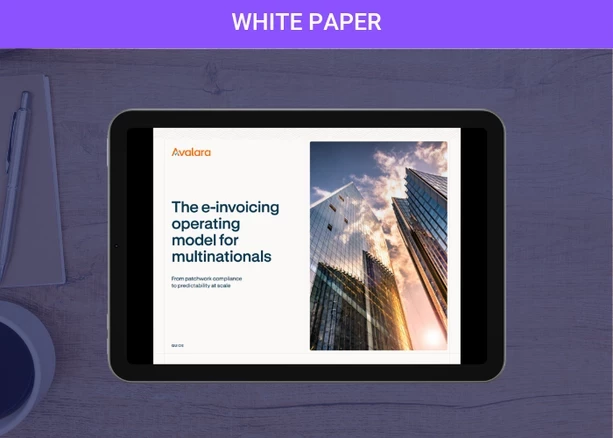
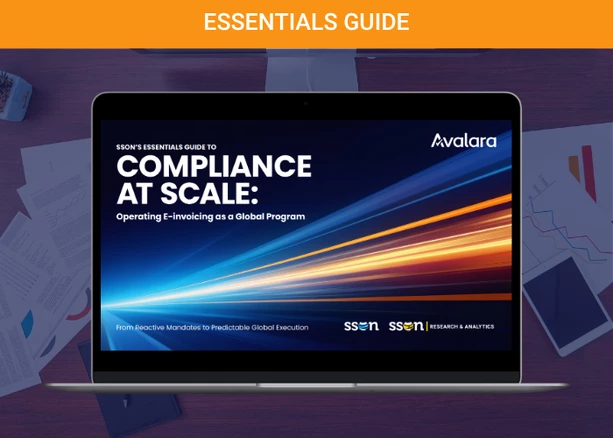
In this whitepaper, Avalara outlines a new operating model for global e-invoicing compliance – one built around unified architecture, centralized governance, and scalable automation.
Key takeaways:
- Why patchwork compliance models become unstable as global mandates expand.
- The hidden operational and financial costs of fragmented integrations.
- How leading multinationals are embedding compliance directly into ERP workflows.
- What a scalable global e-invoicing operating model looks like in practice.
- Critical questions to evaluate before selecting an e-invoicing partner.
- How to reduce ERP rework, integration fatigue, and governance gaps at scale.
As e-invoicing requirements tighten worldwide, compliance can no longer be treated as a series of isolated projects. Download the guide to learn how to build a resilient operating model that turns e-invoicing compliance into a strategic advantage.