Is Your Shared Services Operating Model Ready for Transformation?
Editor’s Reflections from SSOW San Diego
Add bookmark
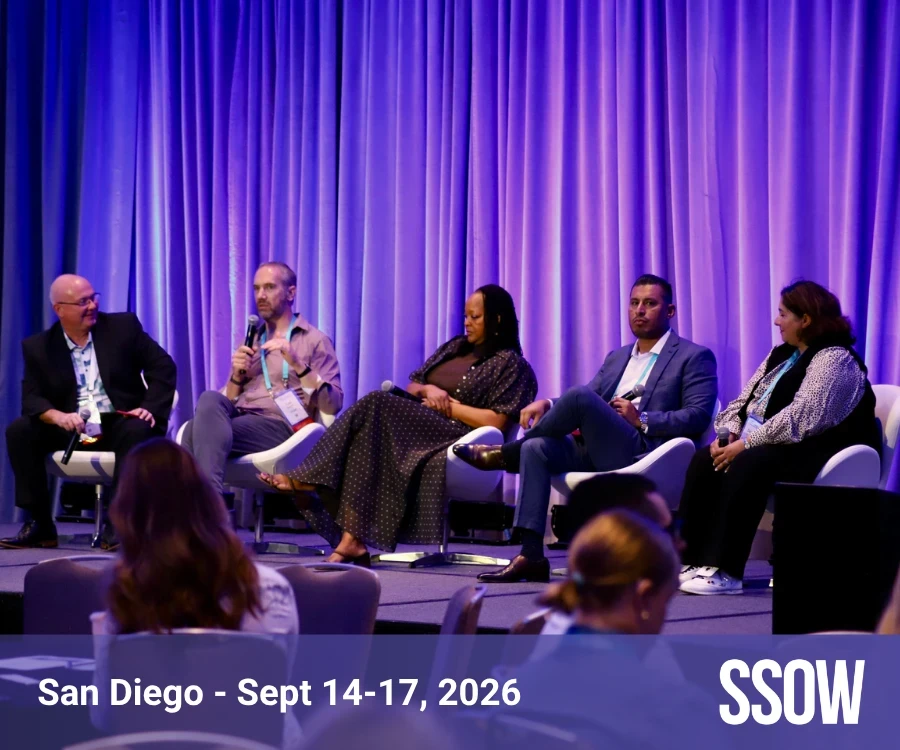
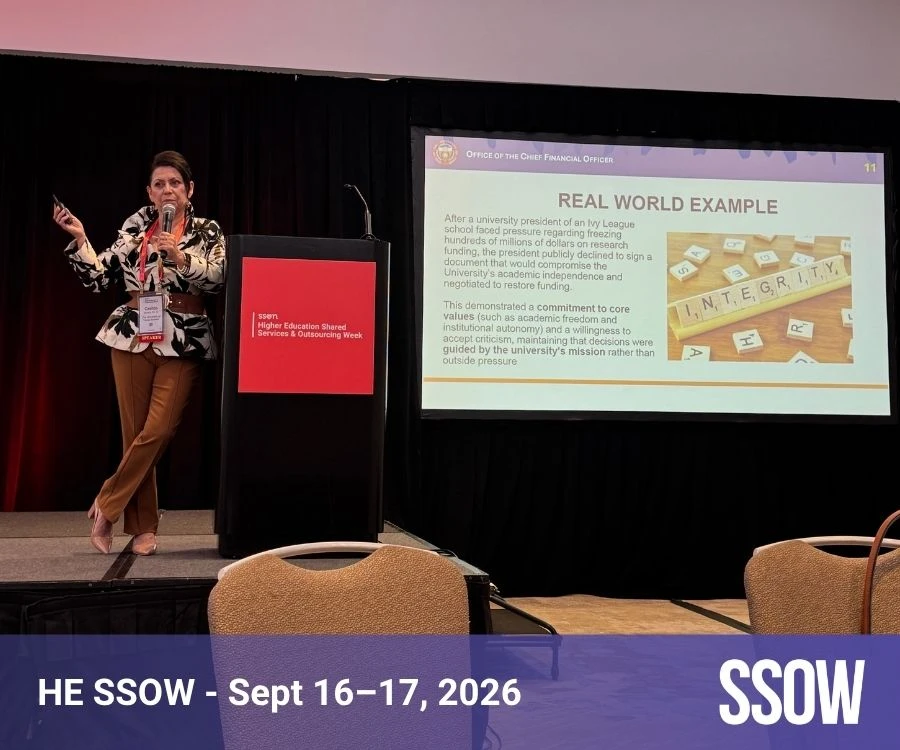
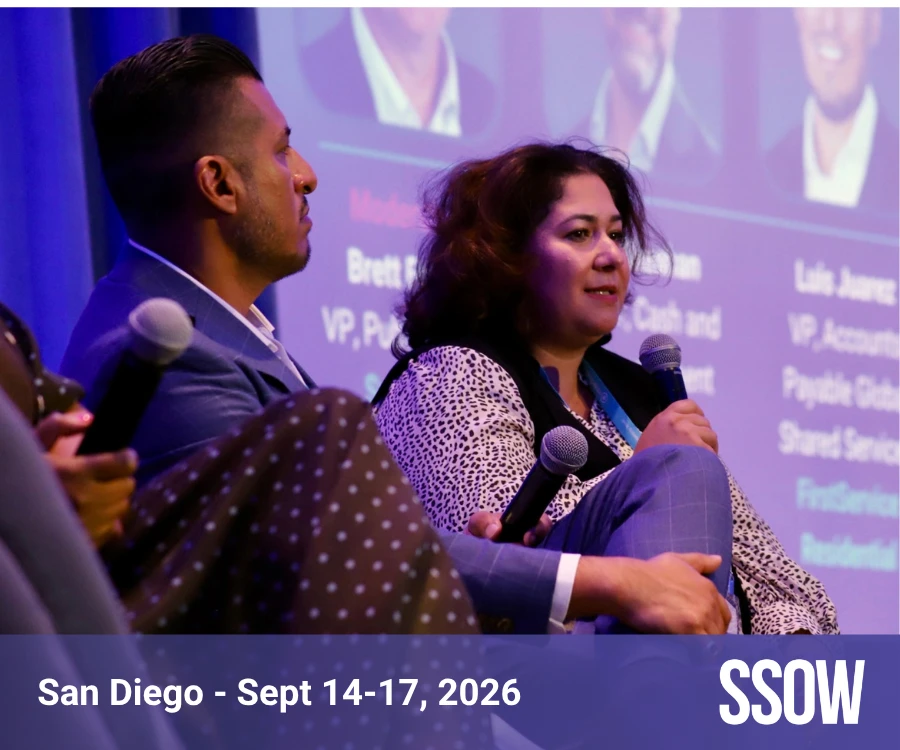
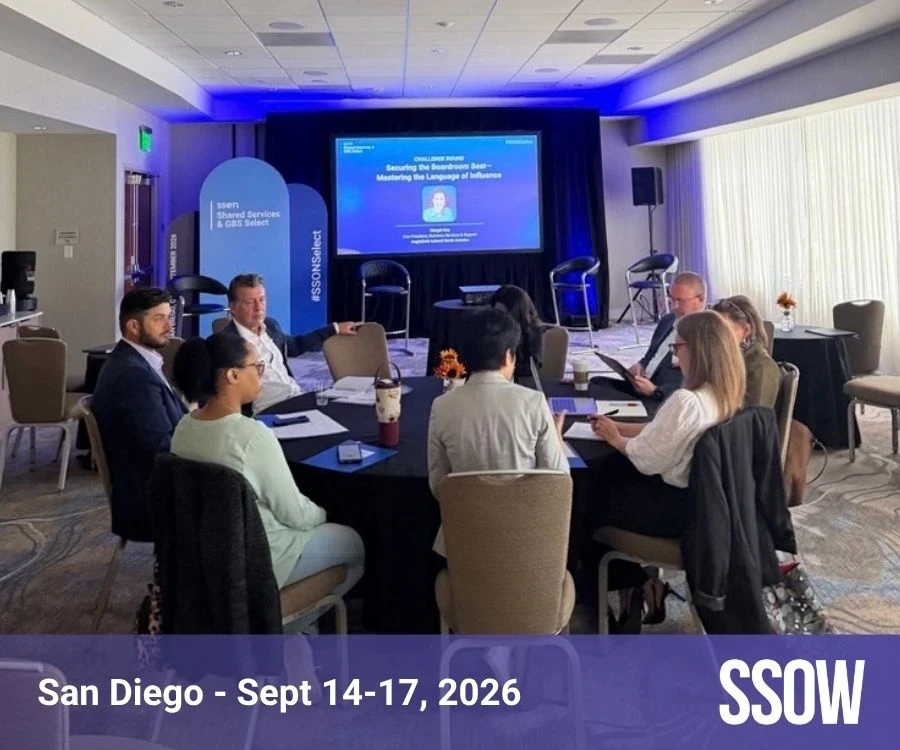
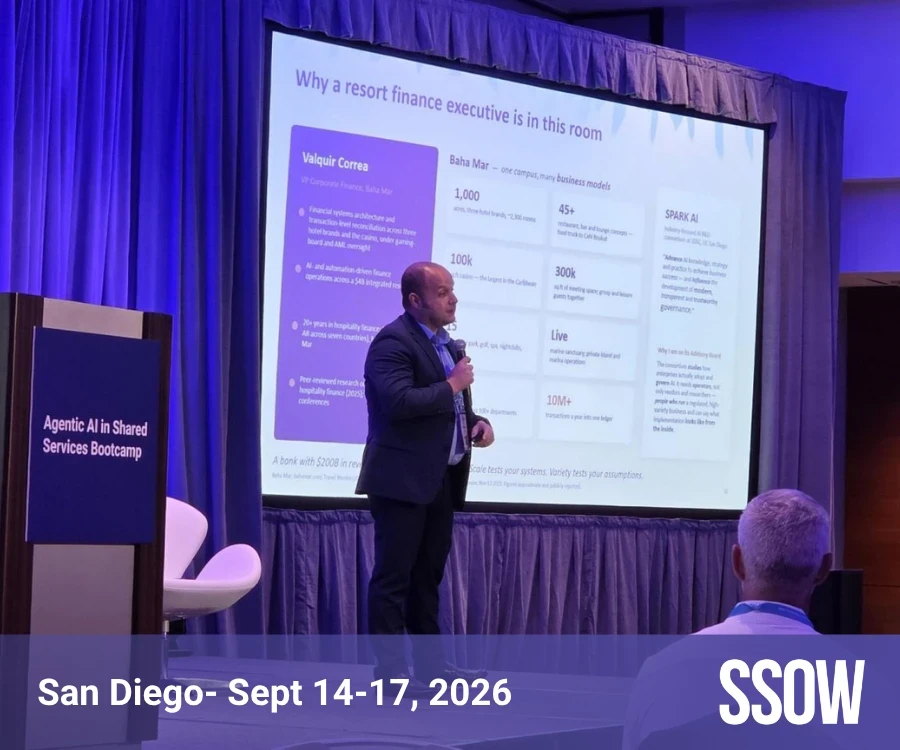
At Shared Services & Outsourcing Week (SSOW) in San Diego, business leaders gathered at the Marriott Marquis San Diego Marina for a packed agenda focused on artificial intelligence (AI), innovation, and the future of enterprise transformation.
Although AI dominated the early conversations at the event, as the week unfolded, a clearer message surfaced:
Organizations are accelerating AI adoption, yet many still lack the fundamentals needed to turn technology into measurable business value.
Across the event, the debate moved beyond tools to the operating-model redesign required for scalable business transformation.
Successful AI Transformation is About Redesigning Work
One of the biggest misconceptions about AI implementation is that it is solely a technology initiative. Yet leaders repeatedly encounter the same problem: organizations are trying to automate workflows they do not fully understand. In many cases, the barriers are not technological but weaknesses in the underlying operating model:
- Fragmented processes
- Functional siloes
- Unclear ownership and governance
- Inconsistent data
- Misalignment on business strategy
As a result, AI is forcing teams to ask questions that go beyond technology. Who owns the end-to-end process? Where are decisions being made? Which activities add value, and which exist because "that's how we've always done it"?
Rather than solving operating model challenges, AI is shining a spotlight on them. Organizations must adapt before scaling AI.
The Human Operating Model Matters as Much as the Technology
However, redesigning work also means redesigning the relationship between people and that work. Employees are being asked to trust new ways of working, new operating models and, in some cases, entirely new roles.
Without people onside, transformation goes nowhere.
This challenge surfaced repeatedly throughout the week. Speakers discussed transformation fatigue, concerns about job displacement, and the difficulty of communicating the benefits of AI augmentation. The consensus was clear: organizations need to explain not only what is changing, but why it is changing.
Providing employees with AI tools is relatively straightforward. But access does not necessarily equal adoption. Questions about accountability, decision-making, skills development, and career progression remained front of mind.
Organizations can't automate their way around change management. The technology may be moving quickly, but bringing people with it remains a much slower process.
There is No Universal Transformation Playbook
In an industry that searches for best practices, multiple sessions challenged the idea that organizations should replicate what has worked elsewhere. What works for a university navigating budget pressures may look very different from what works for a global consumer goods company or a technology giant.
Organizations often jump to solutions before defining the problem. It is important to understand your enterprise context, customer needs, and organizational culture.
The most successful transformation stories in San Diego began with alignment and clarity of the unique problem that needed solving. Teams should be able to answer these fundamental questions before beginning a transformation project:
- What outcome are we trying to achieve?
- What is preventing us from achieving it today
- Which parts of the process genuinely need to change?
- What does success look like for our stakeholders?
As several speakers noted, there is no shortage of case studies, frameworks, or maturity models. The difficult part is determining which elements fit your organization. The first step is creating clarity on the problem and building an approach around it.
What Makes Technology Become Measurable Business Value?
At SSOW, the strongest conversations weren't about technology alone. They focused on the foundations that enable transformation to succeed:
- Redesigning work rather than just implementing tools
- Strengthening process and data foundations before automating
- Bringing employees along on the transformation journey
- Designing operating models around unique business needs