Crafting Teams That Deliver Excellence: Nick Fury’s Framework from Avengers
Add bookmark

Because sometimes, you don’t need perfection — you need the RIGHT people. “There was an idea… to bring together a group of remarkable people…” — Nick Fury.
In the world of corporate teams, high performance is often defined by metrics — velocity, efficiency, output. But if we look beyond the dashboards and KPIs, the real essence of performance lies in people — how they collaborate, challenge, trust, and evolve together.
And who better to teach us about that than Nick Fury, the architect of the Avengers?
He wasn’t the strongest, fastest, or even the most powerful. He didn’t lead from the front lines. But he had vision — and he knew how to bring the right people together.
Lesson #1: Don't Look for the Best, Look for the Right Mix
Fury didn’t assemble a team of similar skills. He brought together a billionaire tech genius, a super-soldier, a spy, a rage-driven scientist, and a god — not because they were alike, but because they weren’t.
High-performance teams thrive on diversity of thought, not uniformity of skill.
A Boston Consulting Group (BCG) study found that diverse teams deliver 19% higher innovation revenue. It’s not just a feel-good principle — it’s a performance lever. Cognitive diversity leads to better problem-solving, creativity, and adaptability.
In the workplace, this means intentionally building teams with complementary capabilities, different perspectives, and even conflicting personalities — because that’s where innovation lives.
Lesson #2: Purpose Over Ego
The Avengers had their share of ego clashes. (Stark vs. Rogers, anyone?) But they found alignment when the mission was clear — and bigger than any one person.
High-performing teams don’t eliminate conflict — they channel it toward a shared goal.
According to McKinsey, organizations that focus on shared purpose and psychological safety see more than a 25% increase in team performance. Purpose acts as the gravitational force — keeping even the strongest egos in orbit around a common goal.
As leaders, our job isn’t to silence conflict, but to shape it — with a purpose so strong it transforms friction into forward motion.
Lesson #3: Trust the Chaos, Not Everything Has to Be in Control
Fury didn’t micromanage. He gave each Avenger space to operate in their own style. He understood the value of controlled chaos — knowing when to step in, and when to let the team figure it out.
Teams aren’t machines to be programmed — they’re ecosystems to be nurtured.
Gartner research highlights that high-performing teams operate best when leaders shift from control to enablement. That means leaders act more like gardeners than architects — creating conditions for growth, not just structure for compliance.
When we allow people to own outcomes instead of just tasks, we unlock accountability, adaptability, and innovation at scale.
Lesson #4: Lead with Belief, Not Perfection
Fury wasn’t perfect — he operated in shades of grey, made tough calls, and kept secrets. But he believed in the team. He saw what they didn’t yet see in themselves.
High-performance leaders spot potential, not just polish.
McKinsey notes that leaders who demonstrate trust and belief in their people increase employee engagement by up to 67%, especially during times of uncertainty or transformation.
That one belief — “I still believe in heroes.” — That’s not strategy. That’s soul.
The best leaders don’t fixate on what’s missing. They focus on what’s possible — and they keep the team steady even when the world’s crumbling around them.
So, What Does This Mean for Us?
We may not be battling alien invasions, but we are building things that matter — systems, cultures, products, and movements. And to do that, we need to:
- Build teams on trust, not just talent
- Lead with a mission, not just management
- Turn conflict into sparks, not silence
- Empower with belief, not command
Final Thought: Don’t Just Hire, Assemble
Filling roles is easy. Assembling a team? That’s an art. It requires intuition, courage, and the willingness to bet on people who might not “fit” on paper — but fit the mission.
Because in the end…
“It’s not about having superpowers. It’s about having people who show up when it matters.”
Continue your HR Transformation journey...
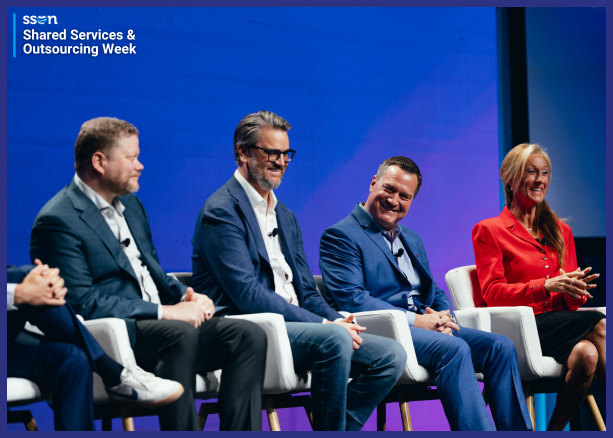
HR is evolving to meet the needs of a changing workforce. Join the HR Shared Services Program at the 30th Annual Shared Services & Outsourcing Week conference (March 16–19, 2026, Orlando, FL) to explore AI-powered service models and skills-first transformation. Learn more.
Learn More