Sustaining Awareness During Growth
Why Organizations and Individuals Risk Blind Spots When Governance Falters During Success
Add bookmark

Exceeding Every Expectation
Governance is usually associated with preventing failure, things like catching errors, enforcing compliance, and avoiding drift. Most of my time was spent supporting strategic operations, working closely with functional leads, business stakeholders, and executive sponsors to drive clarity, accountability, and momentum across a multi-stream initiative.
The awareness of how things should work used to drive most of our conversations, to the extent that after a couple of years, the organization became overconfident. When success happens, that can be equally dangerous, because vigilance goes on holiday. Leaders assume that good results prove that systems are strong, controls are loosened, risks are ignored, and blind spots multiply. That's a huge mistake; after all, sustained growth without oversight can vanish quickly.
During my years at Credit Suisse, I experienced this paradox directly, achieving way more than was expected of our projects, celebrating results, and feeling secure. Beneath the surface, blind spots would appear both on the organizational and personal level, quietly forming and shaping my career for a decade to come.
My mandate was ambitious but clear; I was the new golden boy hired to deliver ten Lean Six Sigma projects. With enthusiasm, I threw myself into the work. Each project followed a methodology where Green Belts were shown how to define, measure, analyze, enhance Processes based on their findings, and ensure sustainable Controls. I coached 36 Green Belts across functions, teaching them to think critically about variation, how to test assumptions with Data, and better ways to design Processes that were stable rather than reactive. That all was deeply satisfying, to watch colleagues gaining confidence about their skills, to see them presenting metrics with clarity, and to propose improvements with evidence.
Projects in turn have generated measurable gains, processes have become faster, and errors have declined. Reporting became reliable and transparent in our department, where we maintained and enriched reference data for financial products used by both Investment Banking and the Private Banking and Wealth Management arm. Leaders from both sides recognized the results and encouraged me to keep pushing forward. In governance terms, we had a success story of disciplined methodology leading to reliable improvements.
The Energy of Transformation
While surpassing all targets, my name was associated with reliability and energy. To my surprise, managers and colleagues in New York and Zurich sought me out for advice. The structure applied gave me a framework to enable order to solve problems, and all thrived in that environment.
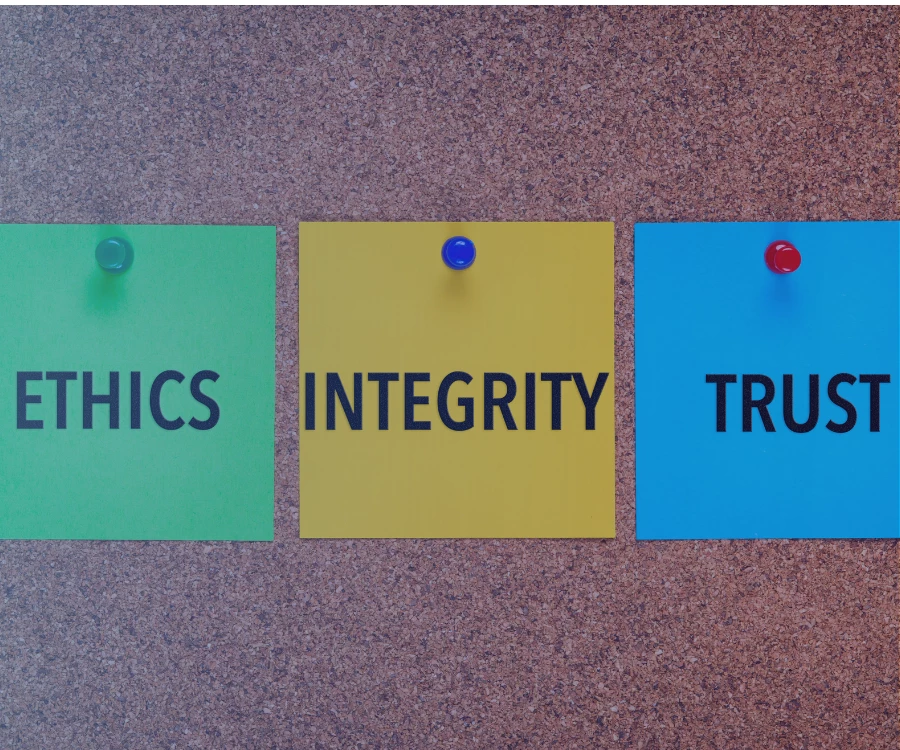
Governance was thriving too; projects were completed, results documented, and controls in place. From the outside, it was textbook success, but not everything was about change management, applied statistics, and impactful projects. Something was looming that should have been extended beyond metrics on a dashboard. My mentor expressed concerns about ethical implications and conflict of interest involving top management with other topics in the Bank, and I decided to ignore it. "What was all that fuss about?"
At home, life was looking great; my wife and I had just bought a house, something that gave us a sense of happiness and safety. Our twins were growing quickly, filling our days with both exhaustion and joy. My wife faced her own professional challenges, just as I did at Hewlett-Packard just a few months ago. Working as an architect, she was working hard, and her entire salary was being drained by childcare costs with a nanny. After taking some time to think, she chose to have a pause and dedicate time to raising our children. We rationalized it as the right choice because my career was advancing, and financial stability would pave our way to an even happier life.
Everything seemed aligned with a growing family, a stable home, and professional momentum. Governance appeared intact but hiding beneath the surface, but I had stopped applying the very principles I enforced in projects.
Organizational Parallels
In Lean Six Sigma, the Control phase is non-negotiable. After improvement, Controls are the very thing that ensures the gains are sustained. Metrics monitor variation, guardrails prevent regression, and without this vigilance, Processes inevitably can drift back to their old ways or break.
The bank used to reward a hustle culture, a mindset glorifying relentless work, equating long hours with success and self-worth, promoting personal life sacrifices for professional achievement, leading to burnout, anxiety, and exhaustion. There was an emphasis on not questioning orders, being always productive, staying connected to work, and taking on side hustles, creating pressure to overwork.
At work, I adopted this hustle culture and did not track the creeping strain of working long hours in the office. I did not account for how quickly financial stability could unravel under stress, and because things looked so great, I assumed they would remain forever like that.
My personal oversight mirrored what happens in organizations when a business line delivers record profits, and risk oversight is relaxed. A Process doesn't stop producing outputs, and at a certain point, the compliance checks are reduced. A leader exceeds targets, and governance scrutiny is softened; success becomes a proof of resilience, when in fact it often conceals fragility.
History is full of examples like that, with companies like Nokia and Kodak thriving until they assumed success was permanent. They failed to apply governance to their own strategies, ignoring signals of change. What felt secure one year collapsed the next. The same pattern plays out in personal lives, and now I can say, success blinds us to risks we no longer measure.
Lessons in Personal Governance
Why does success so often make governance weaker? Part of the answer lies in human psychology; after all, positive results activate optimism. Leaders prefer to believe that good outcomes prove that their systems are robust and healthy, to the point where scrutiny feels unnecessary, and even counterproductive. Vigilance is interpreted as pessimism, an unnecessary distraction from growth.
But governance is not pessimism; it is rather getting a realistic line of sight, just as an aircraft relies on constant instrument feedback even in smooth skies. Organizations require governance most when conditions look calm, and being watchful during success is a sign of true resilience, for the storm that is out of sight.
For me, the lesson was humbling. I had built my professional identity around discipline, data, and control, with insistence that teams monitor every variable. Still in my own life, I failed to apply the same rigor, treating extreme care as situational, a thing necessary in projects but optional.
Professional recognition, a stable home, a supportive family, those were my key process indicators masking the absence of a stricter discipline. Just like organizations that mistake good outcomes for strong systems, I learned in the worst way that unmonitored success is a fragile thing.
Governance Beyond Metrics
Controls are not about metrics only; that's a mindset demanding a constant watch regardless of nice outcomes. That approach treats success as something to be sustained, not taken for granted.
For organizations, this means continuing to test assumptions even when results look good. For individuals, it means applying the same discipline everywhere. For both organizations and people, it perhaps points to always remembering that governance without vigilance is an illusion.
There's the paradox of governance: success can be as risky as an imminent failure. True governance is about awareness and the courage to question even when everything looks perfect. My mentor's warning now echoes as a vital truth. Silence breeds danger, whether after a corporation celebrates profits or in a professional savoring personal milestones. What is not consciously governed will eventually govern you, and sustaining growth demands a few things. First of all, humility, and the discipline to keep measuring what seems like success and remember that resilience is built not in triumph, but in how we safeguard it.