The Autonomous Close: Bridging the Gap Between Fragmented R2R and AI-Enabled Finance
Many SAP-centric enterprises find that Record-to-Report (R2R) automation has evolved organically—a fragmented landscape of local schedulers, legacy tools, spreadsheets, and standalone bots. While the closure eventually completes, this "accidental architecture" lacks the transparency and scalability required to leverage the next generation of Artificial Intelligence.
In this joint session, KPMG and Redwood examine how global organizations are consolidating fragmented automation into a governed, SAP-native orchestration layer—the essential foundation for AI-enabled finance. Drawing on large-scale R2R transformation programs, we discuss how leaders move beyond simple task automation to intelligent orchestration that identifies patterns, predicts delays, and self-corrects.
The session will explore the practical realities of execution:
- The Blueprint: Mapping the existing landscape and identifying where AI can eliminate manual intervention in journals and reconciliations.
- The Migration: Sequencing the move to a central orchestration layer inside SAP without destabilizing the close.
- The Intelligence Layer: Configuring control gates and AI-driven insights to enforce consistency while preserving local accountability.
- The Ownership: Enabling internal teams to manage a model where AI and human expertise work in tandem.
Attendees will gain a grounded view of what accelerates value realization in enterprise R2R consolidation. Learn how to position platform rationalization not just as a technology refresh, but as a mandatory step to becoming an AI-ready finance organization.
Speakers
 Aaron Veach
Executive Director, Finance Transformation
Redwood Software
Aaron Veach is an Executive Director, Finance Transformation with Redwood Software, providing finance transformation and accounting automation to strengthen and transform organizations. With a strong background in finance processes through market-leading automation platforms, his experience spans across many disciplines, giving him a wholistic view of organizations: global pre-sales solutioning, partner alliances, sales operations, customer experience, project management, and sales training and enablement. Aaron's responsibility at Redwood Software is to help clients to identify pain points and evaluate their impact on organizations, and then to build out strategies for their finance transformation journeys. He brings over 25 years of experience as an accomplished professional with global experience as an individual contributor, manager, and strategic leader for leading technology companies.
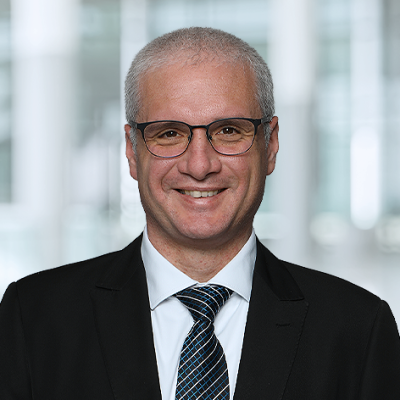 Volker Merkel
Partner, Performance & Strategy | Enterprise Performance
KPMG AG
Volker Merkel is a Partner at KPMG Deutschland, based in Frankfurt am Main, with a focus on Advisory, Performance & Strategy, and Enterprise Performance. He represents the concept of "intelligentFinance" and supports organizations in transforming their accounting and finance functions. His work centers on the digitalization and automation of finance processes, applying modern concepts and leading technologies to improve efficiency and effectiveness. Volker has extensive experience in finance transformation, intelligent finance automation, and the development of digital foundations for finance organizations. At KPMG, he advises clients across accounting, process optimization, and performance management, with a strong emphasis on technology-enabled transformation. Prior to joining KPMG, Volker held senior leadership roles at EY, IBM, Redwood Software, and Fresenius Kabi AG, where he worked on smart closing and reporting, digital finance, robotics solutions, and finance process excellence. He holds a Master's degree in Economics and is fluent in German and English.
Sponsored by