Data Literacy as the First Step in Digital Transformation
Democratizing data skills as the foundation for cultural and organizational change
Add bookmark

Data is everywhere, but meaning is Human
Data literacy is the competence to collect, manage, evaluate, interpret, and apply data in context to obtain meaningful insights, make decisions, and communicate findings. It involves technical skills as well as critical thinking about bias, source, and limitations. That’s not something reserved for financial analysts, black belts, and data scientists, but is a foundational skill for anyone who interacts with Data.
There’s a basic assumption about Data that might be hard to recognize at first glance. Everything around us is producing that; take, for example, our five senses: smell, touch, hearing, sight, and taste. Each is generating data points that the brain is collecting, analyzing, and interpreting. Right now, you’re doing just that while reading this article, with the words on this page.
Pixels on a screen, fluctuations on a balance sheet, the first words of your daughter or son, the smell of your grandma’s kitchen, or that amazing dish you tried on a holiday. All of these experiences are packed with information, ready to be understood.
As a designer, I always saw that kind of information in shape and content. Write a word in bold or italics, and it will evoke different meanings. Change the font, add color, and each version takes you somewhere else in your mind. Swiss linguist Ferdinand de Saussure called this the signifier and signified. In business, our data works the same way with numbers on dashboards as the signifiers or shape, and the signified meaning, or content, will emerge through interpretation.
AI models remind us of this daily with Tokens, or small chunks of information that are processing inputs on a prompt, for example. That’s what Generative Artificial Intelligence is using to process text or numbers; sometimes the interpretation is wrong, and the model “hallucinates.” Organizations can get bad outputs when they misinterpret their inputs, and that’s why there are now so many enterprise-wide programs to cover data literacy. That means training employees across finance, HR, operations, and marketing to use a shared data language, and that is emerging as a strategic priority.
Reading signs earlier is something anyone can learn, regardless of education or background. Interpretation becomes tangled with trained responses, where patterns can appear in the most unexpected way, and gives people little time to answer accordingly. Without shared literacy, two departments may look at the same chart and draw opposite conclusions. Enterprises can’t rely on intuition to get the job done; they need a common framework to ensure data points lead to a shared meaning.
Lessons in Literacy From the Black Belt Journey
Since everything is data, I had to understand that better and decided to become a Lean Six Sigma Black Belt. That was the golden ticket to understanding what was going on in my earlier career, but the cost was more than 300 hours of training, long evenings after work, and endless reviews with Master Black Belts until I finally completed a project at Hewlett Packard that saved over $12 million.
The recognition came from Headquarters with a golden plaque, congratulatory emails, and even pats on the back. That came without any promotion or salary raise, and it didn’t take much analysis to understand that value created does not always equal reward received. At the same time, there was a literacy gap shared by colleagues in the organization, one big problem was sorted, but overall, there was a difficulty in connecting outcomes and recommendations with long-term meaning, tangible things.
At that point, I changed my strategy and discovered mentors, great veterans from Treasury and Sales. One of them even set up a call with Cathie Lesjak, then interim CEO. Back then, I discovered that she was a fantastic person, with a background in biology, not finance. She was self-made, with a sharp grasp of business data that many seasoned analysts didn’t possess. Her advice was simple: to “always jump out of your comfort zone”. My first big lesson in becoming literate was not about mastering Excel formulas, but about connecting data to meaning, and spreading that ability across the line of business we had.
Those hours of training taught me more than formulas or advanced statistics; I could see variation, risk, and the opportunities appearing with that. Becoming inquisitive, asking what the significance behind a chart became a matter of framing what was the best question, and what would be the right way to connect insights to long-term cultural change. That had to move beyond individuals and become embedded in how the enterprise learned.
When Emotion Becomes Data
One thing leads to another, and I got an opportunity to get a dream job in Brazil. Arrangements were made, but I decided to stay in Poland, making a lot of people upset. The same mentor who arranged a call with our CEO told me bluntly, “Your career in this company is over.” There was nothing mean in his voice, just the dry analysis of someone who had worked in risk management for decades.
At that moment, I realized how decisions that appear to be fast are grounded in layers of silent information processing. Malcom Gladwell calls this “thin slicing” in his book “Blink: The Power of Thinking Without Thinking”. That’s just the ability of our unconscious mind to process data at incredible speed, separating the signal from the noise without us even realizing it. My mentor was reading years of patterns in corporate behavior, leadership rotations, and strategic shifts, and expressing his views into a single statement. Myself, all I had were family ties, values, my own interactions, and signals, which were also data-driven. That’s what Gladwell suggests: that individuals rely on their lived experiences and accumulated knowledge to make quick judgments that are surprisingly accurate.
But here’s a main difference: people can thin-slice as much as they want, but organizations can’t. Companies are a collection of individual minds, slowed by silos, politics, and fragmented knowledge. That’s another reason why shared frameworks and a common language become important at scale. Without that, enterprises can easily misinterpret yesterday’s inputs and logic and act out of time. For different functions with diverging views, there’s a risk of missing the patterns and ways to address common problems. That can multiply with organizations in different countries and thousands of employees, of course, there are people with jobs to look at the data which is available, but a data-driven culture depends not only on that small population. There’s data on dashboards, but also on how people talk to each other. The expected outcome should be trust, safety, and shared beliefs in the value of data, but that’s not always what happens.
Courage, Culture, and Enterprise Literacy
Ranjay Gulati calls courage a skill that leaders can cultivate, and that has a lot to do with Data literacy. Not just the statistical training matters, there’s a learnt skill to interpret signals, whether financial or emotional, and take ownership of them.
People entitled to analyze data share recommendations, and with that, they build confidence in the ability to interpret meaning beyond the obvious. That requires a certain trust in fast insights that can appear during a conversation with a C-level executive, and the ability to slow down for validation. Good leaders can recognize whether the speed is fine and if courage is designed into the culture.
For organizations, that means the common language created across functions, so people don’t misread the same numbers. That creates conditions to build cultures of trust so employees feel safe using data to challenge assumptions; without that scaffolding, courage stays personal and never scales. Finally, embedding data literacy in onboarding and leadership development programs and ensuring data literacy becomes not just a skillset but a strength, a competitive edge.
Literacy can show you the way
Data surrounds us, but meaning requires the ability to become literate, and lose the kind of bias where people think Data is complicated, intimidating, and used for evil purposes. Organizations that democratize data literacy have a fantastic way of blending skills, culture, and courage. That’s when the conditions of creating a data-driven organization happen; otherwise, that can point in the wrong direction.
Another situation when Data does not become a compass is when there's a very challenging time, and people keep acting with “yesterday’s logic,” to use another analogy borrowed from Peter Drucker. That’s a comfort zone, and Tomorrow’s leaders can read the signs and teach across functions to read it fluently.
Falling back into past logic is easy, clinging to what worked before instead of reading signals. The comfort zone feels safe, but when the skies are not clear, and there’s a storm is approaching, the instruments we use to navigate need to be checked once again. Charting new directions, both on a personal and professional level, can be challenging, but that’s when things can be reinvented. Data literacy provides the direction, ensuring the whole organization can read it, aligning functions and strategy, and ensuring organizations move in the right direction.
Continue your Process Excellence journey...
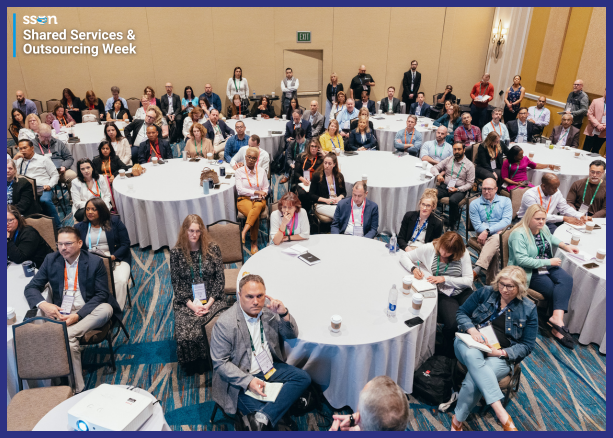
Transformation depends on the strength of your processes. Join the Process Excellence Program at the 30th Annual Shared Services & Outsourcing Week conference (March 16–19, 2026, Orlando, FL) to see how top SSOs are turning standardization and analytics into strategic advantage.
Learn More