
Before we dive in, I need to share something my 12-year-old son told me recently. We were talking about this newsletter, about the frameworks I write about, and he said:
"Dad, there are always dots to connect. It's whether you see them or not that matters."
At twelve. He understood something that took me decades to recognize. The dots are always there. The patterns exist. The connections wait to be discovered. The only variable is our willingness to look.
So thank you for looking with me. To everyone who subscribed in 2025 and stuck with this journey through Intelligence Triads, Data Hedges, and White Canvas Moments – I appreciate you. To those just joining us, welcome. I hope you enjoy the ride.
My 2026 started with an energizing Danone Business Services global meeting in Warsaw. Seeing colleagues from different service lines, exchanging ideas, and appreciating what we've built together over the years. Several phrases from that gathering stuck with me:
- "Sometimes you win, sometimes you lose, but you always learn."
- "Pressure is a privilege."
- "Stay addicted to progress."
- "Focus on what you can control."
- "It's neither about the journey nor the destination, it's about what you transform during the journey and how the journey transforms you and those who journey with you."
So much to connect here. But today, staying true to my previous challenge, to bring real-life experience and case studies to the drawing board, I want to answer a question many of you have asked since I won Asana's 2025 Most Transformational Leader Award:
What's the story behind that award? Why isn't it about GBS or Master Data, your current expertise? And how on earth did you even win it?
Time to tell that story.
The Award That Confused Everyone
When Asana announced the award in October, my LinkedIn lit up with congratulations. But I could sense the confusion underneath:
"Isn't Mauro the GBS Master Data guy?"
"I thought he wrote about AI and GBS transformation?"
"What does Asana have to do with any of that?"
Fair questions. On the surface, winning a productivity platform's leadership award seems disconnected from my frameworks about Intelligence Triads, Data Readiness, and Generative GBS.
But here's what I've learned: The dots were always there. People just weren't looking at the right pattern.
The transformation that earned this recognition wasn't about technology adoption. It wasn't about implementing a tool. It was about something far more fundamental – and far more difficult.
It was about changing how people think about work itself.
The Problem No One Wanted to Admit
Let me take you back to 2018. Danone's procurement operations were executing well operationally. Strong service delivery. Good cost management. Solid performance metrics.
But underneath, there was growing tension. Teams felt overwhelmed with the project management activities we were managing at the time. Priorities shifted constantly. Cross-functional collaboration was breaking down. People worked harder but felt less effective.
Sound familiar?
The standard diagnosis would be: "We need better project management. Let's implement a tool."
But I saw something different. The problem wasn't how we tracked work. The problem was how we thought about work – as disconnected tasks rather than interconnected outcomes.
We had organizational silos. Data Hedges, if you remember, Edition #2. Not just in our systems, but in how teams operated. Finance worked in isolation. Procurement had its own world. HR operated separately.
Each hedge was natural. Necessary, even. But left untrimmed, they had grown into walls.
The real transformation challenge wasn't implementing Asana. It was “making the invisible visible” – helping people see how their work connected to others' work, how their outcomes depended on shared understanding, and how collaboration required “designed connectivity”, not just good intentions.
The Transformation That Wasn't About the Tool
Here's what actually happened, and why it earned recognition:
Phase 1: Trust Before Technology
Remember Edition #5 on Trust? That principle guided everything. Before discussing Asana, before showing features, we focused on a different question:
"What would it mean if everyone could actually see what everyone else was working on?"
Not for surveillance. For context.
Most resistance to collaboration tools comes from fear – fear of exposure, fear of judgment, fear of losing control. We addressed that directly. Transparently. With vulnerability.
I shared my own overwhelm. My own struggle with competing priorities. My own need for help in seeing the bigger picture. Leadership vulnerability built trust. Trust enabled adoption.
Phase 2: Focus on Outcomes, Not Tasks
We didn't implement Asana as a task tracker. We implemented it as an “Intelligence Orchestration platform”.
Remember the Intelligence Triad from Edition #1?
- Human Intelligence (judgment, context, relationships)
- Process Intelligence (understanding how work flows)
- Artificial Intelligence (amplification and automation)
Asana became the connective tissue enabling all three to work together. It made Process Intelligence visible. It freed Human Intelligence from administrative overhead to focus on strategic thinking. And it created the data foundation that AI features could amplify.
We weren't tracking tasks. We were orchestrating intelligence.
Phase 3: Make the Invisible Visible
The breakthrough came when teams could suddenly see what was breaking.
Why did vendor onboarding take 45 days? Because 12 handoffs existed across 4 departments, and no one had visibility into where delays actually occurred.
Why did budget planning feel chaotic? Because Finance, Operations, and Strategy worked on disconnected timelines with different assumptions, and no shared view of dependencies existed.
Why did new hires struggle? Because onboarding involved 23 different people across 8 teams, and no one owned the end-to-end experience.
Asana didn't solve these problems. Visibility solved these problems. Asana made visibility possible.
Phase 4: Scale Through Shared Language
The real transformation happened when teams started speaking a common language about work.
Not "I'm working on stuff." But "Here's my outcome, here are my dependencies, here's where I need help."
Not "That's not my problem." But "I can see how my delay impacts your timeline. Let's solve this together."
Not "Why isn't this done?" But "I can see the bottleneck. What support do you need?"
This wasn't project management. This was collaborative intelligence in action.
Why This Connects to Everything
Now you see the dots:
The Intelligence Triad in Action:
Asana orchestrated human judgment, process understanding, and technological capability. Teams didn't just work faster – they worked smarter, with amplified intelligence.
The Virtuoso Dynamic Model:
We combined high-quality data (clear outcomes, visible dependencies), robust processes (standardized workflows), and technology (Asana's platform) to create sustained value. Just like VDM predicts.
Making the Invisible Visible:
Before teams could optimize, they needed to see what was actually happening. Asana made work visible in the way digital twins make processes visible. Same principle, different application.
Trust as Foundation:
The technology worked because we built trust first. We acknowledged vulnerability. We focused on collective success rather than individual monitoring. Trust enabled adoption. Adoption enabled transformation.
Focus as Discipline:
Remember Edition #6 on FOCUS? Scattered light vs. laser beam? Asana helped teams focus energy on what mattered by making priorities visible, dependencies clear, and progress transparent.
The transformation wasn't about Asana. Asana was the cipher key that made everything else readable.
The Lesson for GBS Leaders
Here's what winning this award taught me about transformation:
1. Technology never solves the real problem.
The real problem is always about how humans work together. Technology can enable new ways of working, but only after you solve for trust, visibility, and shared purpose.
2. Transformation is about making the invisible visible.
People can't fix what they can't see. Whether it's data hedges, process bottlenecks, or collaboration breakdowns – the first step is always diagnosis through visibility.
3. Tools become transformative when they change behavior.
Asana didn't transform our organization because it tracked tasks. It transformed us because it changed how we thought about work – from individual tasks to connected outcomes.
4. Leadership means going first.
I didn't mandate Asana adoption. I “modeled” it and leaped. Publicly. With all my own conflicting priorities, competing demands, and requests for help visible. Vulnerability unlocked adoption.
5. Awards recognize journeys, not destinations.
We're not "done" with transformation. We're continuously evolving. The award recognized my own experience in progress and learning, not perfection.
What This Means for our AI Journey
This story matters now more than ever because organizations are repeating the same mistake with AI that they made with digital transformation:
They're implementing technology before solving for visibility, trust, and connected intelligence.
Your AI will hallucinate (Edition #4) because you haven't made your data hedges visible.
Your teams will resist AI because you haven't built trust in what AI means for their roles.
Your transformation will stall because you're focused on the tool rather than the behavioral change the tool enables.
The pattern is always the same:
- Make the invisible visible (diagnosis)
- Build trust (foundation)
- Create shared language (connectivity)
- Enable tools that orchestrate intelligence (amplification)
- Measure new capabilities, not efficiency (transformation)
Technology is never step one. Understanding what needs to be solved or improved deeply, that’s step one.
Final Reflection
My son is right. There are always dots to connect. The patterns exist. The insights wait.
But connection requires something technology can't provide: the willingness to look beyond the obvious, to question assumptions, to see what others miss.
That's what earned the Asana award. Not technical expertise. Not tool implementation. But the ability to see that a collaboration platform could become an Intelligence Orchestration system – if we approached it with the right mindset.
That's what this newsletter is about. Not giving you answers. But helping you see the patterns differently. Helping you connect dots you didn't know existed.
Because once you see them, you can't unsee them.
And once you can't unsee them, you can't help but act differently.
That's transformation.
Let's keep Connecting. the.Dots
- Mauro
Continue your Process Excellence journey...
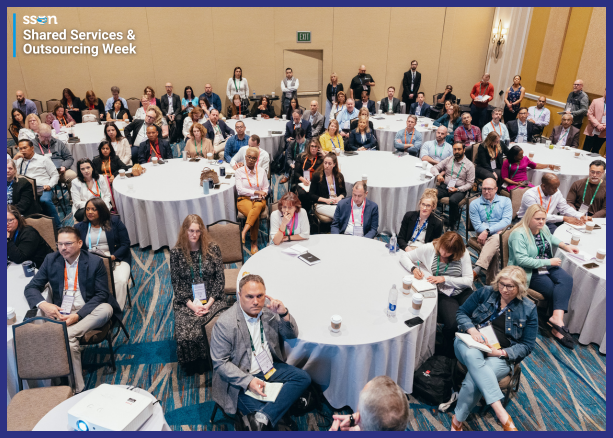
Transformation depends on the strength of your processes. Join the Process Excellence Program at the 30th Annual Shared Services & Outsourcing Week conference (March 16–19, 2026, Orlando, FL) to see how top SSOs are turning standardization and analytics into strategic advantage.
Learn More