Data Infrastructure: Building the Fabric of Transformation
Why invisible foundations define resilience, agility, and long-term advantage
Add bookmark

When Infrastructure Disappears
When infrastructure works for real, it becomes invisible: There’s not a single person marveling at the plumbing in their home until there’s something broken. Nobody applauds the stability of electricity until a blackout plunges entire cities into darkness. Data infrastructure works the same way; in the best of times, it quietly enables flows of information that keep organizations alive. When there’s no infrastructure to support data, that can mess up things and stall entire enterprises.
For decades, infrastructure was treated as a kind of unnecessary pain with servers, networks, and storage buried deep down in cost centers, rarely discussed outside IT departments. Data lived in rusted datacenters falling to pieces, locked in departmental silos, or stranded in legacy ERP instances that never integrated as planned. There were zillions of integration projects that were perpetually almost getting there, because technical headaches were kept under wraps, rather than becoming strategic imperatives.
The digital transformation era upended that mindset. Infrastructure is no longer about wiring
cables and connecting devices; it is like air waves that can either make the foundation of competitive crumble or get steady with an advantage. Without the strength of an intentional, resilient, adaptive, and trustworthy data infrastructure, we are at risk of seeing even the most sophisticated algorithms collapsing.
From Records to Fabrics
The early phases of business services treated data as static records, using loads of paper
stored in boxes. Digitization came to ensure control, while automation brought speed, without any magic wands. Analytics delivered foresight, the ability to see far from here and now, look back, and take important lessons. When the volumes of data being processed started to grow exponentially, these steps proved insufficient, because organizations could now generate petabytes of information each year. Traditional warehouses were too rigid to cope, too centralized to scale, and had to quickly move to Cloud servers. That is, of course, not the story of all enterprises, because today, countries and organizations are still struggling with paper documents, believe it or not.
Anyway, for those running to get ahead, the response has been the rise of unified data fabrics. We can take data centers to explain it, because fabrics weave together structured and unstructured data across geographies and functions into a coherent ecosystem. When that's combined with multi-cloud strategies, these fabrics create resilience and portability, ensuring that insights flow wherever they are needed. The metaphor of a warehouse could also be used, and points to how global supply chains revolutionized the movement of physical goods. Think of data fabrics and cloud architectures as the new revolution in how digital assets flow. Similarly to supply chains, which require standards, monitoring, and getting rid of what’s not useful (redundancy), to get data pipelines being used more effectively.
Supply Chains for Information
One of the most important lessons of recent years is that data must be treated like any other strategic asset, and we have a lot to learn about the supply chain. That means reliable sourcing, consistent quality checks, and delivery that happens smoothly, at the point where DataOps for pipelines and MLOps for machine learning models enter.
These disciplines serve as the quality assurance teams of the data economy, with Data Operations (DataOps) taking care of accuracy for flows, ensuring they are complete and in time. Machine Learning Operations (MLOps) maintains models, monitors drift, and retrains algorithms as new patterns emerge. Together, they provide resilience, preventing the slow erosion of trust that comes when leaders discover their metrics are either outdated or inconsistent.
When executed well, DataOps and MLOps create agility, exactly in the same way just-in-time logistics keeps manufacturers competitive, and real-time pipelines keep enterprises adaptive. Markets shift, customer behavior evolves, and supply disruptions strike without warning, and best of all, Agile data infrastructure creates new ways to work more effectively, enabling organizations to adapt without having to stop on their journey.
Synthetic Data and the Space for Experimentation
Innovation thrives on experimentation, but real-world data is most of the time something that people can’t or shouldn't share. That can be sensitive, regulated, or scarce, and anyone
working in Healthcare, Banking, and government organizations struggles to innovate without
risking confidentiality. That’s when synthetic data becomes important; these are artificially
generated datasets that mimic real-world patterns, without exposing actual records.
Synthetic data has already begun to reshape industries, and Banks use it to push test fraud
detection models to their limits. Retailers simulate customer journeys without relying on invasive surveillance, and manufacturers like 3M explore failure scenarios that would be too costly or dangerous to replicate physically. In Healthcare, researchers use synthetic patient data to accelerate discoveries while preserving the patient’s privacy.
Combined with cloud-based architectures, synthetic data opens the door to experimentation at scale. Startups and incumbents alike can prototype, iterate, and refine new models without waiting for approvals or fearing compliance violations. Far from being a niche technique, synthetic data is becoming a core element of responsible innovation.
Infrastructure and the Demand for Trust
Infrastructure must also support not only the flow of data but also the way in which data is interpreted. Because AGI spreads into decision-making, the demand for things that can be easily explained has grown. Black-box models, things that only experts can decipher, can
generate accurate outputs, but without clear reasoning behind those models, they fail to earn
trust.
Explainable AI tools embedded into infrastructure ensure that employees, regulators, and customers understand why a recommendation was made and comply with regulatory requirements built into the system. There’s a level of trust that must be reinforced in traditional quarterly calls, because once it is lost, it would be nearly impossible to rebuild.
By designing infrastructure around explainability, organizations prevent intelligence from becoming alienating. An HR system that flags a hiring risk must be able to articulate the rationale, and a credit model that denies a loan must make its criteria transparent. A recommendation engine must align with ethical as well as commercial goals, and it all adds up to the point where infrastructure must provide these assurances; otherwise, they undermine the very transformations it is meant to enable.
Industry Lessons: Infrastructure as Destiny
Different industries illustrate the same truth, in the same way infrastructure defines multiple
possibilities. Finance functions with fragmented systems can delay the month-end close by
weeks. Integrated data fabrics reduce the cycle time to fewer days to be spent, freeing analysts to focus on insight rather than reconciliation.
When it comes to Media, there are now Real-time analytics powered by streaming architectures capable of processing millions of interactions per second. That depends, of course, on the kind of company and how big the infrastructure is, but the point is that without personalization, their strategies would collapse. For Manufacturing, predictive maintenance is only as strong as the IoT data feeding it, using internet-connected devices with sensors to collect and exchange data from a shelf in a shop or a big factory warehouse. Without seamless flows into centralized platforms, alerts remain fragmented, and machines fail. Healthcare has now advanced because of Infrastructure, with clinical research relying on trustworthy datasets that can be easily shared. That's the perfect case where Infrastructure balances privacy with access and, in the end, makes breakthroughs scale up even more. Across all cases, the new thing which makes it so much more important is the fact that how much data exists is not the problem, but how reliably it moves and how consistently it is
interpreted.
The Shift Beneath the Surface
For years, conversations about data centered on front-end tools like dashboards, reports,
and AI models, but today there’s leading companies are recognizing that these tools are only as strong as the infrastructure beneath them. Over time, I saw Hewlett-Packard’s Procurement
redesign, IBM’s global delivery centers, and DXC Technology’s human-centered automation,
and all were relying on stable infrastructure. Without that, innovation collapses, and even modest initiatives can get jammed on the enterprise transformation journey.
This shift mirrors other historical moments, when railroads were no longer simply tracks and became national arteries enabling commerce. Power grids started to enable other industrial revolutions, and in the same way, I believe that data infrastructure is not lying underneath; it is reshaping and bringing together people, processes, and technologies.
Takeaway: Infrastructure as Strategic Fabric
Data fabrics, multi-cloud strategies, DataOps, MLOps, synthetic data, and explainable AI are
daunting terms for people who are not familiar with them, and often used as buzzwords.
When used with intent and seamless execution, they have the power to become the building
blocks of resilient enterprises.
Winners of the next decade will not be those with the most sophisticated technology; they
will be those with the most trusted, reliable, and adaptive infrastructure, creating foundations
strong enough to support transformation at scale. For business leaders, three imperatives
stand out:
- Elevate infrastructure to the boardroom. Treat it not as a cost but as a strategy.
- Design for agility and trust. Build pipelines that are as resilient as physical supply
chains. - Embed explainability. Governance is not an afterthought but a design principle.
Only when infrastructure is treated as a strategic fabric can analytics, governance, and literacy
deliver on their promise. Invisible when it works, devastating when it fails, infrastructure is
the silent determinant of transformation.
Continue your Process Excellence journey...
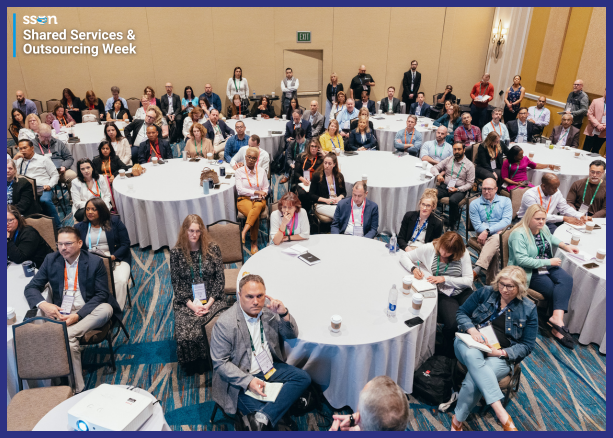
Transformation depends on the strength of your processes. Join the Process Excellence Program at the 30th Annual Shared Services & Outsourcing Week conference (March 16–19, 2026, Orlando, FL) to see how top SSOs are turning standardization and analytics into strategic advantage.
Learn More