The Evolving Role of BPO in the Agentic Era
Key Tensions from SSOW Orlando 2026’s G6 Debate
Add bookmark
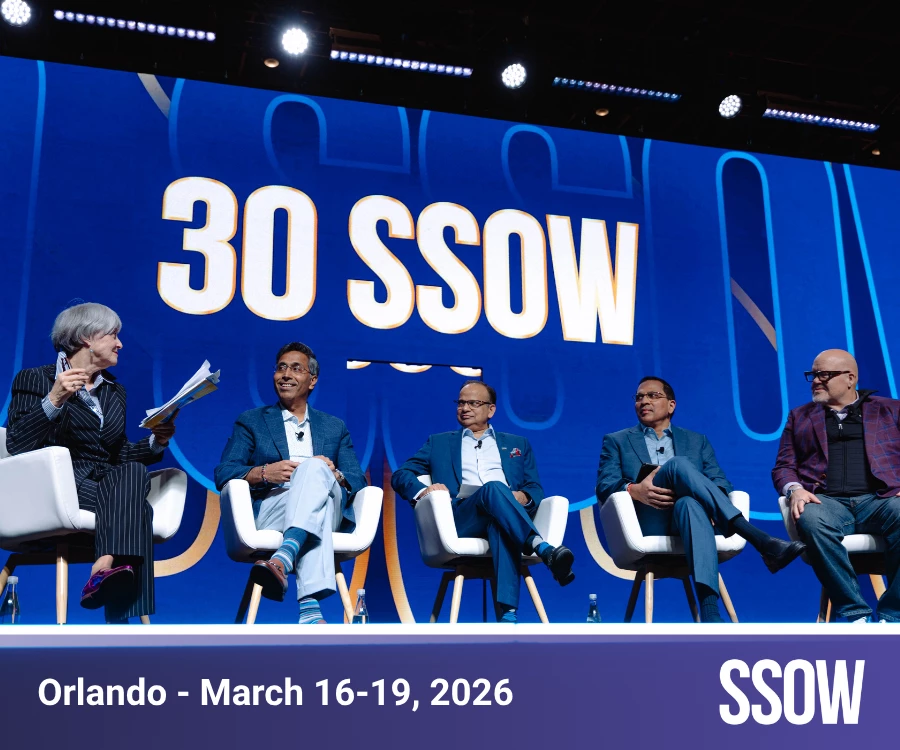
At Shared Services and Outsourcing Week (SSOW), the G6 debate is consistently one of the most anticipated sessions of the conference. The candid panel puts Business Process Outsourcing (BPO) providers in the hot seat, questioning where outsourcing fits into the modern shared services landscape.
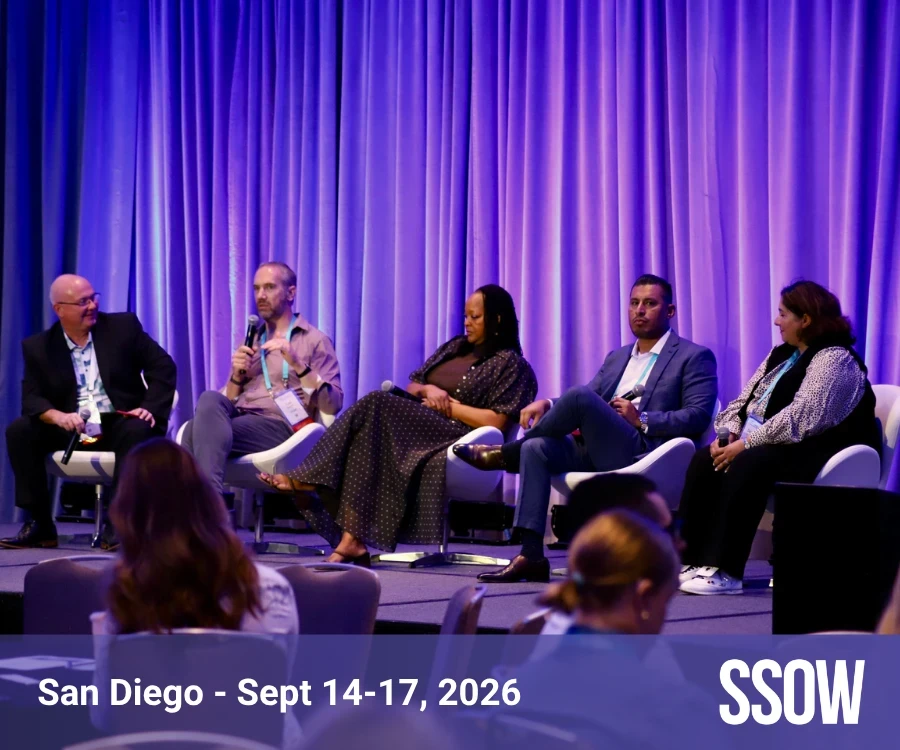
During the 2026 SSOW Orlando event, Deborah Kops, Principal and Co-Founder at Sourcing Change, asked the panelists: Does BPO actually fit in the AI age? The session urged providers to detail how their offerings are changing to meet the new, agentic reality – and where they can continue to add value for organizations.
Alongside Deborah, the moderator, were::
- Ashok Pai, Senior Vice President, Enterprise Cognitive Business Operations, Tata Consultancy Services
- Kevin Campbell, CEO, Capgemini Insights & Data GBL, Capgemini
- Yogendra Goyal, Global Managing Partner-Head, AI-First Business Operations, IBM
- Shiva Jayaraman, SVP & Business Unit Head, Wipro
The discussion focused on how BPO is not necessarily losing relevance, but is being forced to evolve as agentic systems mature and proliferate. For those unable to attend, this article breaks down what these panelists believe is the future of BPO in the AI age.
The Enduring BPO Value: From Execution to Orchestration
AI agents go beyond task assistance to enable end-to-end service delivery. As a result, outsourcing is shifting from doing the work to orchestrating how complex digital systems work together. BPO value is moving from execution to orchestration.
Panelists positioned BPO as the layer that:
- Integrates fragmented data
- Coordinates humans and technology
- Manages exceptions and risk
Can Shared Services Replicate BPO Orchestration?
Reframing BPO as an orchestration layer does not automatically guarantee relevance, the panelists agreed.
Nothing the speakers described is exclusive to BPO providers. With sufficient investment, enterprises can integrate their data, redesign workflows, govern agentic decision making, and run orchestration internally. Over time, as platforms mature and architecture stabilizes, the capability gap between internal teams and external providers will narrow.
The panel pointed out that while insourcing has been debated for more than four decades, organizations do not always make the sustained investment required to build and operate advanced capabilities. This truth reveals a key tension: most organizations can build internally, but few want to absorb the cost, time, or failure risk. This is where orchestration becomes the enduring BPO value.
But, as organizations mature (and as orchestration patterns become more standardized), GBS leaders will ask themselves: Can we build this ourselves? Do we still need someone else to run it?
GBS vs BPO: The Redrawn Fault Line
As well as the question of who builds and runs it, some of the logistics of BPO's evolving role remain unresolved. Where will delivery boundaries sit? Who owns the platform and the control risk? What will clients actually buy once delivery is no longer a reliable metric?
The panel remained adamant that BPO can add value in an agentic model, but also exposed what is still unclear.
What GBS Should Not Own by 2030
The discussion quickly turned to ownership, with providers keen to "fix the mess of the last thirty years." Panelists argued that GBS cannot control the 'messy middle' – stitching together fragmented processes, tools, and exceptions – with BPO teams then being judged on service stability.
The consensus was that after piecemeal transformation, someone must bring the operating model back together again. Providers argued that this belongs not to internal GBS, but to external delivery partners willing to absorb the complexity.
Their proposed boundaries saw GBS "taking care of what comes out of the system", such as:
- Developing strategy and operating model intent
- Exception authority
- Interpreting and acting on outputs
- Organizational culture
Whereas BPO should manage:
- Automation delivery
- Continuous improvement and simplification
- Orchestration across tools, agents, and workflows
- Platform and change risk
- Talent models for hybrid human/AI delivery
When leveraged this way, BPO absorbs volatility from new agentic tooling – keeping controls intact while the target keeps moving.
The Economic Question BPO Cannot Avoid
The panel was adamant that, by 2030, BPO can no longer rely on FTE-based pricing as its role moves away from execution. But outcome-based models can be difficult to audit and compare across providers: definitions vary, baselines shift, attribution can be blurry, and success can change as agents and policies evolve.
In an agentic operating model, even the question of what counts as underperformance becomes fluid. The question is: What replaces FTE pricing at scale – and what becomes the new unit of value?
Without commercial models that are governable and auditable, providers will struggle to keep "orchestration" from becoming a generic claim. Expect future G6 debates to return to this point: what BPO should own, what it should be paid for, and how its value holds up in the digital era.
BPO Remains Relevant (For Now)
The role of BPOs is evolving alongside agentic transformation. Their value no longer lies in execution, but in re-architecting operating models. For now, outsourcing will survive the next era of automation as:
- Enterprises underestimate integration difficulty
- AI change outpaces organizational redesign
- Someone must hold the operational risk
The discussion exposed another growing tension. While BPOs have demonstrated near‑term value as orchestrators in an agentic environment, many of the foundations that would secure that role longer term remain shaky.
Economic models beyond FTE pricing models and ownership boundaries between GBS and providers remain ill defined. Orchestration itself risks commoditization as platforms mature and internal capabilities strengthen.
As such, BPO is not facing immediate irrelevance, but its future is not guaranteed. Long-term survival will depend on providers' ability to answer the uncomfortable question:
What happens when enterprises finally can reproduce this themselves?