GBS Uncovered: What Practitioners are Actually Talking About
Takeaways from the IDGs at SSOW Orlando 2026
Add bookmark
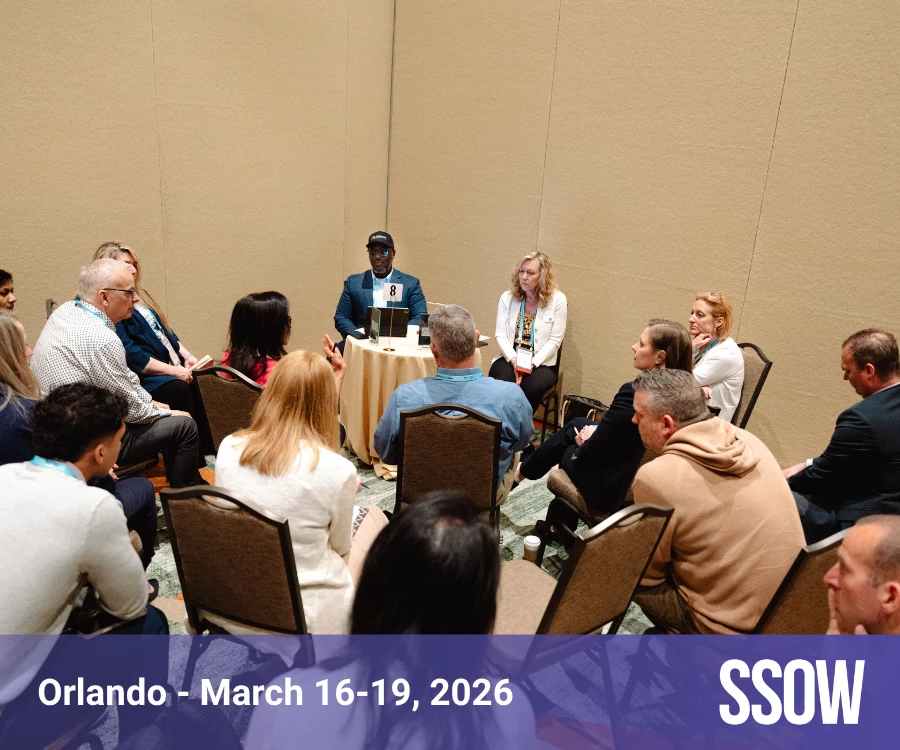
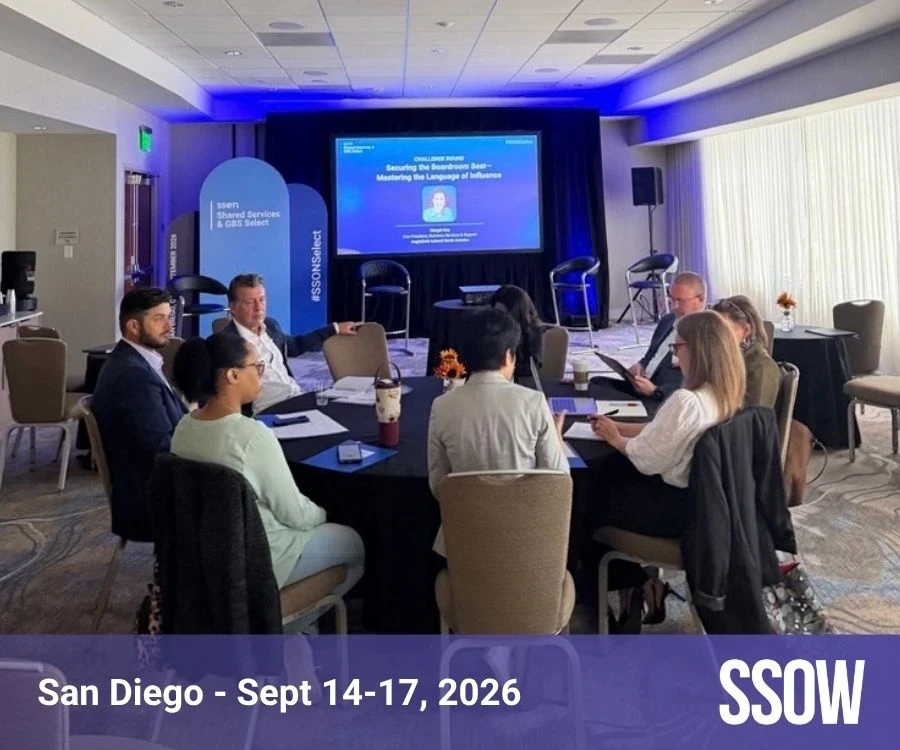
At Shared Services and Outsourcing Week (SSOW), the Big Ideas Stage signals where Global Business Services (GBS) leaders want to take shared services. On the other hand, the Interactive Discussion Groups (IDGs) – peer-led roundtables – show where GBS really is today.
In these candid sessions, GBS practitioners covered it all – from automation maturity gaps to the ongoing war for specialized talent. Together, the conversations revealed the pressures GBS teams are navigating right now.
For those unable to attend, below are the key takeaways from the 2026 IDGs, including quotations from some of the attendees:
1. Most organizations are less automated than they think
Across multiple groups, leaders said automation maturity is often overstated. A large (and widening) gap remains between automation ambitions and the day-to-day reality.
Automation is still a top priority for many GBS teams: tools are invested in, dashboards are built, and AI is deployed. Yet people still step in to fix broken handoffs and exceptions, leaving end-to-end processes largely manual despite pockets of automation.
"It's time to move away from repetitive tasks using the technology that's already there."
In other words, the constraint is not access to technology. Groups pointed to a familiar set of barriers to end-to-end automation:
- Unclear ownership
- Underdeveloped skills
- Change resistance
- Ambiguous roadmaps
The tools may be available, and stakeholder buy-in may be there, but poor operating discipline is limiting automation's impact.
2. GBS leaders struggle to prove meaningful automation ROI
Another key barrier to automation maturity is unclear return on investment (ROI). No matter the IDG topic – AI agents, automation roadmaps, or transformation funding – discussions kept circling back to the same question: what's the tangible ROI?
Teams are still expected to justify investment in financial terms, but the benefits that advanced tools can unlock are not often best demonstrated with monetary metrics. Cost reduction and efficiency are now table stakes.
However, extensive value lies in consistency, risk reduction, improved controls, and freeing people up for higher-value work. Those outcomes are harder to quantify and look different in every organization.
"You need justifiable ROI, not industry best practice. What does best practice mean for me?"
The ROI conversation needs to move beyond cost, just as the shared services model has moved beyond cost arbitrage. Until teams can articulate (and measure) value more broadly, automation will struggle to secure sustained investment.
3. AI Agents should belong to GBS, not IT
As organizations move from isolated task automation to agentic systems, ownership is becoming a live issue. Unlike traditional automation, agents do more than just execute tasks; they collaborate, make decisions, and shape outcomes. In practice, they need to be managed more like coworkers than tools: a digital workforce.
One interesting perspective emerged within the IDGs: when AI agents are embedded in workflows, they should sit within GBS and its Centres of Excellence (CoE), not in IT. The teams accountable for service delivery should also be accountable for agent performance.
"AI agents should be owned by GBS. They are your AI colleagues."
As these systems move beyond running infrastructure and start participating directly in service delivery, they blur the line between technology and operations. This shift changes ownership from managing a platform to owning outcomes.
4. Governance is the next accountability hurdle
Passing an audit does not guarantee strong governance. It only confirms that requirements have been met. AI tools are now exposing this distinction.
As AI automation is embedded into finance and compliance workflows, long-standing weaknesses are surfacing fast: poor data quality, unclear ownership, and inconsistent controls. For example, when an automated output is wrong, accountability can become murky, especially when multiple teams interact with the process end to end.
"If the rules are wrong, is that a governance failure or an execution failure? Either way, it's your problem."
With this in mind, build-versus-buy decisions now carry more governance weight than ever. Building in house can offer more control and transparency, but it demands operational maturity. Buying a solution can embed capabilities quickly, but it does not outsource accountability. Your organization still owns the controls, outcomes, and regulatory exposure.
As the financial and reputational risk tied to AI is no longer theoretical, governance gaps need to be closed quickly.
5. Talent retention is a critical priority for GBS
The IDGs extended beyond discussions of AI into workforce management, which emerged as a persistent pressure for HR shared services and wider GBS teams alike.
Leaders described a familiar pattern: a predictable turnover around the two-to-three-year mark as career progression stalls, alongside invisible burnout in fully remote teams balancing heavy workloads with constant availability. As the rise of flexible working models intensifies, leaders must ensure the modern workforce is still adequately supported and developed.
"A fully remote workforce adds complexity to task management. We need to ensure loads are balanced and avoid burnout."
Meanwhile, generational expectations are shifting, with newer, Gen Z talent questioning why repetitive work has not already been automated. In some ways, automation is becoming a retention strategy.
Organizations that fail to redesign work around meaningful roles will continue to lose the very talent they have already invested in developing.
The Digital GBS Brings New Challenges
Across this year's IDGs, the overall focus was on how digital tools continue to actively reshape the operating model end to end.
The automation conversation has moved on from targeted task efficiency to questions of process ownership and operating discipline. As AI agents act as participants in service delivery, teams are forced to make clearer decisions about control. Governance must be designed into digital workflows from the outset. In the workforce, the presence (or absence) of automation is changing roles, expectations, and retention as much as productivity.
Overall, GBS is entering a more integrated phase of digital maturity, as technology decisions are no longer separable from talent strategy, governance models, or value propositions. For GBS leaders, the challenge is to align automation and workforce design around a coherent operating model.