
Welcome back to Connecting.The.Dots.
If you've been following this series, you know we've explored the Intelligence Triad, the Virtuoso Dynamic Model, and the concept of Data Hedges that invisibly break our AI investments.
This edition connects those dots to something I've been reflecting on deeply: Why are we all suddenly talking about "5.0" everything?
It started with a comment from a network peer who mentioned how remarkably similar GBS 3.0 and Industry 5.0 sounded in their descriptions. Then I saw a recent event called Unleashing GBS 5.0: Human-Centric, AI-Driven, Impact-Focused.
Wait. GBS 5.0?
I thought we were building GBS 3.0. What happened to 4.0? And why does every industry—Healthcare, Education, Procurement, Agriculture—suddenly have a "5.0" vision?
This edition is about trimming a new kind of hedge: the version number labyrinth that's growing fast across industries, obscuring what's really happening beneath.
Spoiler: It's all about Generative AI. And it changes everything.
A New Hedge to Trim: The x.0 Maze
In Edition #2, we explored Data Hedges—those natural boundaries that grow into invisible barriers when left untrimmed, causing our AI to hallucinate and our digital twins to remain incomplete.
This time, we're facing a different kind of hedge: the x.0 classification system spreading across every domain.
Let me show you the pattern I discovered:
Healthcare 5.0, Education 4.0, Procurement 4.0, Agriculture 5.0, Manufacturing 5.0, GBS 5.0—everyone's using different numbers, but describing the same thing.
When you trim the hedges, here's what you see:
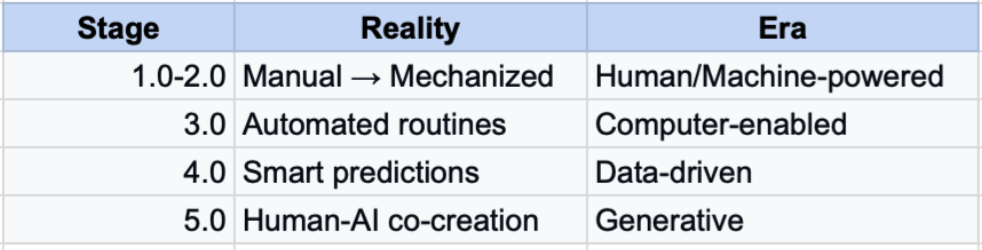
The pattern is identical across all domains.
And here's the insight: The version numbers aren't the story—they're just helping us see the SIZE and SPEED of the shift.
The real story? Generative AI.
The White Canvas Moment
Remember Edition #1's Intelligence Triad?
Human Intelligence + Process Intelligence + Artificial Intelligence = Amplified Intelligence
For years, digital transformation meant reengineering the past: mechanize manual work, computerize mechanical work, make computerized work smarter.
Generative AI changes everything because it doesn't just optimize—it designs what doesn't exist yet.
Think about Edition #2's challenges:
- Data Hedges causing AI hallucinations? GenAI can synthesize across them.
- Incomplete Digital Twins? GenAI can generate missing connections.
- Fragmented Master Data? GenAI can harmonize in ways impossible before.
This is why every industry talks about "5.0"—we've reached a white canvas moment where we can design entirely new operating models.
GenAI Becomes the Orchestration Layer
Here's what changes with Generative AI:
Before (4.0):
- Humans analyzed data
- AI provided patterns
- Integration happened in people's heads
Now (5.0):
- AI synthesizes across all three intelligence types in real-time
- Generates insights connecting Process + Human + Data
- Creates possibilities humans hadn't imagined
- Proposes solutions, not just analysis
And critically—it creates entirely new human roles by freeing us from routine activity drains to focus on what makes us uniquely human—creativity and innovation.
This is the Virtuoso Dynamic Model from Edition #1, amplified at scale.
Any 5.0 automatically integrates all 1.0-4.0 knowledge, then adds the generative layer that can design, simulate, predict, and create new workflows.
And it's happening at unprecedented speed:
- Industry 1.0-2.0: ~100 years each
- Industry 3.0: ~40 years
- Industry 4.0: ~10 years
- Industry 5.0: Right now
You can't wait for perfect 3.0 or 4.0 implementation. By the time you're "ready," the game will have moved on.
Three Mindset Traps to Avoid
Trap #1: "We need to perfect our systems first"
This assumes GenAI is just another layer. Wrong.
GenAI lets you redesign from scratch. Don't reengineer the past—design the future.
Better question: "If we designed our GBS function from scratch today with GenAI, what would it look like?"
Trap #2: "This is about efficiency"
This assumes we're optimizing existing roles. Wrong.
GenAI creates entirely new capabilities by freeing people from routine activity drains, allowing them to focus on creativity and innovation—our unique human value.
Better question: "What strategic value could our teams create when freed from routine drains to focus on creativity and innovation?"
Trap #3: "We'll pilot and scale"
This assumes incremental adoption. Wrong.
GenAI's value compounds across domains. Think ecosystem, not point solution.
Better question: "How could GenAI become the connective tissue making our entire organization intelligent?"
Three Principles for White Canvas Thinking
1. Start with Ambitious Outcomes
Don't ask "Where can AI help current processes?"
Ask: "What outcomes seemed impossible before?"
Example: Not "How can AI automate financial reporting?" but "How can we synthesize real-time strategic insights across the entire enterprise?"
2. Design for Human-AI Collaboration
The Intelligence Triad in action:
- Human: Strategic direction, judgment, creative vision
- AI: Pattern synthesis, possibility generation, real-time adaptation
- Process: Context, relationships, institutional knowledge
Design new workflows, not new tools.
3. Measure New Capabilities, Not Efficiency
Stop measuring cost reduction (that's 3.0-4.0 thinking).
Start measuring:
- Speed of insight generation
- Quality of strategic options created
- Breadth of synthesis across domains
- Human creativity and innovation unleashed (not hours reduced)
What Generative GBS Actually Means
Whether we call it GBS 3.0, GBS 5.0, or Generative GBS—same DNA:
- Integrated Knowledge: Incorporates all 1.0-4.0 capabilities automatically
- Generative Layer: Designs and proposes, not just analyzes
- Human Amplification: Creates new high-value roles
- Ecosystem Thinking: Value from connections, not components
This is why version numbers converge across industries—Generative AI is a general-purpose transformation technology.
CALL TO ACTION
Answer these three questions for your organization:
1. The White Canvas Question: If you could design your function from scratch today, what would it look like?
2. The Human Value Question: What becomes possible when your people are freed from routine activity drains to focus on creativity and innovation?
3. The Integration Question: How could intelligence flow seamlessly across your entire ecosystem?
The Bottom Line
The x.0 version numbers help us see the magnitude and speed of change.
But the real insight?
- Generative AI gives us a white canvas to design the future, not reengineer the past.
- Stop optimizing. Start designing.
- Stop thinking efficiency. Start thinking capability.
- Stop asking "How do we automate?" Start asking "What becomes possible?"
The organizations embracing white canvas thinking now will create advantages nearly impossible to replicate later.
They won't just be more efficient. They'll be operating in a fundamentally different way.
Continue your Agentic AI journey...
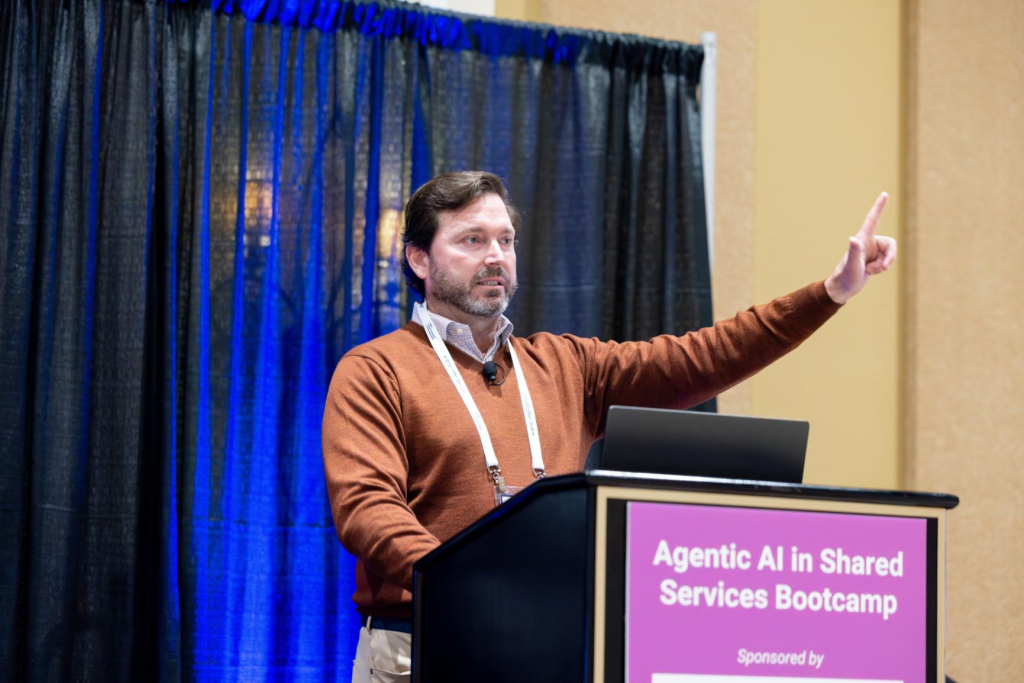
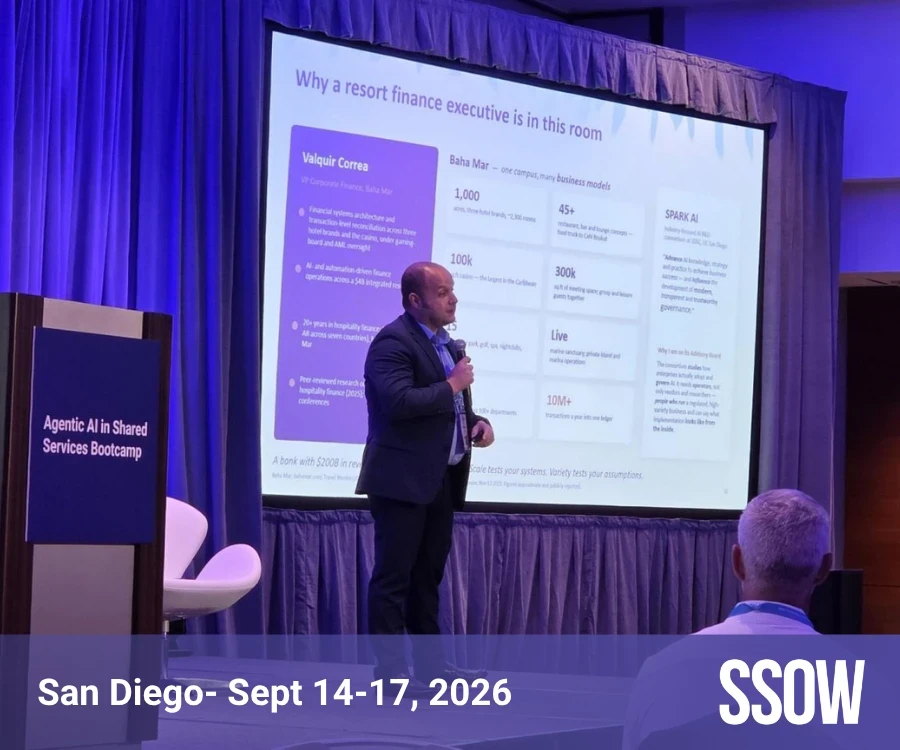
The era of experimenting with AI is over. The Agentic AI in Shared Services Bootcamp (September 14, 2026, San Diego, CA), a one-day add-on to Shared Services & Outsourcing Week, helps GBS and shared services leaders move from exploration to execution. Discover how AI agents are powering autonomous service delivery, redesigning operating models, and scaling across core enterprise systems. The question is no longer if you adopt, but how fast you can scale.
Learn More