Agentic AI: 5 Lessons for Scaling Digital Labor
Agentic & Applied AI for the Enterprise Conference 2026: Editor’s Reflections
Add bookmark
Agentic Conversations Extend Beyond Capabilities to Implementation
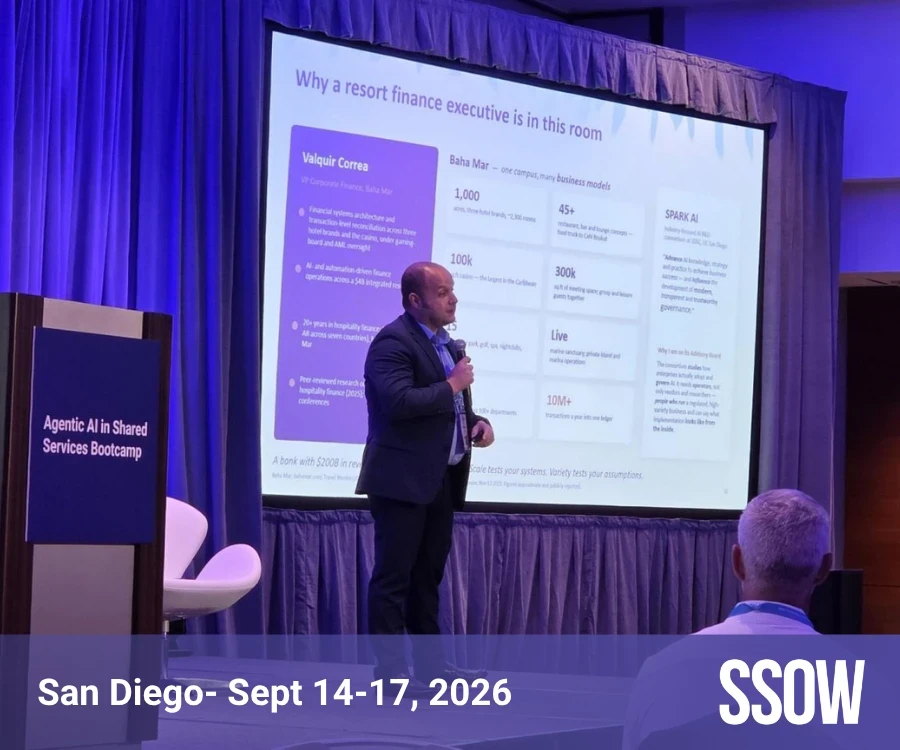
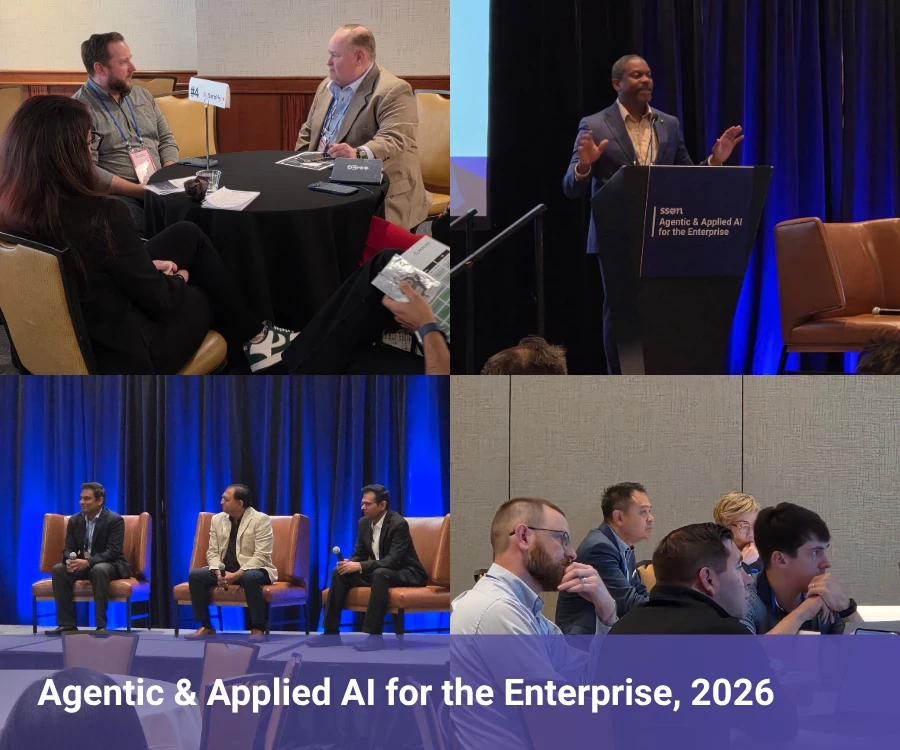
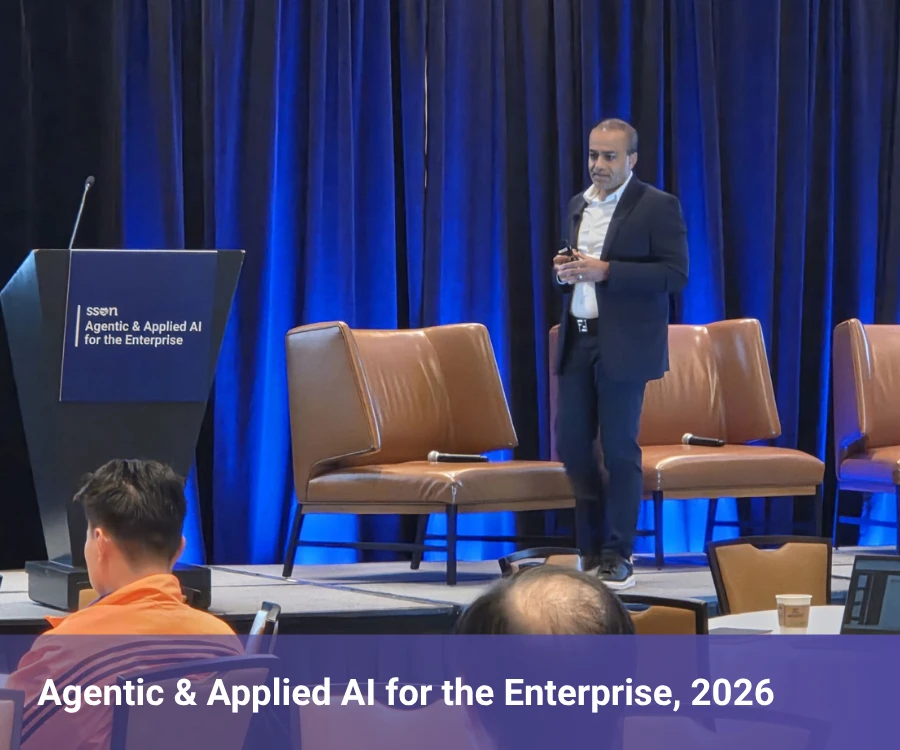
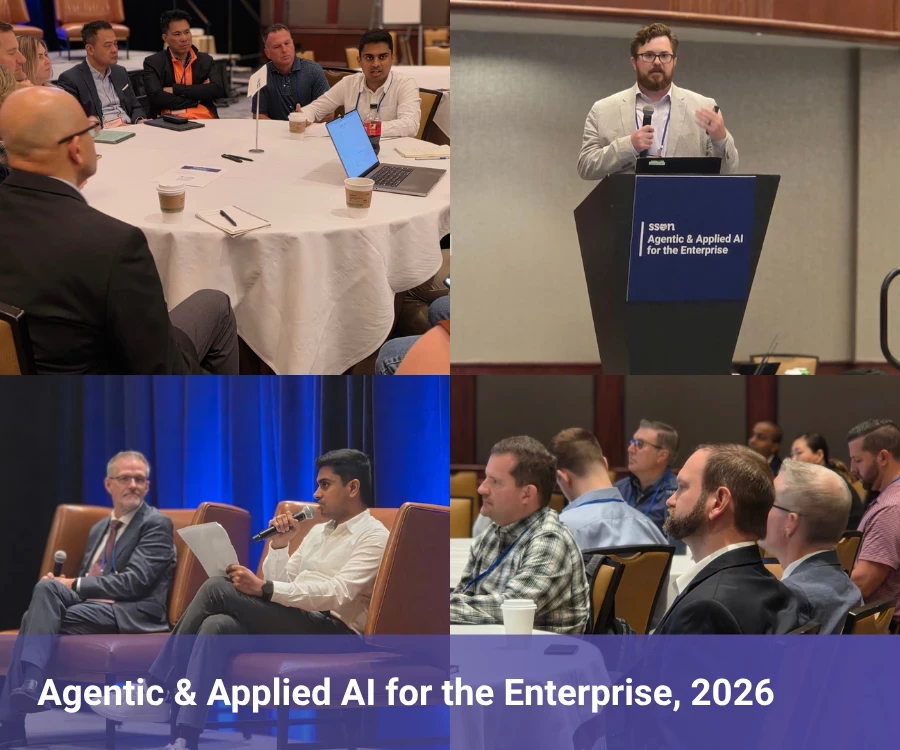
This week, I attended the Agentic & Applied AI for the Enterprise conference in the Southern cosmopolitan of Atlanta, Georgia. The event brought together AI thought leaders, practitioners, and executives to define how to build the autonomous enterprise.
In the dynamic presentations and collaborative workshops, the conversations focused less on technology capabilities and more on the practical implementation of AI agents. Across the event, speakers tackled the fundamental questions of staying competitive in the agentic era:
- What is preventing agentic AI from delivering enterprise-scale value?
- How should organizations prepare for autonomous systems?
- Which agentic use cases are truly worth pursuing?
- How should AI success be measured?
As autonomous technologies continue to reshape the shared services landscape, discussions spanned it all – from governance models to managing digital labor. Summarizing the event is no easy task, but several key themes emerged throughout the conference.
Five Considerations for Successful Agentic Operations
1. AI agents are driving operating model transformation
A future-ready mindset towards agentic operations positions agents as digital employees instead of tools. Deploying these agents effectively requires organizations to reconsider how work is delivered, as AI agents go far beyond simple task automation.
Hybrid operating models must be built around end-to-end outcomes, where digital workers and human workers collaborate seamlessly across workflows. Agents handle execution at scale while humans take ownership of oversight, exception handling, and continuous improvement.
2. Governance is an enabler, not an inhibitor of agentic operations
Governance is often perceived as an unnecessarily bureaucratic layer that reduces speed-to-value in automation projects. However, in the agentic era, effective governance becomes the mechanism that enables scale.
Without clear guardrails, organizations risk duplicating agents, uncontrolled access, and limited visibility into how agentic AI is reshaping workflows.
Teams need safe environments to experiment with agents without exposing the business to costly, time-consuming, or high-risk failures. The overall takeaway was that effective governance enables an enterprise-wide, holistic agentic strategy, rather than a collection of fragmented pilots.
3. Your organization does not need "perfect" data for agents
As is the case for many technologies, data readiness is critical when deploying AI agents – speakers reminded us of the perils of 'trash in, trash out'. Weak data foundations will be amplified by AI, creating risk for organizations as incorrect actions may be autonomously executed at scale.
However, "perfect" data is a myth, and waiting for it will stall value creation. It is not about perfection, but fit-for-purpose data, dependent on the workflow being automated. Where is the data clean, reliable, accessible, and governed enough to begin? Controlled pilots and feedback loops can then drive incremental improvements.
4. Value creation must be clearly defined before deploying agentic AI
As organizations rush to catch the agentic AI wave, many pilots fail to scale beyond initial experimentation. Too often, teams try to find a problem to fit the solution, rather than identifying where AI can support an existing business objective. Organizations need a clear path to enterprise value from the outset.
AI initiatives should begin with real business problems, AI-ready workflows, and success metrics defined before deployment. Without a clear value proposition, executives will just see unnecessary risk and cost.
ROI frameworks must also evolve beyond headcount reduction and speed. Value should be measured through workflow outcomes, adoption, risk reduction, scalability, and business impact.
5. The human factor determines the success of agentic AI adoption
Even strong tools can fail if employees do not trust them or feel confident to challenge their outputs. Organizations must create the right environment for adoption through role clarity, training, and psychological safety. This should be underpinned by a key message: AI is there to support human capability, not replace it.
Human oversight must also be deliberately designed into agentic workflows. Organizations should define where human judgment is required throughout the workflow instead of being a final checkpoint for AI outputs. Human overrides should then be used to continuously improve the agent.
Final Thoughts: The Real Challenge of the Agentic Enterprise
Overall, the conference's defining narrative was not about agentic AI capabilities alone. Instead, the focus was on the strategic and operational challenges preventing agents from delivering enterprise-scale value.
As organizations move beyond experimentation, the next phase of agentic AI will depend on operating model redesign, effective governance, modern ROI frameworks, data readiness, and human adoption. The organizations that succeed will not simply be those that deploy the most advanced agents, but those that build the structures, safeguards, and cultural conditions required for digital labor to scale.
Continue your Agentic AI journey...
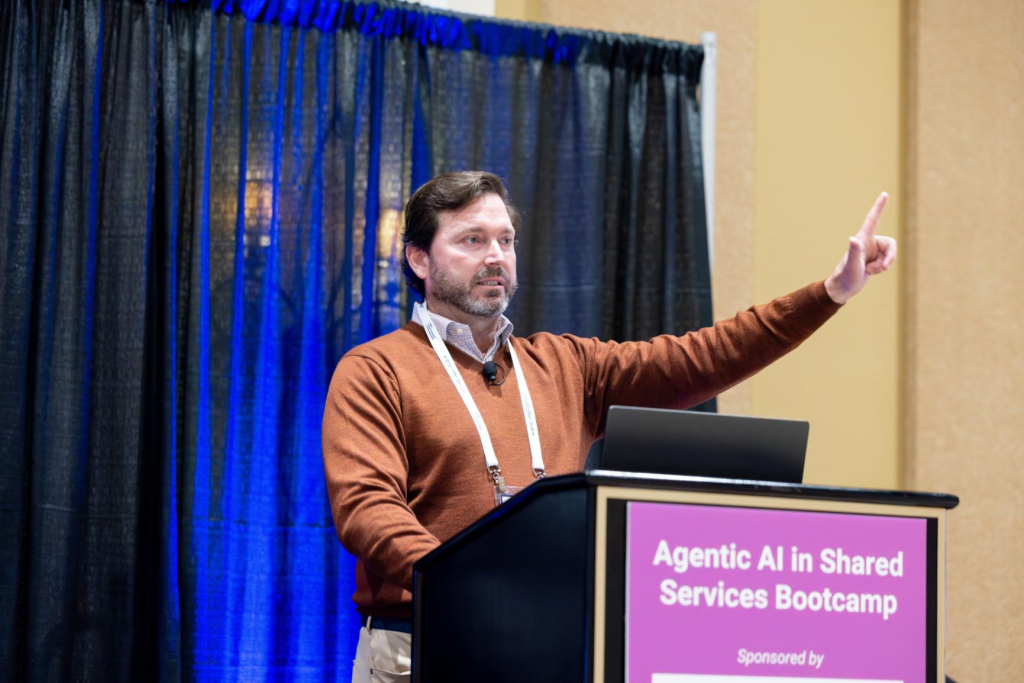
The era of experimenting with AI is over. The Agentic AI in Shared Services Bootcamp (September 14, 2026, San Diego, CA), a one-day add-on to Shared Services & Outsourcing Week, helps GBS and shared services leaders move from exploration to execution. Discover how AI agents are powering autonomous service delivery, redesigning operating models, and scaling across core enterprise systems. The question is no longer if you adopt, but how fast you can scale.
Learn More