Governing AI That No Longer Just Advises
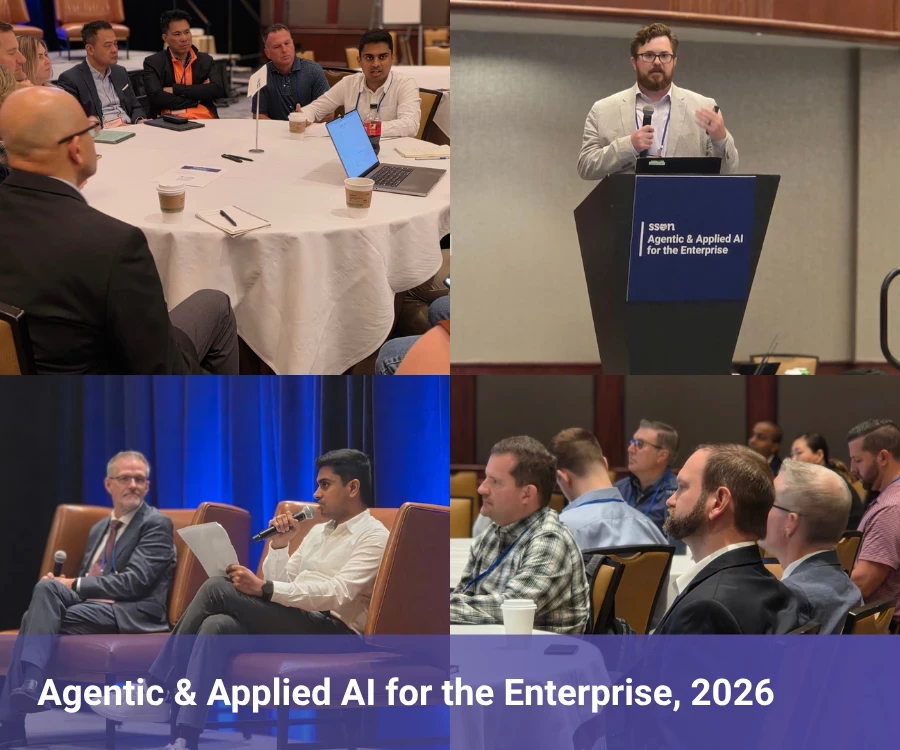
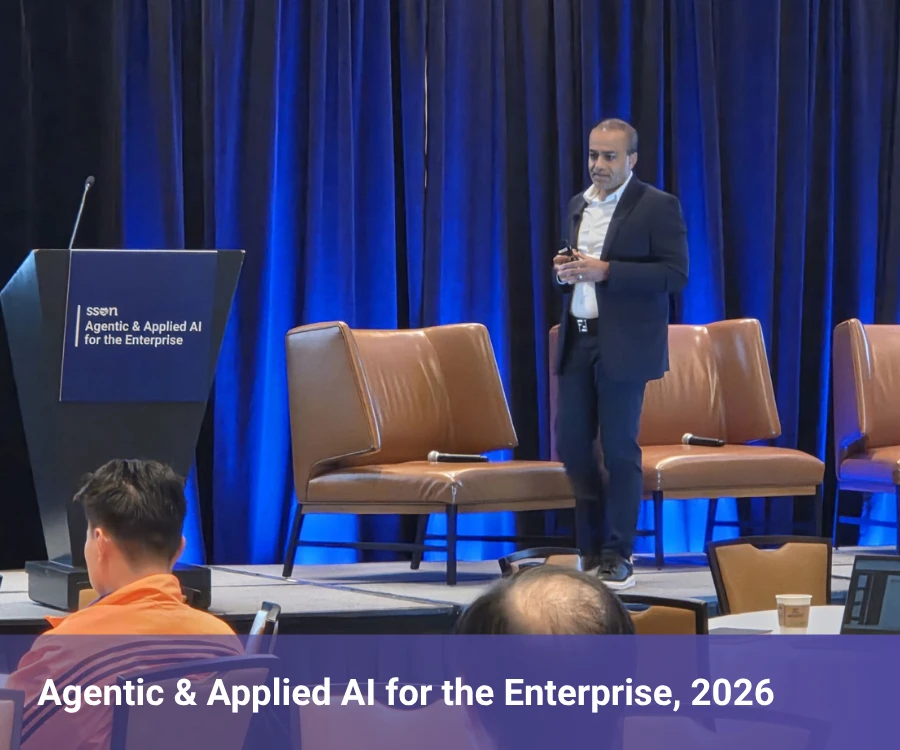
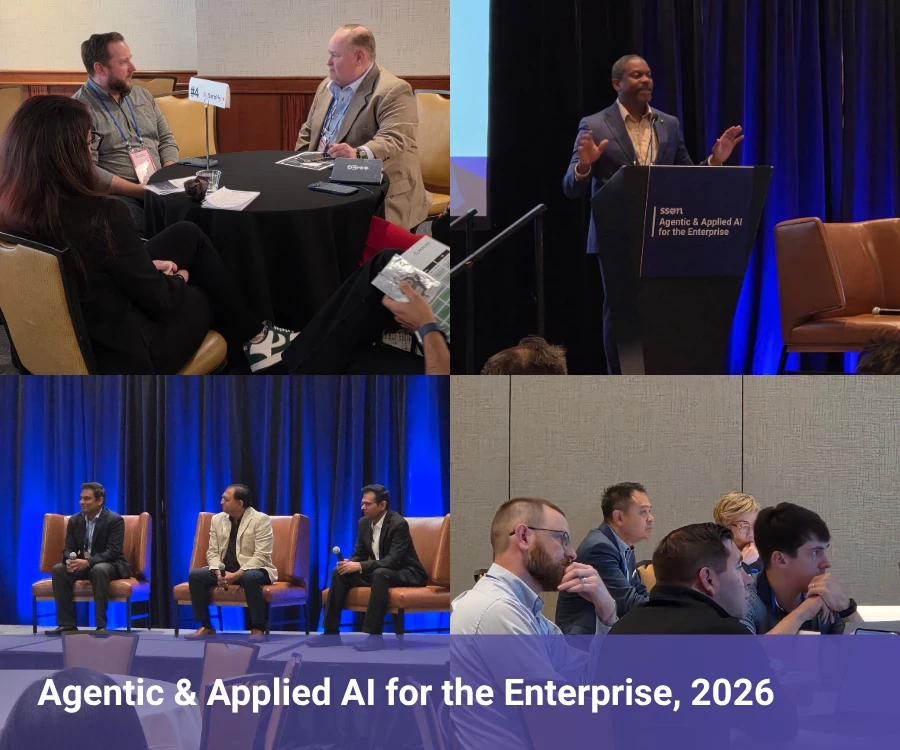
At SSON's Agentic & Applied AI for the Enterprise conference, speakers focused on how autonomous agents are beginning to reshape operating models – and instate a new digital workforce. However, as shared services examine how to progress towards enterprise-wide deployment, one area is emerging as the defining test of success: governance.
Across the event, a central question emerged: how do we govern technology that is not just advising humans, but executing tasks autonomously? Throughout the conference, one deceptively simple question continued to resurface: Who owns the agent?
The conversations pointed to a clear set of priorities:
1. Governance needs to move upstream
Historically, transformation often follows a linear path, which sees governance as the final hurdle to clear:
- Identify a transformation opportunity
- Build the solution
- Test and refine
- Submit for governance approval
- Go-live
In this model, governance became a tick-box exercise: confirm the risks are assessed, ensure policies are met, and sign off for deployment. While this approach worked for more predictable, rules-based systems, it positioned governance as something reactive and procedural.
Agentic AI makes that view too narrow. When systems can act autonomously, risk is continuous – it's embedded into every decision an agent makes. A one-time governance checkpoint before go-live cannot account for how these systems behave in real-world environments.
Instead, as LinkedIn's Bhupinder Singh Narang emphasized, "Governance is not a policy on paper anymore – it is an engineering problem." Modern governance must be designed into the architecture of every workflow and every agent from the outset. It must be continuously enforced through measures such as audit logs, scoped permissions, robust approval thresholds, rollback mechanisms, and continuous monitoring.
This shift towards governance by design was one of the strongest messages from the event.
2. Governance is an enabler of innovation
A common misconception speakers debunked was that governance is an overly bureaucratic layer that limits change. With agentic AI, robust governance defines how successfully organizations can deploy and scale. As Matt Shait, Partner at ScottMadden, explained, "Governance is an enabling function, not a controlling function."
However, speakers emphasized the need to strike a careful balance between too much governance and too little. As Brinks Global Business Services' Satya Angara noted, "Too much governance kills innovation velocity, too little creates existential risk."
But how do you achieve this balance? Ash Kaduskar from First Citizens Bank offers a strong solution: "from saying no, to saying yes with guardrails." By adopting risk-based approaches, enterprises can enable low-risk experimentation to move quickly within predefined boundaries, while applying deeper oversight to higher-risk use cases. The result is more controlled (and faster) progress.
Perhaps the best analogy came from Narang, who compared governance to the brakes on a car – not designed to slow a vehicle down, but to give the driver the confidence to travel safely.
3. Every AI agent needs an owner
Ownership was one of the strongest recurring themes at the event. With technology acting independently, accountability becomes harder to trace. That uncertainty surfaced in a set of recurring questions:
- Who approves an agent before it goes live?
- Who monitors its behavior in production?
- Who controls and updates its permissions?
- Who steps in when it behaves in unexpected or unintended ways?
Scaling agentic AI requires clear accountability structures. Every agent must have defined ownership across three dimensions: a business owner responsible for outcomes, a technical steward responsible for performance and reliability, and a risk sponsor responsible for oversight.
Without this clarity, governance quickly breaks down. Responsibility becomes diffused across teams, decisions are delayed, and risks go unmanaged. In practice, what looks like shared ownership becomes a lack of ownership altogether.
4. Data governance becomes operational governance
Although strong data is crucial for any automation initiative, deploying AI agents takes the operational risk to a new level. Weaknesses that once resulted in flawed insights are now translated directly into flawed actions. As one speaker warned, "Agents don't create weak data foundations, they amplify them at production speed."
As a result, foundations such as reliable metadata, clear data lineage, defined ownership, and permission-aware access become mission-critical controls. They determine whether autonomous actions are safe and aligned with business intent. If an organization does not trust its data to support a human decision, it cannot trust that same data to drive autonomous execution.
Modern governance then extends beyond policies and compliance. It becomes an operational capability, ensuring that data quality and business context remain trustworthy throughout the entire lifecycle of an AI agent.
Governance: The Real Scaling Challenge
The organizations that succeed with agentic AI will build the right foundations:
- Clear ownership
- Trusted data
- Engineered controls
- Governance by design
As Angara concluded, "The enterprises that win are not the ones that are moving fast; they are moving responsibly."
Continue your Agentic AI journey...
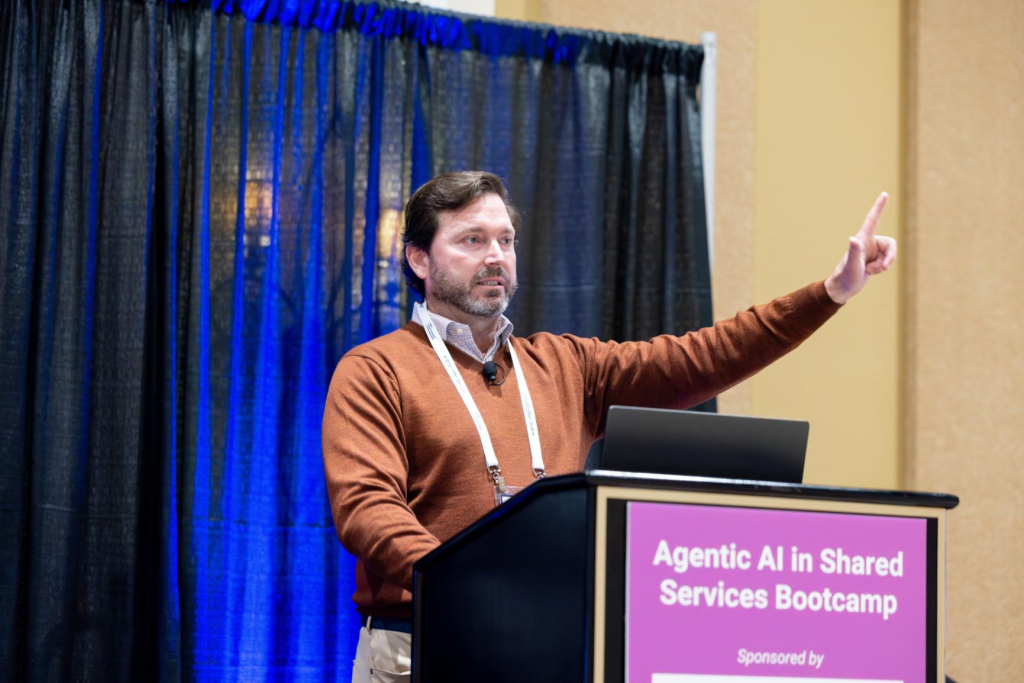
The era of experimenting with AI is over. The Agentic AI in Shared Services Bootcamp (September 14, 2026, San Diego, CA), a one-day add-on to Shared Services & Outsourcing Week, helps GBS and shared services leaders move from exploration to execution. Discover how AI agents are powering autonomous service delivery, redesigning operating models, and scaling across core enterprise systems. The question is no longer if you adopt, but how fast you can scale.
Learn More