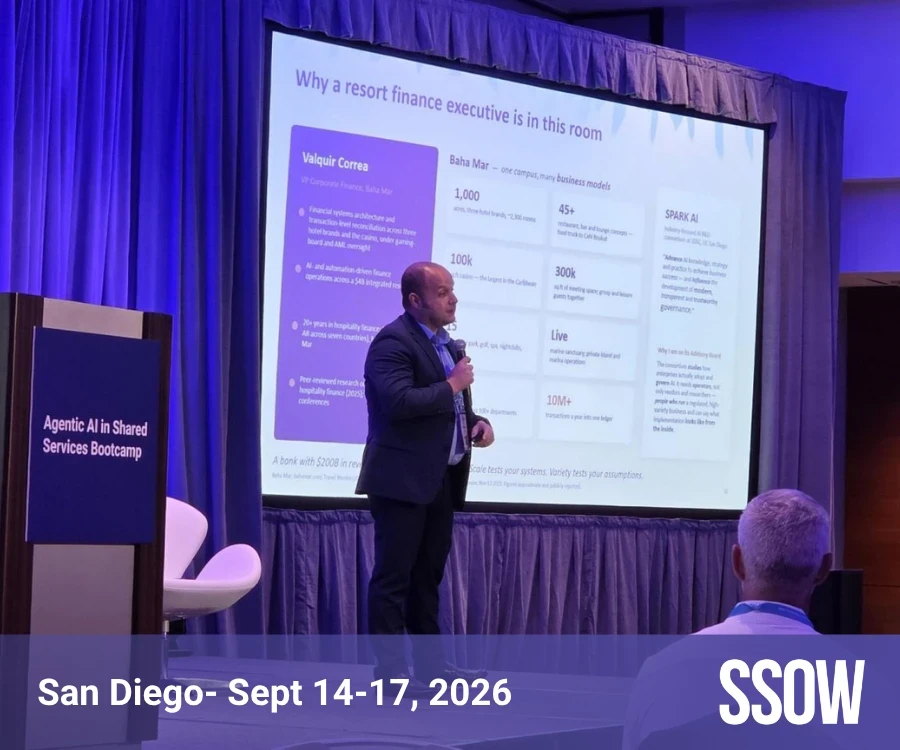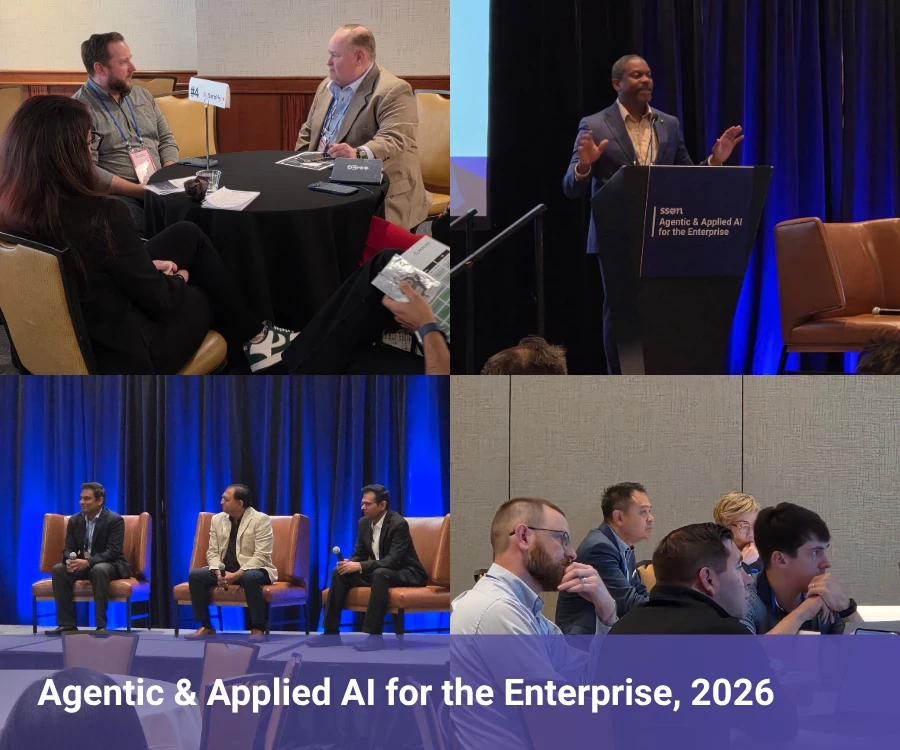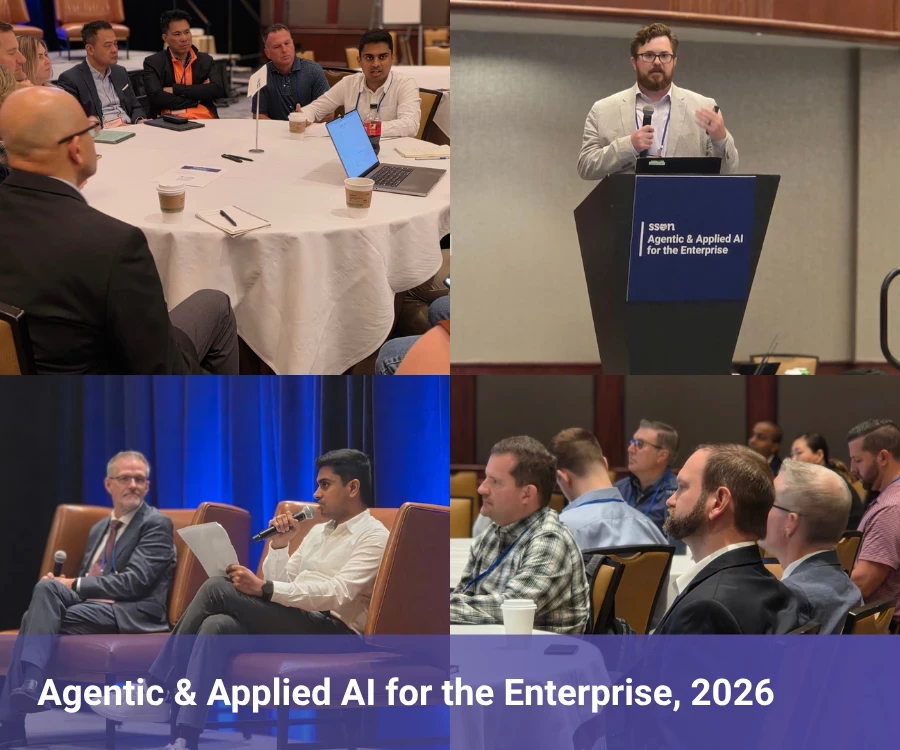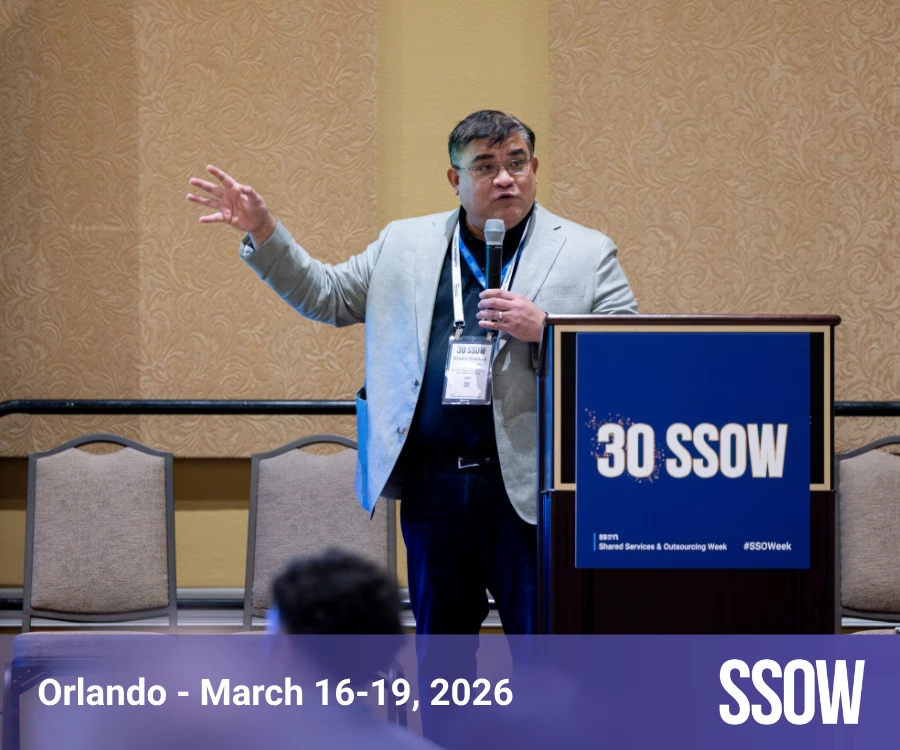
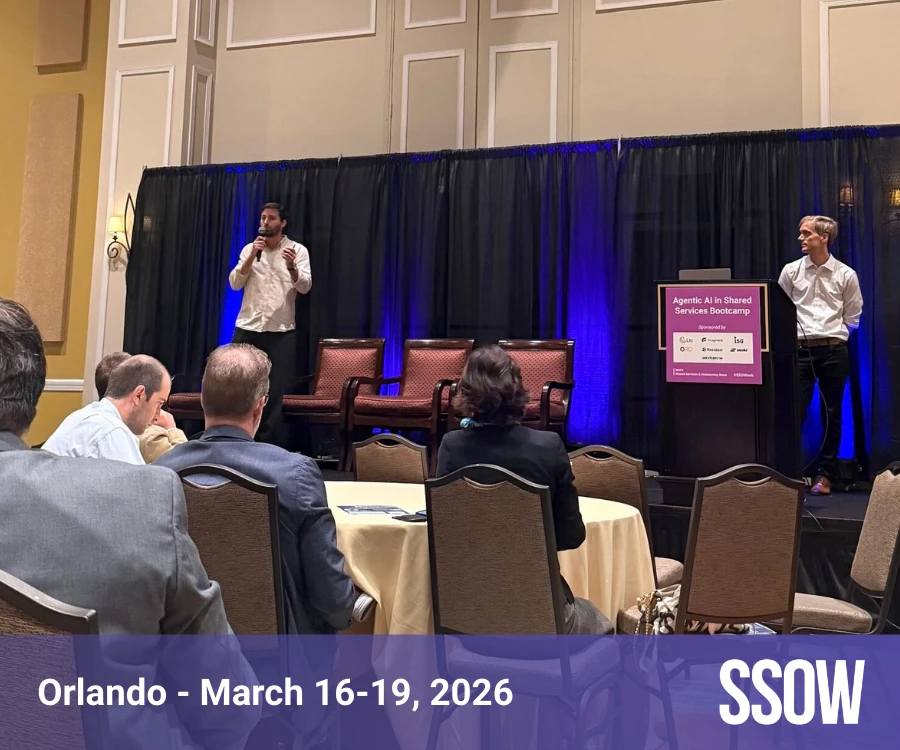
As the shared services and GBS industry faces rapid digital innovation, agentic AI remains the hot topic at the forefront of leaders’ minds. This year’s SSOW Orlando tackled the autonomous head-on with the Agentic AI in the Shared Services Bootcamp.
Moving beyond the theoretical, the program focused on practical and interactive learning to deliver real-world impact. From preparing data to the build vs. buy debate, attendees left with a comprehensive view of how AI agents are transforming GBS now and what it means for the future.
For those unable to attend, here is an overview of the day’s takeaways.
1. End-to-end agentic operations unlock greater value.
Agentic AI moves organizations beyond isolated automation into fully connected, end-to-end operations. The real value lies in enabling systems to not only execute but also make informed decisions across the process lifecycle.
“AI + workflows + data is the secret sauce.”
2. Strategic implementation recognizes that AI is not a silver bullet.
Agentic AI is not simply an evolution of RPA. It requires a shift in thinking around how and where automation should be applied.
“Agentic AI is not RPA 2.0. You must match the tool to the task, and the use case is everything.”
Organizations need to be intentional, selecting use cases where autonomy and decision-making will enhance outcomes. This, in turn, more successfully demonstrates ROI and builds buy-in.
3. Strong data is key to successful implementation.
Data remains the foundation of any successful AI strategy. Without visibility into processes, volumes, and costs, organizations struggle to identify where AI can deliver impact.
“Do you have clean data? Is it structured? Do you have process debt?”
“We fundamentally believe AI will transform GBS, but those furthest out in implementation are pulling from data […] The complexity of GBS can stall transformation and make strong use cases unclear.”
4. Empowered teams should be the center of AI strategy.
Successful implementation starts with people. Organizations must foster a growth mindset, ensure teams feel comfortable leveraging AI, and recognize that building capabilities is a continuous journey rather than a one-time effort.
“AI is about fueling investments in shared services and levelling up what you can extract from investments. It’s not about displacing humans, but augmenting capabilities.”
5. Thoroughly assess readiness before scaling
Pilots are an essential learning phase, but scaling introduces new risks. Organizations must ensure that processes are stable, data is reliable, and governance is in place before expanding AI initiatives, as inefficiencies can quickly multiply at scale.
“You need to be careful, especially when scaling. Any problems you have will also scale!”
6. Trust, controls, and auditability are non-negotiable.
As agentic AI takes on more decision-making responsibility, trust becomes critical. Organizations must embed governance, ensure transparency in decision-making, and maintain strong audit frameworks.
“It’s not about what AI can do, it’s what we trust AI to do. Do I trust this data enough so that it can make this decision for me?”
“Processes that are highly regulated and need more control stall as there is not the trust for AI to automate regulated processes end-to-end.”
7. Agentic AI can be implemented without disruption.
“It’s a step up from automating tasks to automating decision-making. How do we do this without disruption or damaging service levels?”
The transition to agentic AI should be gradual and controlled. Organizations need to balance innovation with operational stability, ensuring that service levels are maintained while introducing more advanced automation capabilities.
Ultimately, organizations that approach agentic AI with clear intent, strong data foundations, and a people-first mindset will be best positioned to unlock sustainable value without compromising trust or service quality.