Agentic AI in Shared Services: From Experimentation to Operating Model Transformation
Insights from the Agentic AI in Shared Services Bootcamp
Add bookmark
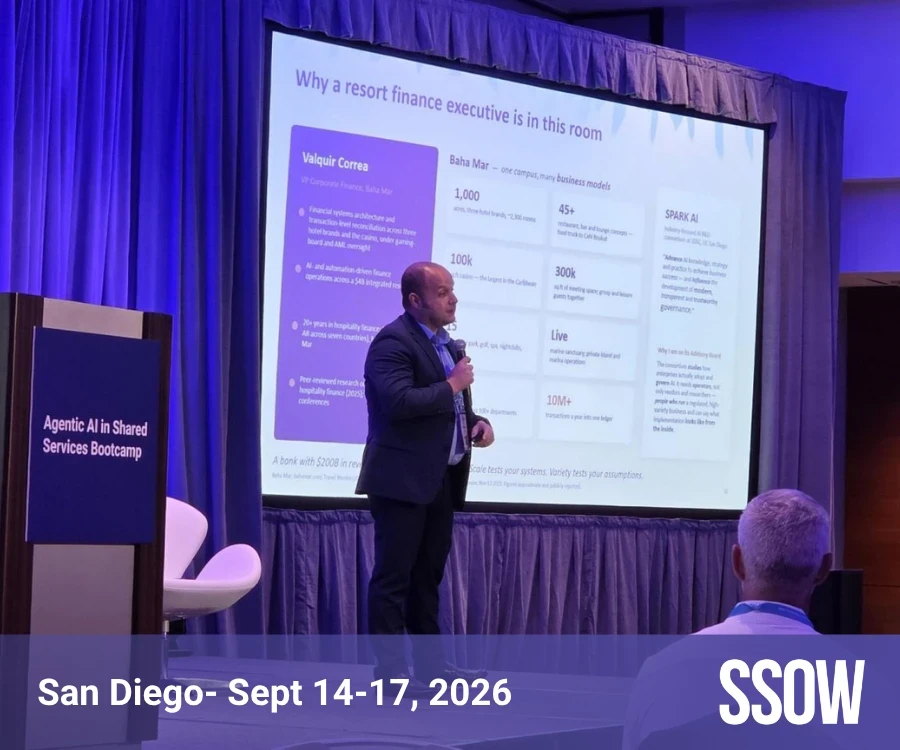
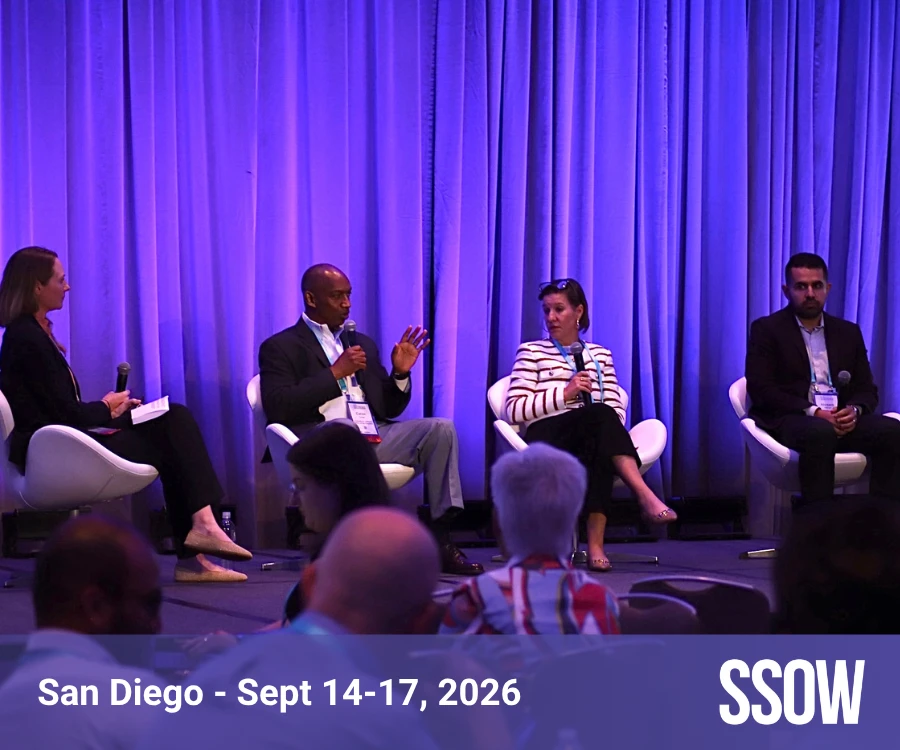
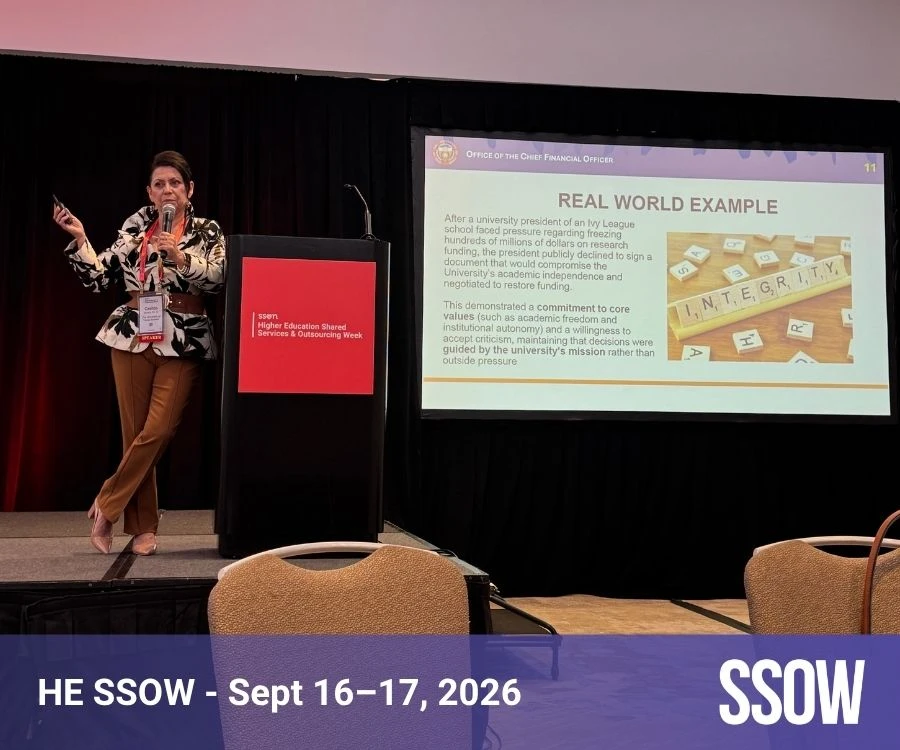
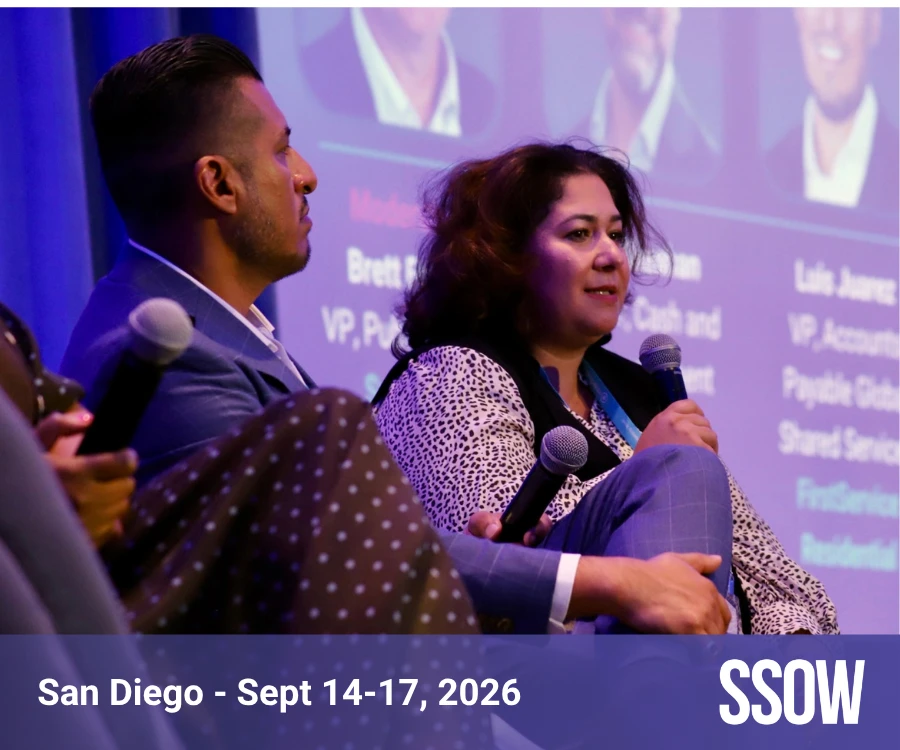
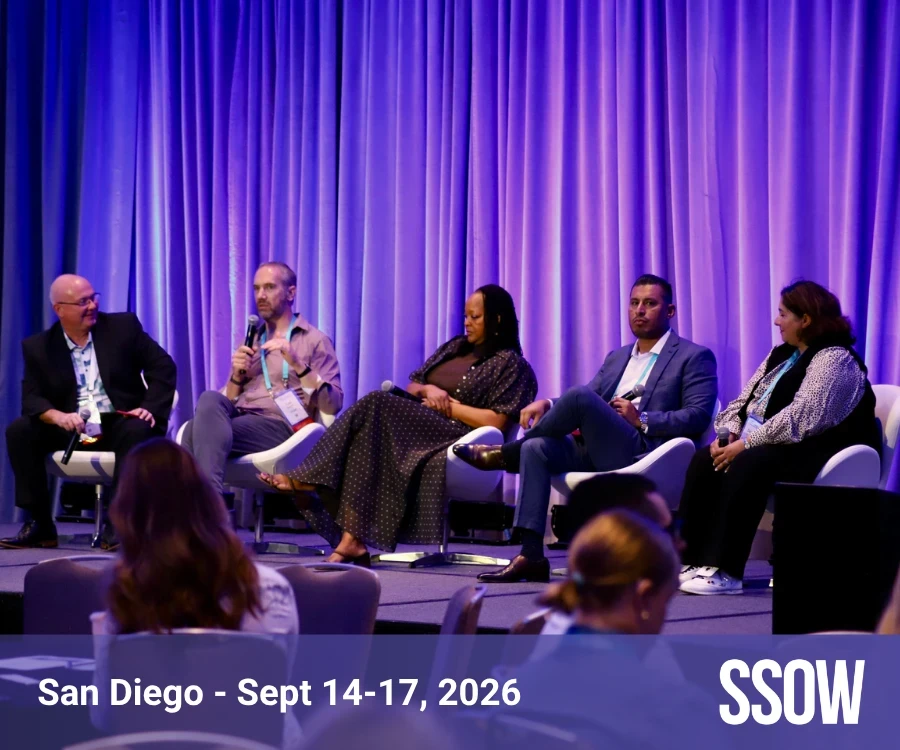
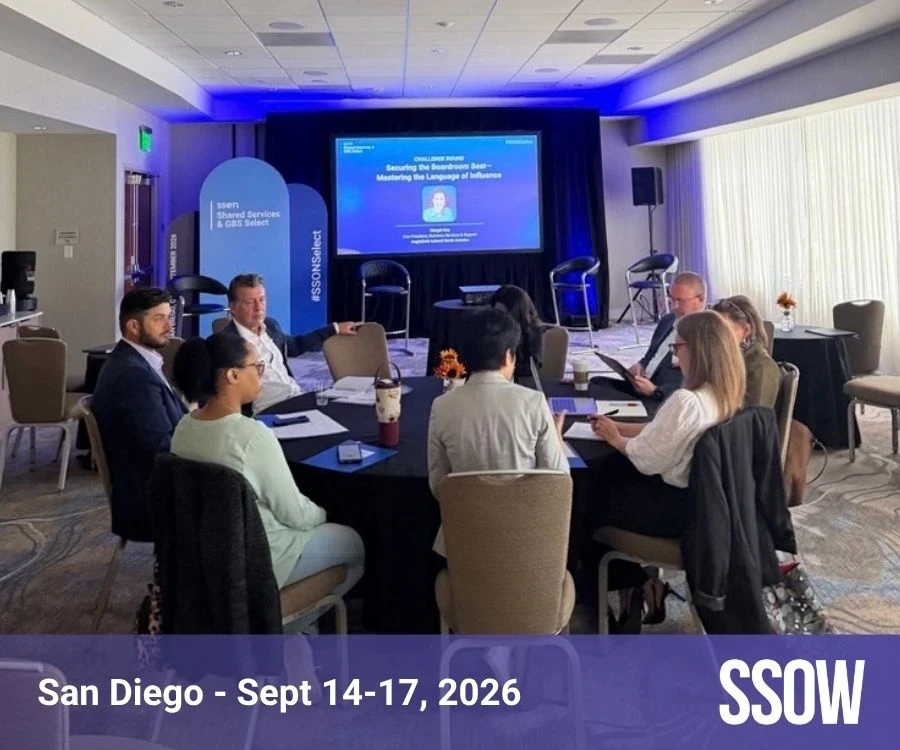
This week, San Diego is home to more than world-famous zoos and a rich military history, as Shared Services & Outsourcing Week (SSOW) takes over the city with a packed agenda of innovation and networking.
The Agentic AI in Shared Services Bootcamp kicked off the week, where practitioners and providers alike discussed how to move from AI exploration to execution. Although the industry largely agrees the future is agentic, determining how organizations can successfully make the transition is far less clear.
Here are five key lessons from thought leaders across the AI landscape on how to move agentic AI initiatives from experimentation to part of a sustainable operating model.
1. Scaling Agentic AI Requires More Than Technology Strategy
According to McKinsey & Company, 89% of organizations report regular use of AI in 2026. However, enterprise value creation is lagging, as only 37% report some positive EBIT impact – the same rate as 2025. There is a clear delay between AI implementation and impact.
Valquir Correa, VP, Corporate Finance at Baha Mar, highlighted that organizations cannot simply deploy tools and expect value to materialize. Instead, high-performing teams combine:
- Senior leadership ownership
- Human-in-the-loop design
- A robust knowledge validation layer over enterprise data
- Strategic measurement of business impact
- Proactive risk management
Together, these capabilities keep teams in 'the driver's seat' of AI strategy. Scalable agentic AI begins with business alignment, human integration, and robust data foundations. Building these foundations is what shifts agentic AI from a technology strategy into part of a broader operating model transformation. As Correa noted, "Where assumption testing precedes strategic commitment, AI compounds value. Where those conditions have quietly eroded, AI compounds distortion."
2. Before Automating, You Must Have Clear Process Visibility
Building on criticisms of the "wild-west approach" to AI implementation, organizations must truly understand their processes before investing in technology.
Brad DeMent, Partner at ScottMadden, and Laura Campbell, Partner at ScottMadden, highlighted the importance of a defensible, data-driven AI roadmap built on process visibility. Selecting the most complex use case for AI does not account for volume, cost, and complexity in combination. For example, a lower-complexity task at scale is often a stronger automation opportunity than a highly complex but infrequent task.
This is where work intelligence is key. By examining activities at a granular level, organizations can identify:
- Where automation will create the greatest impact
- Where workflow redesign is required first
- How initiatives should be prioritized
That visibility is often weaker than leaders assume: ScottMadden found that the same activity can be distributed across five to fifteen times more employees than expected.
These gaps matter because AI can amplify inefficiency just as easily as it can eliminate it. Automating a fragmented or poorly understood process risks embedding existing problems into a faster system.
3. AI Governance Needs to Be Embedded into Execution
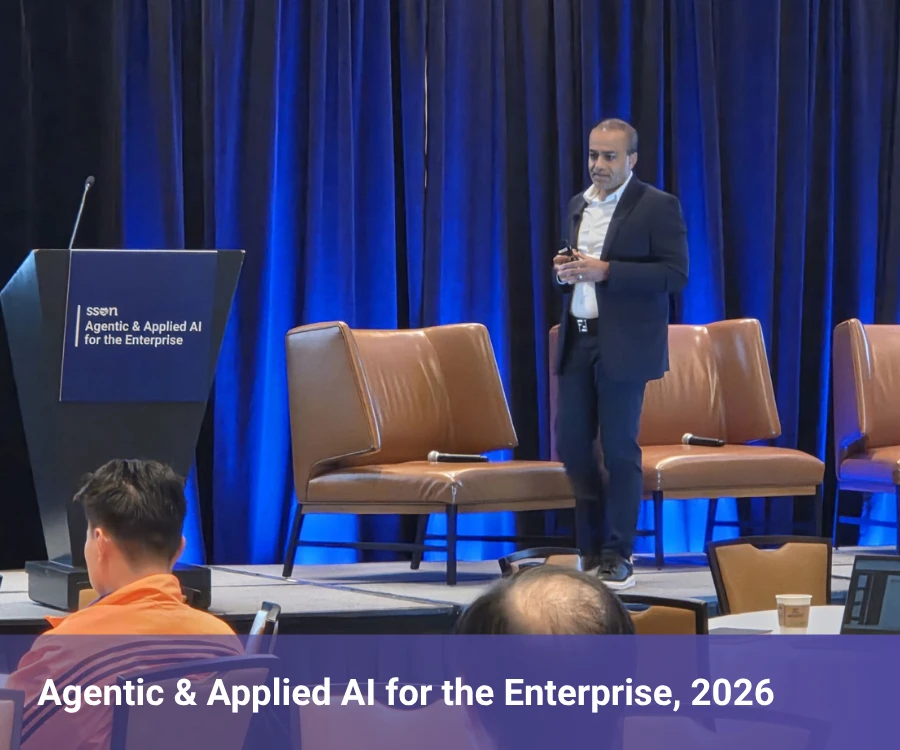
The June Agentic & Applied AI for the Enterprise conference established that governance is often the biggest challenge in scaling AI. As Sameer Andi, VP, People Digital Services & Analytics at Cushman & Wakefield, noted, "AI readiness is less about a tool and more about trust."
Conversations repeatedly returned to trust, guardrails, and ownership. Before scaling agentic AI, organizations need to consider how to:
- Identify where the data comes from and who owns it
- Maximize existing capabilities before investing in more technology
- Design for failure and establish clear escalation mechanisms
- Vet agents and effectively control the environment in which they operate
- Maintain human-in-the-loop mechanisms
James Lewis, CEO at Sentinel Navigation, argued that when an agent behaves incorrectly, enterprises cannot completely assign responsibility to the technology, as "the structure […] came from us!" Governance must be embedded into the agentic operating model, shaping how agents are designed, deployed, and managed.
4. The Business Case for AI is Moving Beyond Cost Reduction
Although shared services was historically viewed as a cost arbitrage strategy, the model has developed far beyond just financial efficiency. As such, organizations' AI strategy cannot be limited to speed, cost reduction, and productivity.
Instead, Jack Gottlieb, Strategic Advisor and Fmr. VP of Global Capability & Transformation, Gaming Laboratories International, LLC, challenged organizations to think align on how they measure enterprise value, asking: "Does everyone see ROI the same way that you do?"
Gottlieb highlighted where organizations can assess broader value created by AI:
- Strategic alignment
- Problem resolution
- Growth opportunities
- Customer and employee value
- Enterprise capacity
- Adoption and impact
If organizations measure agentic AI purely through FTE reduction or processing speed, they risk automating activity without improving performance.
5. The Agentic Operating Model is a Human Model
The final session of the bootcamp moved from the enterprise strategy down to the individual employee. Anu Varmani, Director, Product Management, Data Platforms & Global Services at Honda, highlighted how access to AI does not automatically guarantee adoption. Instead, the workforce model must shift to facilitate agentic operations.
For Varmani, building AI literacy through practice is one of the most important factors in a successful implementation. Employees who become AI builders rather than AI users are more empowered to leverage emerging tools. Varmani argued that "80% of using AI effectively is prompting skills. […] The other 20% is reiterating and testing."
This confidence requires continuous training. Varmani outlined how AI literacy ultimately becomes workforce readiness:
- Using AI
- Prompting AI
- Creating repeatable workflows
- Configuring agents
- Redesigning work
A successful AI strategy, therefore, empowers people to leverage technology instead of fearing it.
From AI Projects to an Agentic Operating Model Transformation
The bootcamp suggested that organizations that successfully move beyond AI experimentation are rethinking foundations, such as:
- How work is understood
- How technology is governed
- How value is measured
- How people interact with technology
The shift to agentic AI, then, is more than a technology transformation. It is an operating model transformation.