

The Gartner Reality Check
To start, Gartner's 2025 AI Job Impacts Analysis lands a useful piece of clarity: there will be no "jobs apocalypse" due to AI — but there will be job chaos. Gartner predicts that starting in 2028-2029, AI will create more jobs than it eliminates. Wow — why is this not making as much headlines as Anthropic's new Claude Mythos?
Yet what Gartner is also saying is that each year, more than 32 million jobs will be significantly transformed. Personally, the word transformed always excites me and calls me to action. I believe we have a huge role to play in this transformation of jobs, through our GBS/GCC/SSC organizations globally.
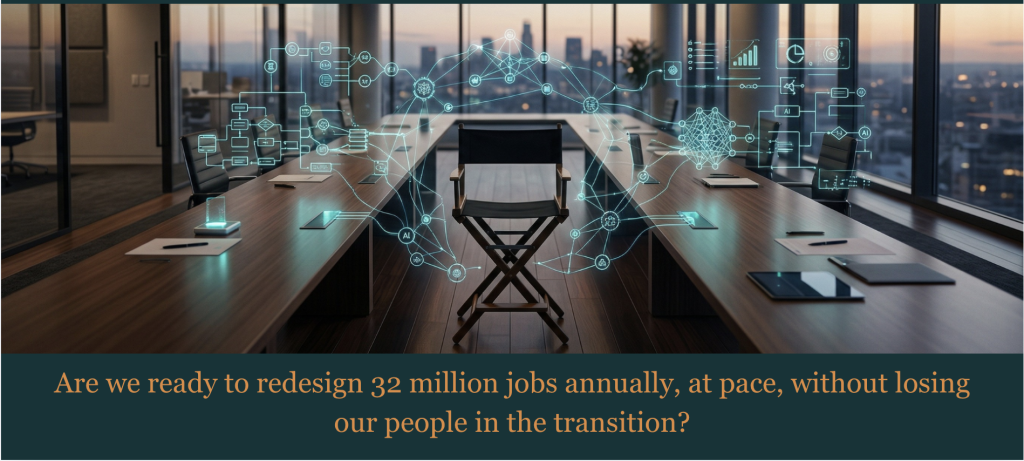
That is the number that should anchor every GBS leadership conversation in the near future. Not "will AI take jobs?" but: are we ready to redesign 32 million jobs annually, at pace, without losing our People in the transition?
The human and organizational side of AI transformation comes down to three shifts.
Redefining Talent and Roles in a Generative AI Operating Model
We need to be clear at this point: we are no longer discussing just adding AI to existing jobs. What we are discussing is broader and deeper — we are, in fact, rebuilding what a job will look like in the future. AI is part of the job design, not just a gimmick or a tool. Let's not get distracted by the idea that AI will simply be a "copilot" (no association to the Microsoft brand) in our work lives.
In Edition #1 of my Connecting.The.Dots. newsletter (which, by the way, you can read on my SSON column of the same name, or on LinkedIn), I introduced the Intelligence Triad — Human + Process + Artificial Intelligence = Amplified Intelligence. It forces a question most operating models avoid: what is the highest-value contribution a human can make when AI handles execution at scale?
The professionals who define the next era of GBS will be certainly Amplified Intelligence Orchestrators (A.I.O) — People who blend professional judgment, Process knowledge, Data expertise, and AI capability into outcomes none of the components could deliver alone. We will need designers, not operators. Curators, not processors. Same People, fundamentally different roles. The orchestration layer is Human. Humans will be on top of the loop.
This means we the org charts we inherited were built for transactional throughput. The org charts we need are design will be built for A.I.O.
Are we ready to move in this direction?
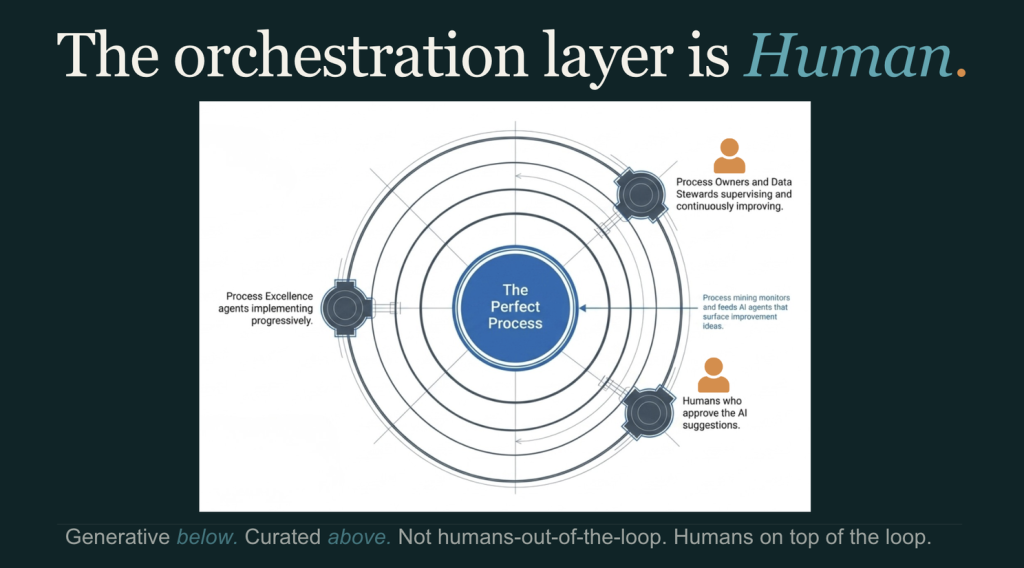
From Ownership to Stewardship – Extended to Context
Here is the shift most organizations are missing.
For 30+ years, Shared Services have been built around Process ownership. To unpack the building blocks for the future, we need to distinguish two fundamental roles: Owners vs Stewards. Owners hold accountability and decision rights; Stewards carry operational responsibility day to day. Already today, we need them both — and we need them across two perimeters: Process AND Data.
But there is a third dimension coming up rapidly, which I have come to believe is the next frontier — one where Humans will matter more than ever: Context.
Process is how we do things. Data is what we know. Context is why it matters, when it applies, and what nuance shapes the right call.
Generative AI is brilliant at Process, and getting better at Data. But it has no native sense of Context — and that is exactly where most AI failures happen. The system delivers a technically correct answer that is operationally wrong, because nobody curated the Context the model needed.
GBS Condominiums are unavoidable – But Who Goes first?
The third shift is structural. Generative AI flows horizontally. Our organizations are still vertical. Functions hoard Data behind what I have called Data Hedges — natural boundaries that grow into invisible walls.
Breaking silos inside one company is hard enough. The bolder question is whether GBS organizations will finally cross company boundaries effectively.
I believe GBS Condominiums are now unavoidable. The economic environment, the talent scarcity, the pace of AI investment — none of it works at the scale of a single company anymore. The only real question is who will be bold enough to take the first step, and how the setup should look.
The IP-vs-operating-capacity line is where this conversation gets practical:
- Protect as IP: anything that differentiates you commercially. Proprietary methodologies, customer-specific workflows, pricing logic, confidential intelligence.
- Share as operating capacity or capability: anything where collective scale makes everyone safer or faster.
The clearest example today is bank account and payment fraud. Defending our companies from fraudsters and cyber-criminals in isolation, with only a fraction of the signal, is structurally inefficient. Shared security Processes, shared pattern recognition, and shared Know-Your-Vendor and Know-Your-Customer capabilities make every participant stronger — and make the protective lines of defense more effective by compounding intelligence and Data sources. The same logic applies to Master Data governance, sanctions screening, and emerging AI-risk monitoring. We all need these capabilities — but can we afford to keep building them in isolation?
The first mover here will not be the largest GBS in the room — it will be the boldest, and the one willing to connect the dots to unlock the winning move (to borrow an analogy from chess).
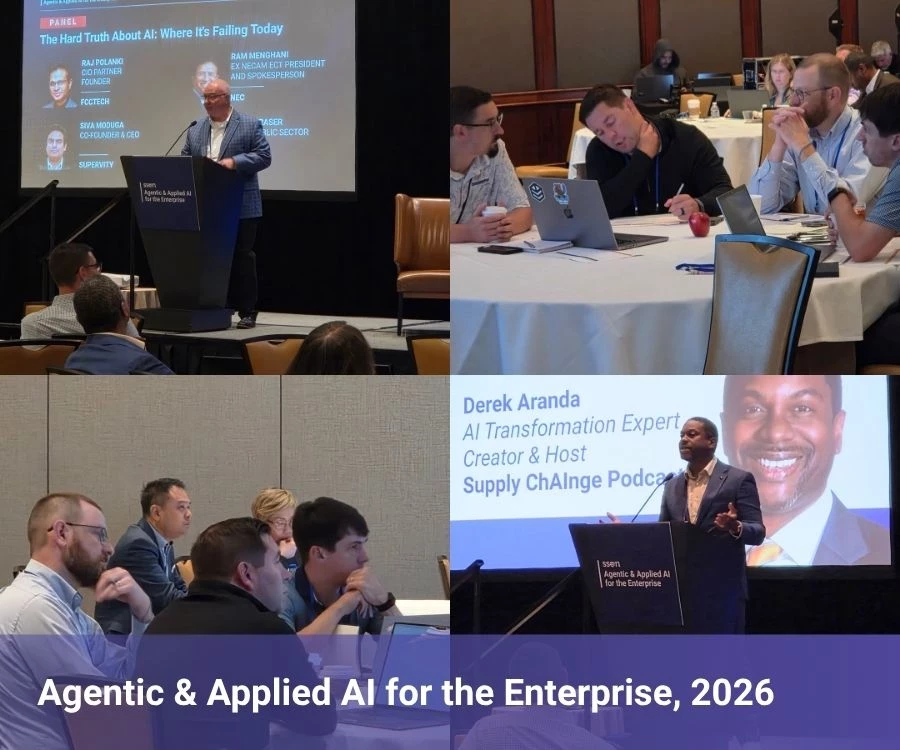
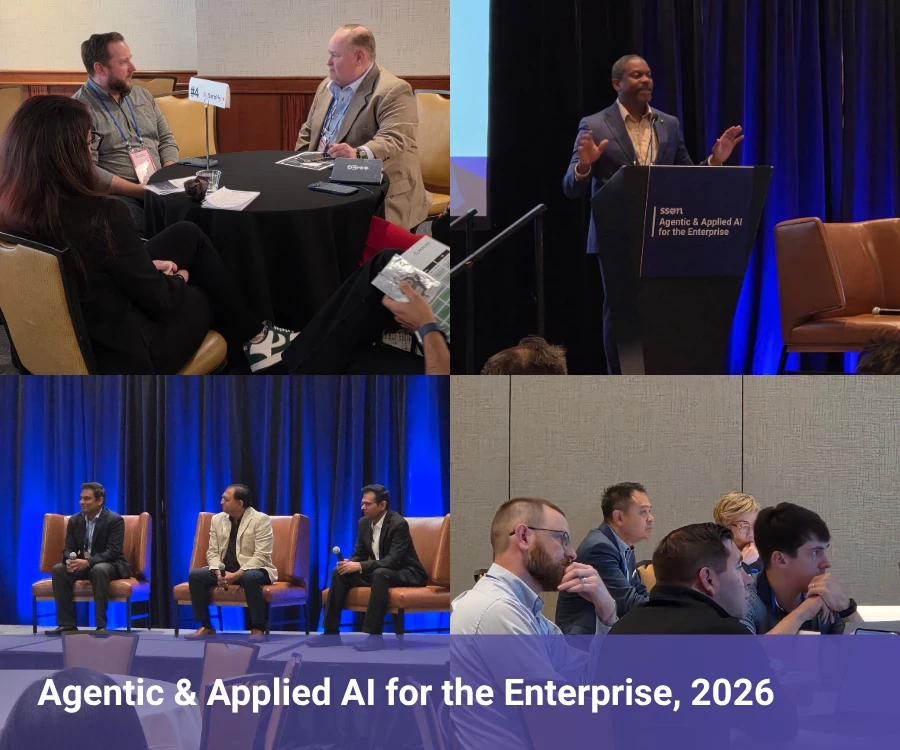
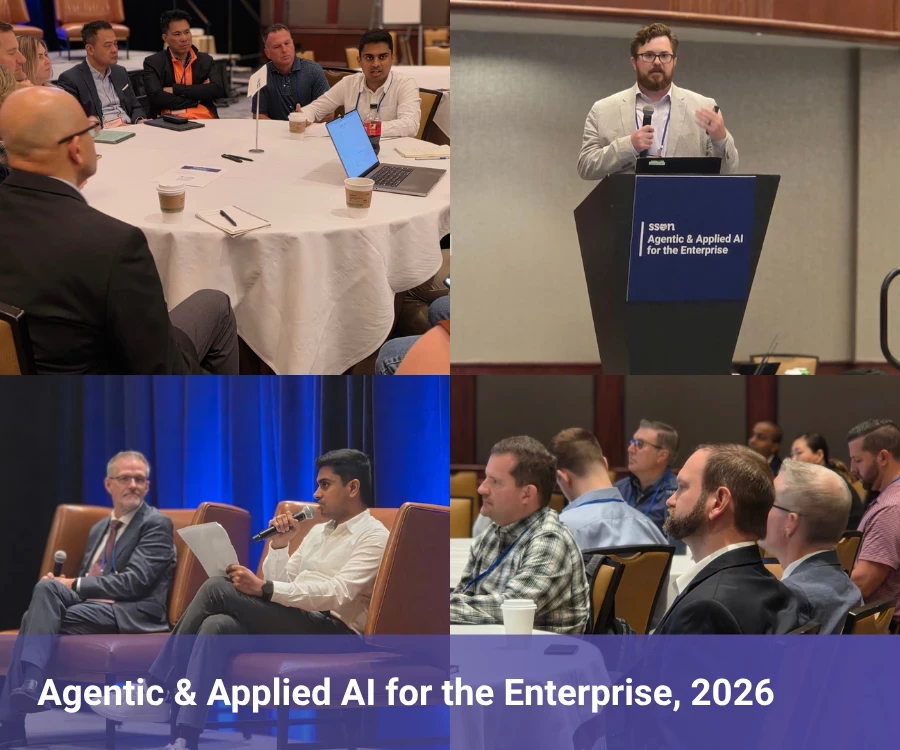
Reflections from Estoril
Job chaos is coming. So is Amplified Intelligence Orchestration. The organizations that thrive will be the ones that redesign the human layer with the same seriousness they apply to the tech stack.
Hi, I'm Mauro Portela, a Global Business Services leader. I author "Connecting.The.Dots," exploring the intersection between Global Business Services, Business Transformation, Data Governance, AI adoption, and the Future of Work . Visit my website www.mauroportela.com
Disclaimer: The content of this article is based on the author's own independent reflections and thoughts and is not in any way associated with any company or organisation and has no commercial intent.